| Version |
2.5 |
| Creation Date |
2005-11-16 15:48:42 |
| Update Date |
2009-07-28 13:56:49 |
| Accession Number |
HMDB01452 |
| Secondary Accession Numbers |
Not Available |
| Common Name |
Thromboxane A2 |
| Description |
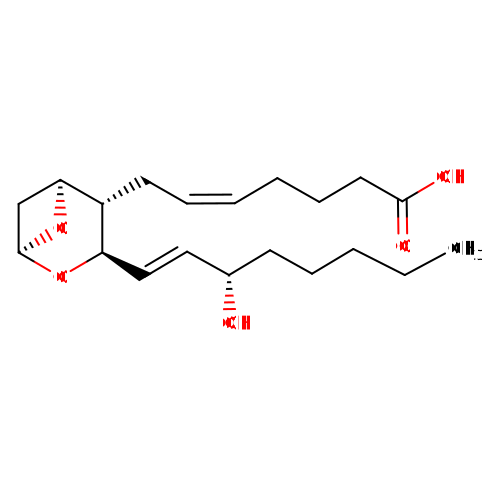
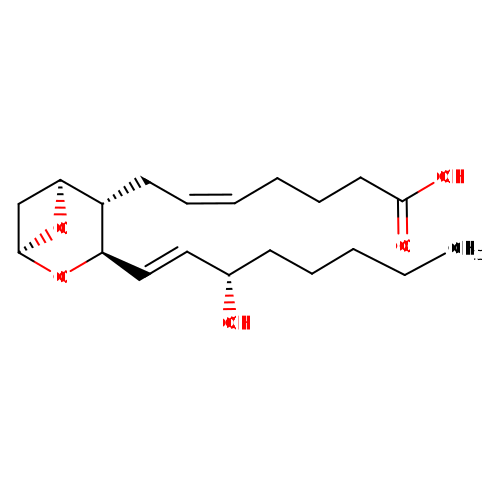
An unstable intermediate between the prostaglandin endoperoxides and thromboxane B2. The compound has a bicyclic oxaneoxetane structure. It is a potent inducer of platelet aggregation and causes vasoconstriction. It is the principal component of rabbit aorta contracting substance (RCS).
Thromboxanes are eicosanoids. The eicosanoids consist of the prostaglandins (PGs), thromboxanes (TXs), leukotrienes (LTs) and lipoxins (LXs). The PGs and TXs are collectively identified as prostanoids. Prostaglandins were originally shown to be synthesized in the prostate gland, thromboxanes from platelets (thrombocytes) and leukotrienes from leukocytes, hence the derivation of their names. All mammalian cells except erythrocytes synthesize eicosanoids. These molecules are extremely potent, able to cause profound physiological effects at very dilute concentrations. All eicosanoids function locally at the site of synthesis, through receptor-mediated G-protein linked signaling pathways. |
| Synonyms |
- (1S-(1alpha,3alpha,3R*),4beta(Z),5alpha)-7-(3-(3-hydroxy-1-octenyl)-2,6-dioxabicyclo(3.1.1)hept-4-yl)-5-Heptenoate
- (1S-(1alpha,3alpha,3R*),4beta(Z),5alpha)-7-(3-(3-hydroxy-1-octenyl)-2,6-dioxabicyclo(3.1.1)hept-4-yl)-5-Heptenoic acid
- (5Z)-7-[(1S,3R,4S,5S)-3-[(1E,3S)-3-hydroxy-1-octenyl]-2,6-dioxabicyclo[3.1.1]hept-4-yl]-5-Heptenoate
- (5Z)-7-[(1S,3R,4S,5S)-3-[(1E,3S)-3-hydroxy-1-octenyl]-2,6-dioxabicyclo[3.1.1]hept-4-yl]-5-Heptenoic acid
- (5Z,13E)-(15S)-9,11-epoxy-15-hydroxythromba-5,13-dienoate
- (5Z,13E)-(15S)-9-alpha,11-alpha-Epoxy-15-hydroxythromboxa-5,13-dienoate
- (5Z,13E)-(15S)-9a,11a-epoxy-15-Hydroxythromboxa-5,13-dienoate
- (5Z,13E)-(15S)-9a,11a-epoxy-15-Hydroxythromboxa-5,13-dienoic acid
- (5Z,13E)-(15S)-9alpha,11alpha-epoxy-15-hydroxythromboxa-5,13-dienoate
- (5Z,9alpha,11alpha,13E,15S)-9,11-Epoxy-15-hydroxythromboxa-5,13-dien-1-oate
- (5Z,9alpha,11alpha,13E,15S)-9,11-Epoxy-15-hydroxythromboxa-5,13-dien-1-oic acid
- (5Z,9alpha,11alpha,13E,15S)-9,11-epoxy-15-hydroxy-Thromboxa-5,13-dien-1-oate
- (5Z,9alpha,11alpha,13E,15S)-9,11-epoxy-15-hydroxy-Thromboxa-5,13-dien-1-oic acid
- 7-[3-(3-hydroxy-1-octenyl)-2,6-dioxabicyclo[3.1.1]hept-4-yl]-[1S-[1alpha,3alpha(1E,3R*),4beta(Z),5alpha]]-5-Heptenoate
- 7-[3-(3-hydroxy-1-octenyl)-2,6-dioxabicyclo[3.1.1]hept-4-yl]-[1S-[1alpha,3alpha(1E,3R*),4beta(Z),5alpha]]-5-Heptenoic acid
- 9S,11S-epoxy,15S-hydroxy-thromboxa-5Z,13E-dien-1-oate
- 9S,11S-epoxy,15S-hydroxy-thromboxa-5Z,13E-dien-1-oic acid
- RCS
- Rabbit aorta contracting substance
- TXA-2
- TXA2
- cid
- (5Z,13E)-(15S)-9,11-epoxy-15-hydroxythromba-5,13-dienoic acid
- (5Z,13E)-(15S)-9-alpha,11-alpha-Epoxy-15-hydroxythromboxa-5,13-dienoic acid
- (5Z,13E)-(15S)-9alpha,11alpha-epoxy-15-hydroxythromboxa-5,13-dienoic acid
|
| Chemical IUPAC Name |
7-[3-(3-hydroxyoct-1-enyl)-4,6-dioxabicyclo[3.1.1]hept-2-yl]hept-5-enoic acid |
| Chemical Formula |
C20H32O5 |
| Chemical Structure |
 |
| Chemical Taxonomy |
| Kingdom |
|
| Super Class |
|
| Class |
|
| Sub Class |
|
| Family |
|
| Species |
- acetal
- secondary alcohol
- carboxylic acid
- alkene
- heterocyclic compound
|
| Biofunction |
| — |
| Application |
| — |
| Source |
|
|
| Average Molecular Weight |
352.465 |
| Monoisotopic Molecular Weight |
352.224976 |
| Isomeric SMILES |
CCCCC[C@H](O)C=C[C@H]1O[C@H]2C[C@H](O2)[C@@H]1CC=C/CCCC(O)=O |
| Canonical SMILES |
CCCCCC(O)C=CC1OC2CC(O2)C1CC=CCCCC(O)=O |
| KEGG Compound ID |
C02198  |
| BioCyc ID |
ALPHA11-ALPHA-EPOXY-15-HYDROXYTHROMBA  |
| BiGG ID |
39305  |
| Wikipedia Link |
Thromboxane A2  |
| NuGOwiki Link |
HMDB01452  |
| Metagene Link |
HMDB01452  |
| METLIN ID |
6253  |
| PubChem Compound |
42475  |
| PubChem Substance |
5266  |
| ChEBI ID |
15627  |
| CAS Registry Number |
57576-52-0 |
| InChI Identifier |
InChI=1/C20H32O5/c1-2-3-6-9-15(21)12-13-17-16(18-14-20(24-17)25-18)10-7-4-5-8-11-19(22)23/h4,7,12-13,15-18,20-21H,2-3,5-6,8-11,14H2,1H3,(H,22,23)/b7-4-,13-12+/t15-,16+,17+,18-,20+/m0/s1 |
| Synthesis Reference |
Not Available |
| Melting Point (Experimental) |
Not Available |
| Experimental Water Solubility |
Not Available
Source: PhysProp
|
| Predicted Water Solubility |
0.0469 mg/mL [Predicted by ALOGPS]
Calculated using ALOGPS
|
| Physiological Charge |
-1 |
| State |
Solid |
| Experimental LogP/Hydrophobicity |
Not Available
Source: PhysProp
|
| Predicted LogP/Hydrophobicity |
4.31 [Predicted by ALOGPS]; 4.2 [Predicted by PubChem via XLOGP]
Calculated using ALOGPS
|
| Material Safety Data Sheet (MSDS) |
Not Available |
| MOL File |
Show |
| SDF File |
Show |
| PDB File |
Show |
| 2D Structure |
|
| 3D Structure |
|
| Experimental PDB ID |
Not Available |
| Experimental 1H NMR Spectrum |
Not Available |
| Experimental 13C NMR Spectrum |
Not Available |
| Experimental 13C HSQC Spectrum |
Not Available |
| Predicted 1H NMR Spectrum |
Show Image Show Peaklist
|
| Predicted 13C NMR Spectrum |
Show Image Not Available
|
| Mass Spectrum |
Not Available |
| Simplified TOCSY Spectrum |
Not Available |
| BMRB Spectrum |
Not Available |
| Cellular Location |
- Membrane (Predicted from LogP)
- Cytoplasm
- endoplasmic reticulum
- Extracellular
|
| Biofluid Location |
|
| Tissue Location |
| Tissue |
References |
| Platelet |
— |
| Smooth Muscle |
— |
|
| Concentrations (Normal) |
| Biofluid |
Blood |
| Value |
0.00024 +/- 0.000036 uM |
| Age |
Adult:>18 yrs old |
| Sex |
Both |
| Patient information |
Normal |
| Comments |
Not Available |
| References |
- Akimova EV: Prostacyclin and thromboxane A2 levels in children and adolescents with an inherited predisposition to coronary heart disease: a family study. Coron Artery Dis. 1994 Sep;5(9):761-5. [PubMed
]
|
|
| Concentrations (Abnormal) |
| Biofluid |
Blood |
| Value |
0.00045 +/- 0.000047 uM |
| Age |
Children:1-13 yrs old |
| Sex |
Both |
| Condition |
Coronary heart disease |
| Comments |
Not Available |
| References |
- Akimova EV: Prostacyclin and thromboxane A2 levels in children and adolescents with an inherited predisposition to coronary heart disease: a family study. Coron Artery Dis. 1994 Sep;5(9):761-5. [PubMed
]
|
| Biofluid |
Urine |
| Value |
0.00078 +/- 0.00035 umol/mmol creatinine |
| Age |
Adult:>18 yrs old |
| Sex |
Both |
| Condition |
Hepatocellular carcinoma |
| Comments |
Not Available |
| References |
- Matsumata T, Yamamoto K, Shirabe K, Shimada M, Sugimachi K, Takesue F, Muto Y, Ikeda T: Urinary excretion of prostaglandins and renal function after hepatic resection. Hepatogastroenterology. 1997 May-Jun;44(15):774-8. [PubMed
]
|
|
| Associated Disorders |
| Condition |
References |
| Coronary heart disease |
- Akimova EV: Prostacyclin and thromboxane A2 levels in children and adolescents with an inherited predisposition to coronary heart disease: a family study. Coron Artery Dis. 1994 Sep;5(9):761-5. [PubMed
]
|
| Hepatocellular carcinoma |
- Matsumata T, Yamamoto K, Shirabe K, Shimada M, Sugimachi K, Takesue F, Muto Y, Ikeda T: Urinary excretion of prostaglandins and renal function after hepatic resection. Hepatogastroenterology. 1997 May-Jun;44(15):774-8. [PubMed
]
|
|
| OMIM ID |
- 114550
(Hepatocellular carcinoma)
|
| Pathways |
|
| General References |
- Wu X, Dev A, Leong AB: Zileuton, a 5-lipoxygenase inhibitor, increases production of thromboxane A2 and platelet aggregation in patients with asthma. Am J Hematol. 2003 Sep;74(1):23-5. [PubMed
]
- Feldman M, Cryer B, Rushin K, Betancourt J: A comparison of every-third-day versus daily low-dose aspirin therapy on serum thromboxane concentrations in healthy men and women. Clin Appl Thromb Hemost. 2001 Jan;7(1):53-7. [PubMed
]
- Kobayashi T, Suzuki J, Watanabe M, Suzuki S, Yoshida K, Kume K, Suzuki H: Changes in platelet calcium concentration by thromboxane A2 stimulation in patients with nephrotic syndrome of childhood. Nephron. 1997;77(3):309-14. [PubMed
]
- Amari T, Kubo K, Kobayashi T, Sekiguchi M: Effects of recombinant human superoxide dismutase on tumor necrosis factor-induced lung injury in awake sheep. J Appl Physiol. 1993 Jun;74(6):2641-8. [PubMed
]
- Hada S, Hashizume M, Yoshioka F, Nishii S, Yasunaga K: [Measurement of platelet thromboxane A2/prostaglandin H2 receptor in asthmatic patients] Arerugi. 1993 May;42(5):609-16. [PubMed
]
- Cattaneo M, Lombardi R, Zighetti ML, Gachet C, Ohlmann P, Cazenave JP, Mannucci PM: Deficiency of (33P)2MeS-ADP binding sites on platelets with secretion defect, normal granule stores and normal thromboxane A2 production. Evidence that ADP potentiates platelet secretion independently of the formation of large platelet aggregates and thromboxane A2 production. Thromb Haemost. 1997 May;77(5):986-90. [PubMed
]
- Schror K: The effect of prostaglandins and thromboxane A2 on coronary vessel tone--mechanisms of action and therapeutic implications. Eur Heart J. 1993 Nov;14 Suppl I:34-41. [PubMed
]
- Marttunen MB, Pyrhonen S, Tiitinen AE, Viinikka LU, Ylikorkala O: Effect of antiestrogen regimen on prostacyclin and thromboxane A2 in postmenopausal patients with breast cancer: evidence of significance of hypertension, smoking or previous use of estrogen therapy. Prostaglandins. 1996 Oct;52(4):317-26. [PubMed
]
- Tanaka K, Roberts MH, Yamamoto N, Sugiura H, Uehara M, Mao XQ, Shirakawa T, Hopkin JM: Genetic variants of the receptors for thromboxane A2 and IL-4 in atopic dermatitis. Biochem Biophys Res Commun. 2002 Apr 5;292(3):776-80. [PubMed
]
- Leonhardt A, Bernert S, Watzer B, Schmitz-Ziegler G, Seyberth HW: Low-dose aspirin in pregnancy: maternal and neonatal aspirin concentrations and neonatal prostanoid formation. Pediatrics. 2003 Jan;111(1):e77-81. [PubMed
]
- Sheu JR, Hsiao G, Shen MY, Lin WY, Tzeng CR: The hyperaggregability of platelets from normal pregnancy is mediated through thromboxane A2 and cyclic AMP pathways. Clin Lab Haematol. 2002 Apr;24(2):121-9. [PubMed
]
- Djellas Y, Manganello JM, Antonakis K, Le Breton GC: Identification of Galpha13 as one of the G-proteins that couple to human platelet thromboxane A2 receptors. J Biol Chem. 1999 May 14;274(20):14325-30. [PubMed
]
- Rocca B, Ranelletti FO, Maggiano N, Ciabattoni G, De Cristofaro R, Landolfi R: Inherited macrothrombocytopenia with distinctive platelet ultrastructural and functional features. Thromb Haemost. 2000 Jan;83(1):35-41. [PubMed
]
- Liel N, Nathan I, Yermiyahu T, Zolotov Z, Lieberman JR, Dvilansky A, Halushka PV: Increased platelet thromboxane A2/prostaglandin H2 receptors in patients with pregnancy induced hypertension. Thromb Res. 1993 May 1;70(3):205-10. [PubMed
]
- Modesti PA, Colella A, Cecioni I, Costoli A, Biagini D, Migliorini A, Neri Serneri GG: Increased number of thromboxane A2-prostaglandin H2 platelet receptors in active unstable angina and causative role of enhanced thrombin formation. Am Heart J. 1995 May;129(5):873-9. [PubMed
]
- Storlien LH, Kriketos AD, Calvert GD, Baur LA, Jenkins AB: Fatty acids, triglycerides and syndromes of insulin resistance. Prostaglandins Leukot Essent Fatty Acids. 1997 Oct;57(4-5):379-85. [PubMed
]
- Wennmalm A, Benthin G, Granstrom EF, Persson L, Winell S: Maintained hyperexcretion of thromboxane A2 metabolite in healthy young cigarette smokers: results from a prospective study in randomly sampled males with stable smoking habits. Clin Physiol. 1993 May;13(3):257-64. [PubMed
]
- Ogawa S, Takeuchi K, Sugimura K, Sato C, Fukuda M, Lee R, Ito S, Sato T: The 5-HT2 receptor antagonist sarpogrelate reduces urinary and plasma levels of thromboxane A2 and urinary albumin excretion in non-insulin-dependent diabetes mellitus patients. Clin Exp Pharmacol Physiol. 1999 May-Jun;26(5-6):461-4. [PubMed
]
- Michelson AD, Wencel-Drake JD, Kestin AS, Barnard MR: Platelet activation results in a redistribution of glycoprotein IV (CD36). Arterioscler Thromb. 1994 Jul;14(7):1193-201. [PubMed
]
- Komiotis D, Wencel-Drake JD, Dieter JP, Lim CT, Le Breton GC: Labeling of human platelet plasma membrane thromboxane A2/prostaglandin H2 receptors using SQB, a novel biotinylated receptor probe. Biochem Pharmacol. 1996 Sep 13;52(5):763-70. [PubMed
]
- Wikipedia

|
| Metabolic Enzymes |
- Thromboxane-A synthase
- Thromboxane A2 receptor
- Thromboxane A synthase 1
|
|
Enzyme 1
[top]
|
| Enzyme 1 ID |
6879 |
| Enzyme 1 Name |
Thromboxane-A synthase |
| Enzyme 1 Synonyms |
- TXA synthase
- TXS
- Cytochrome P450 5A1
|
| Enzyme 1 Gene Name |
TBXAS1 |
| Enzyme 1 Protein Sequence |
>Thromboxane-A synthase
MEALGFLKLEVNGPMVTVALSVALLALLKWYSTSAFSRLEKLGLRHPKPSPFIGNLTFFR
QGFWESQMELRKLYGPLCGYYLGRRMFIVISEPDMIKQVLVENFSNFTNRMASGLEFKSV
ADSVLFLRDKRWEEVRGALMSAFSPEKLNEMVPLISQACDLLLAHLKRYAESGDAFDIQR
CYCNYTTDVVASVPFGTPVDSWQAPEDPFVKHCKRFFEFCIPRPILVLLLSFPSIMVPLA
RILPNKNRDELNGFFNKLIRNVIALRDQQAAEERRRDFLQMVLDARHSASPMGVQDFDIV
RDVFSSTGCKPNPSRQHQPSPMARPLTVDEIVGQAFIFLIAGYEIITNTLSFATYLLATN
PDCQEKLLREVDVFKEKHMAPEFCSLEEGLPYLDMVIAETLRMYPPAFRFTREAAQDCEV
LGQRIPAGAVLEMAVGALHHDPEHWPSPETFNPERFTAEARQQHRPFTYLPFGAGPRSCL
GVRLGLLEVKLTLLHVLHKFRFQACPETQVPLQLESKSALGPKNGVYIKIVSR
|
| Enzyme 1 Number of Residues |
533 |
| Enzyme 1 Molecular Weight |
60545 |
| Enzyme 1 Theoretical pI |
7.68 |
| Enzyme 1 GO Classification |
| Function |
- binding
- catalytic activity
- cation binding
- heme binding
- ion binding
- iron ion binding
- monooxygenase activity
- oxidoreductase activity
- oxidoreductase activity, acting on paired donors, with incorporation or reduction of molecular oxygen, reduced flavin or flavoprotein as one donor, and incorporation of one atom of oxygen
- tetrapyrrole binding
- transition metal ion binding
|
| Process |
- cellular metabolism
- electron transport
- generation of precursor metabolites and energy
- metabolism
- physiological process
|
| Component |
| — |
|
| Enzyme 1 General Function |
Secondary metabolites biosynthesis, transport and catabolism |
| Enzyme 1 Specific Function |
(5Z,13E)-(15S)-9-alpha,11-alpha-epidioxy-15- hydroxyprosta-5,13-dienoate = (5Z,13E)-(15S)-9-alpha,11-alpha- epoxy-15-hydroxythromboxa-5,13-dienoate |
| Enzyme 1 Pathways |
|
| Enzyme 1 Reactions |
- (5Z,13E)-(15S)-9alpha,11alpha-epidioxy-15-hydroxyprosta-5,13-dienoate = (5Z,13E)-(15S)-9alpha,11alpha-epoxy-15-hydroxythromboxa-5,13-dienoate
|
| Enzyme 1 Pfam Domain Function |
|
| Enzyme 1 Signals |
|
| Enzyme 1 Transmembrane Regions |
Not Available |
| Enzyme 1 Essentiality |
Not Available |
| Enzyme 1 GenBank ID Protein |
338704  |
| Enzyme 1 UniProtKB/Swiss-Prot ID |
P24557  |
| Enzyme 1 UniProtKB/Swiss-Prot Entry Name |
THAS_HUMAN  |
| Enzyme 1 PDB ID |
Not Available |
| Enzyme 1 Cellular Location |
Not Available |
| Enzyme 1 Gene Sequence |
>1605 bp
ATGATGGAAGCCTTGGGGTTTCTAAAATTGGAAGTGAATGGCCCCATGGTGACGGTGGCC
CTGTCAGTGGCTCTCTTGGCCCTCCTGAAATGGTACTCCACATCAGCATTCTCAAGACTG
GAGAAGTTAGGCCTCAGACATCCCAAGCCTTCTCCTTTCATTGGAAACTTGACATTTTTC
CGCCAGGGTTTTTGGGAAAGCCAAATGGAGCTCAGAAAGCTGTATGGACCTCTGTGTGGG
TACTATCTTGGTCGTCGGATGTTTATTGTTATTTCTGAGCCAGACATGATCAAGCAGGTG
TTGGTTGAGAACTTCAGTAACTTTACCAACAGAATGGCGTCGGGTTTGGAGTTCAAGTCG
GTAGCCGACAGCGTTCTGTTTTTACGTGACAAAAGATGGGAAGAGGTCAGAGGTGCCCTG
ATGTCTGCTTTCAGTCCTGAAAAGCTGAACGAGATGGTTCCCCTCATCAGCCAAGCCTGC
GACCTTCTCCTGGCTCATTTAAAACGCTATGCGGAATCTGGGGACGCATTTGACATCCAG
AGGTGCTACTGCAATTACACCACAGATGTGGTTGCCAGCGTCCCGTTTGGCACCCCGGTG
GACTCCTGGCAGGCCCCTGAGGATCCCTTTGTGAAACACTGCAAGCGTTTCTTCGAATTC
TGCATCCCCAGACCTATCCTGGTTTTACTCTTATCATTTCCATCCATAATGGTCCCACTG
GCCCGGATTTTGCCCAATAAGAACCGAGACGAACTGAATGGCTTTTTTAACAAACTCATT
AGGAATGTGATTGCCTTGCGGGACCAGCAAGCTGCCGAAGAGAGGCGGAGAGACTTCCTC
CAAATGGTCCTGGATGCCCGACATTCTGCAAGTCCCATGGGCGTGCAAGACTTTGACATC
GTCAGAGACGTTTTCTCCTCTACTGGGTGCAAGCCGAACCCTTCCCGGCAACACCAGCCC
AGCCCTATGGCCAGGCCTTTGACTGTGGATGAGATTGTGGGCCAGGCCTTCATCTTCCTC
ATCGCTGGCTATGAAATCATCACCAACACACTTTCTTTTGCCACCTACCTACTGGCCACC
AACCCTGACTGCCAAGAGAAGCTTCTGAGAGAGGTAGACGTTTTTAAGGAGAAACACATG
GCCCCTGAGTTCTGCAGCCTCGAGGAAGGCCTGCCCTATCTGGACATGGTGATTGCAGAG
ACGCTGAGGATGTACCCGCCAGCTTTCAGATTCACACGGGAGGCAGCTCAGGACTGCGAG
GTGCTGGGGCAGCGCATCCCCGCAGGCGCTGTGCTAGAGATGGCCGTGGGTGCCCTGCAC
CATGACCCTGAGCACTGGCCAAGCCCGGAGACCTTCAACCCTGAAAGGTTCACGGCTGAG
GCCCGGCAGCAGCACCGGCCCTTCACGTACCTGCCCTTCGGGGCCGGCCCACGGAGCTGC
CTCGGGGTGCGTCTAGGGCTGCTTGAGGTCAAGTTGACACTGCTCCACGTGCTGCACAAG
TTCCGGTTCCAAGCCTGCCCTGAGACCCAGGTACCGCTGCAGCTAGAATCCAAATCTGCC
CTAGGTCCAAAAAATGGTGTCTATATCAAGATCGTATCCCGCTGA
|
| Enzyme 1 GenBank Gene ID |
M80647  |
| Enzyme 1 GeneCard ID |
TBXAS1  |
| Enzyme 1 GenAtlas ID |
TBXAS1  |
| Enzyme 1 HGNC ID |
HGNC:11609  |
| Enzyme 1 Chromosome Location |
7 |
| Enzyme 1 Locus |
7q34-q35 |
| Enzyme 1 SNPs |
SNPJam Report  |
| Enzyme 1 General References |
- Yokoyama C, Miyata A, Ihara H, Ullrich V, Tanabe T: Molecular cloning of human platelet thromboxane A synthase. Biochem Biophys Res Commun. 1991 Aug 15;178(3):1479-84. [PubMed
]
- Ohashi K, Ruan KH, Kulmacz RJ, Wu KK, Wang LH: Primary structure of human thromboxane synthase determined from the cDNA sequence. J Biol Chem. 1992 Jan 15;267(2):789-93. [PubMed
]
- Miyata A, Yokoyama C, Ihara H, Bandoh S, Takeda O, Takahashi E, Tanabe T: Characterization of the human gene (TBXAS1) encoding thromboxane synthase. Eur J Biochem. 1994 Sep 1;224(2):273-9. [PubMed
]
- Chevalier D, Lo-Guidice JM, Sergent E, Allorge D, Debuysere H, Ferrari N, Libersa C, Lhermitte M, Broly F: Identification of genetic variants in the human thromboxane synthase gene (CYP5A1). Mutat Res. 2001 Jan;432(3-4):61-7. [PubMed
]
- Wang LH, Ohashi K, Wu KK: Isolation of partial complementary DNA encoding human thromboxane synthase. Biochem Biophys Res Commun. 1991 May 31;177(1):286-91. [PubMed
]
- Nusing R, Schneider-Voss S, Ullrich V: Immunoaffinity purification of human thromboxane synthase. Arch Biochem Biophys. 1990 Aug 1;280(2):325-30. [PubMed
]
- Ruan KH, Wang LH, Wu KK, Kulmacz RJ: Amino-terminal topology of thromboxane synthase in the endoplasmic reticulum. J Biol Chem. 1993 Sep 15;268(26):19483-90. [PubMed
]
- Mestel F, Oetliker O, Beck E, Felix R, Imbach P, Wagner HP: Severe bleeding associated with defective thromboxane synthetase. Lancet. 1980 Jan 19;1(8160):157. [PubMed
]
- Cargill M, Altshuler D, Ireland J, Sklar P, Ardlie K, Patil N, Shaw N, Lane CR, Lim EP, Kalyanaraman N, Nemesh J, Ziaugra L, Friedland L, Rolfe A, Warrington J, Lipshutz R, Daley GQ, Lander ES: Characterization of single-nucleotide polymorphisms in coding regions of human genes. Nat Genet. 1999 Jul;22(3):231-8. [PubMed
]
- Halushka MK, Fan JB, Bentley K, Hsie L, Shen N, Weder A, Cooper R, Lipshutz R, Chakravarti A: Patterns of single-nucleotide polymorphisms in candidate genes for blood-pressure homeostasis. Nat Genet. 1999 Jul;22(3):239-47. [PubMed
]
- Saito S, Iida A, Sekine A, Kawauchi S, Higuchi S, Ogawa C, Nakamura Y: Catalog of 680 variations among eight cytochrome p450 ( CYP) genes, nine esterase genes, and two other genes in the Japanese population. J Hum Genet. 2003;48(5):249-70. Epub 2003 Apr 29. [PubMed
]
|
| Enzyme 1 Metabolite References |
Not Available |
|
Enzyme 2
[top]
|
| Enzyme 2 ID |
7481 |
| Enzyme 2 Name |
Thromboxane A2 receptor |
| Enzyme 2 Synonyms |
- TXA2-R
- Prostanoid TP receptor
|
| Enzyme 2 Gene Name |
TBXA2R |
| Enzyme 2 Protein Sequence |
>Thromboxane A2 receptor
MWPNGSSLGPCFRPTNITLEERRLIASPWFAASFCVVGLASNLLALSVLAGARQGGSHTR
SSFLTFLCGLVLTDFLGLLVTGTIVVSQHAALFEWHAVDPGCRLCRFMGVVMIFFGLSPL
LLGAAMASERYLGITRPFSRPAVASQRRAWATVGLVWAAALALGLLPLLGVGRYTVQYPG
SWCFLTLGAESGDVAFGLLFSMLGGLSVGLSFLLNTVSVATLCHVYHGQEAAQQRPRDSE
VEMMAQLLGIMVVASVCWLPLLVFIAQTVLRNPPAMSPAGQLSRTTEKELLIYLRVATWN
QILDPWVYILFRRAVLRRLQPRLSTRPRRVSLCGPAWSTVARSRLTATSASRVQAILVPQ
PPEQLGLQA
|
| Enzyme 2 Number of Residues |
369 |
| Enzyme 2 Molecular Weight |
40093 |
| Enzyme 2 Theoretical pI |
10.31 |
| Enzyme 2 GO Classification |
| Function |
- G-protein coupled receptor activity
- icosanoid receptor activity
- prostanoid receptor activity
- receptor activity
- rhodopsin-like receptor activity
- signal transducer activity
- thromboxane receptor activity
- transmembrane receptor activity
|
| Process |
- G-protein coupled receptor protein signaling pathway
- cell communication
- cell surface receptor linked signal transduction
- cellular process
- signal transduction
|
| Component |
- cell
- integral to membrane
- intrinsic to membrane
- membrane
|
|
| Enzyme 2 General Function |
Not Available |
| Enzyme 2 Specific Function |
Receptor for thromboxane A2 (TXA2), a potent stimulator of platelet aggregation. The activity of this receptor is mediated by a G-protein that activate a phosphatidylinositol-calcium second messenger system. In the kidney, the binding of TXA2 to glomerular TP receptors causes intense vasoconstriction |
| Enzyme 2 Pathways |
Not Available |
| Enzyme 2 Reactions |
Not Available |
| Enzyme 2 Pfam Domain Function |
|
| Enzyme 2 Signals |
|
| Enzyme 2 Transmembrane Regions |
Not Available |
| Enzyme 2 Essentiality |
Not Available |
| Enzyme 2 GenBank ID Protein |
533326  |
| Enzyme 2 UniProtKB/Swiss-Prot ID |
P21731  |
| Enzyme 2 UniProtKB/Swiss-Prot Entry Name |
TA2R_HUMAN  |
| Enzyme 2 PDB ID |
Not Available |
| Enzyme 2 Cellular Location |
Not Available |
| Enzyme 2 Gene Sequence |
>1032 bp
ATGTGGCCCAACGGCAGTTCCCTGGGGCCCTGTTTCCGGCCCACAAACATTACCCTGGAG
GAGAGACGGCTGATCGCCTCGCCCTGGTTCGCCGCCTCCTTCTGCGTGGTGGGCCTGGCC
TCCAACCTGCTGGCCCTGAGCGTGCTGGCGGGCGCGCGGCAGGGGGGTTCGCACACGCGC
TCCTCCTTCCTCACCTTCCTCTGCGGCCTCGTCCTCACCGACTTCCTGGGGCTGCTGGTG
ACCGGTACCATCGTGGTGTCCCAGCACGCCGCGCTCTTCGAGTGGCACGCCGTGGACCCT
GGCTGCCGTCTCTGTCGCTTCATGGGCGTCGTCATGATCTTCTTCGGCCTGTCCCCGCTG
CTGCTGGGGGCCGCCATGGCCTCAGAGCGCTACCTGGGTATCACCCGGCCCTTCTCGCGC
CCGGCGGTCGCCTCGCAGCGCCGCGCCTGGGCCACCGTGGGGCTGGTGTGGGCGGCCGCG
CTGGCGCTGGGCCTGCTGCCCCTGCTGGGCGTGGGTCGCTACACCGTGCAATACCCGGGG
TCCTGGTGCTTCCTGACGCTGGGCGCCGAGTCCGGGGACGTGGCCTTCGGGCTGCTCTTC
TCCATGCTGGGCGGCCTCTCGGTCGGGCTGTCCTTCCTGCTGAACACGGTCAGCGTGGCC
ACCCTGTGCCACGTCTACCACGGGCAGGAGGCGGCCCAGCAGCGTCCCCGGGACTCCGAG
GTGGAGATGATGGCTCAGCTCCTGGGGATCATGGTGGTGGCCAGCGTGTGTTGGCTGCCC
CTTCTGGTCTTCATTGCCCAGACAGTGCTGCGAAACCCGCCTGCCATGAGCCCCGCCGGG
CAGCTGTCCCGCACCACGGAGAAGGAGCTGCTCATCTACTTGCGCGTGGCCACCTGGAAC
CAGATCCTGGACCCCTGGGTGTATATCCTGTTCCGCCGCGCCGTGCTCCGGCGTCTCCAG
CCTCGCCTCAGCACCCGGCCCAGGTCGCTGTCCCTCCAGCCCCAGCTCACGCAGCGCTCC
GGGCTGCAGTAG
|
| Enzyme 2 GenBank Gene ID |
D38081  |
| Enzyme 2 GeneCard ID |
TBXA2R  |
| Enzyme 2 GenAtlas ID |
TBXA2R  |
| Enzyme 2 HGNC ID |
HGNC:11608  |
| Enzyme 2 Chromosome Location |
19 |
| Enzyme 2 Locus |
19p13.3 |
| Enzyme 2 SNPs |
SNPJam Report  |
| Enzyme 2 General References |
- Hirata M, Hayashi Y, Ushikubi F, Yokota Y, Kageyama R, Nakanishi S, Narumiya S: Cloning and expression of cDNA for a human thromboxane A2 receptor. Nature. 1991 Feb 14;349(6310):617-20. [PubMed
]
- Raychowdhury MK, Yukawa M, Collins LJ, McGrail SH, Kent KC, Ware JA: Alternative splicing produces a divergent cytoplasmic tail in the human endothelial thromboxane A2 receptor. J Biol Chem. 1994 Jul 29;269(30):19256-61. [PubMed
]
- Raychowdhury MK, Yukawa M, Collins LJ, McGrail SH, Kent KC, Ware JA: Alternative splicing produces a divergent cytoplasmic tail in the human endothelial thromboxane A2 receptor. J Biol Chem. 1995 Mar 24;270(12):7011. [PubMed
]
- D'Angelo DD, Davis MG, Ali S, Dorn GW 2nd: Cloning and pharmacologic characterization of a thromboxane A2 receptor from K562 (human chronic myelogenous leukemia) cells. J Pharmacol Exp Ther. 1994 Nov;271(2):1034-41. [PubMed
]
- Nusing RM, Hirata M, Kakizuka A, Eki T, Ozawa K, Narumiya S: Characterization and chromosomal mapping of the human thromboxane A2 receptor gene. J Biol Chem. 1993 Nov 25;268(33):25253-9. [PubMed
]
- Funk CD, Furci L, Moran N, Fitzgerald GA: Point mutation in the seventh hydrophobic domain of the human thromboxane A2 receptor allows discrimination between agonist and antagonist binding sites. Mol Pharmacol. 1993 Nov;44(5):934-9. [PubMed
]
- Hirata T, Kakizuka A, Ushikubi F, Fuse I, Okuma M, Narumiya S: Arg60 to Leu mutation of the human thromboxane A2 receptor in a dominantly inherited bleeding disorder. J Clin Invest. 1994 Oct;94(4):1662-7. [PubMed
]
|
| Enzyme 2 Metabolite References |
Not Available |
|
Enzyme 3
[top]
|
| Enzyme 3 ID |
12988 |
| Enzyme 3 Name |
Thromboxane A synthase 1 |
| Enzyme 3 Synonyms |
- Platelet, cytochrome P450, family 5, subfamily Aisoform TXS-I variant
- HCG14925, isoform CRA_a
|
| Enzyme 3 Gene Name |
Not Available |
| Enzyme 3 Protein Sequence |
>Thromboxane A synthase 1
MMEALGFLKLEVNGPMVTVALSVALLALLKWYSTSAFSRLEKLGLRHPKPSPFIGNLTFF
RQGFWESQMELRKLYGPLCGYYLGRRMFIVISEPDMIKQVLVENFSNFTNRMASGLEFKS
VADSVLFLRDKRWEEVRGALMSAFSPEKLNEMVPLISQACDLLLAHLKRYAESGDAFDIQ
RCYCNYTTDVVASVAFGTPVDSWQAPEDPFVKHCKRFFEFCIPRPILVLLLSFPSIMVPL
ARILPNKNRDELNGFFNKLIRNVIALRDQQAAEERRRDFLQMVLDARHSASPMGVQDFDI
VRDVFSSTGCKPNPSRQHQPSPMARPLTVDEIVGQAFIFLIAGYEIITNTLSFATYLLAT
NPDCQEKLLREVDVFKEKHMAPEFCSLEEGLPYLDMVIAETLRMYPPAFRFTREAAQDCE
VLGQRIPAGAVLEMAVGALHHDPEHWPSPETFNPERFTAEARQQHRPFTYLPFGAGPRSC
LGVRLGLLEVKLTLLHVLHKFRFQACPETQVPLQLESKSALGPKNGVYIKIVSR
|
| Enzyme 3 Number of Residues |
534 |
| Enzyme 3 Molecular Weight |
60650 |
| Enzyme 3 Theoretical pI |
7.68 |
| Enzyme 3 GO Classification |
| Function |
- binding
- catalytic activity
- cation binding
- heme binding
- ion binding
- iron ion binding
- monooxygenase activity
- oxidoreductase activity
- oxidoreductase activity, acting on paired donors, with incorporation or reduction of molecular oxygen, reduced flavin or flavoprotein as one donor, and incorporation of one atom of oxygen
- tetrapyrrole binding
- transition metal ion binding
|
| Process |
- cellular metabolism
- electron transport
- generation of precursor metabolites and energy
- metabolism
- physiological process
|
| Component |
| — |
|
| Enzyme 3 General Function |
Secondary metabolites biosynthesis, transport and catabolism |
| Enzyme 3 Specific Function |
Not Available |
| Enzyme 3 Pathways |
Not Available |
| Enzyme 3 Reactions |
Not Available |
| Enzyme 3 Pfam Domain Function |
|
| Enzyme 3 Signals |
|
| Enzyme 3 Transmembrane Regions |
|
| Enzyme 3 Essentiality |
Not Available |
| Enzyme 3 GenBank ID Protein |
62898664  |
| Enzyme 3 UniProtKB/Swiss-Prot ID |
Q53F23  |
| Enzyme 3 UniProtKB/Swiss-Prot Entry Name |
Q53F23_HUMAN  |
| Enzyme 3 PDB ID |
Not Available |
| Enzyme 3 Cellular Location |
Not Available |
| Enzyme 3 Gene Sequence |
Not Available |
| Enzyme 3 GenBank Gene ID |
AK223466  |
| Enzyme 3 GeneCard ID |
Q53F23  |
| Enzyme 3 GenAtlas ID |
hCG_14925  |
| Enzyme 3 HGNC ID |
HGNC:11609  |
| Enzyme 3 Chromosome Location |
Not Available |
| Enzyme 3 Locus |
Not Available |
| Enzyme 3 SNPs |
Not Available |
| Enzyme 3 General References |
- Maruyama K, Sugano S: Oligo-capping: a simple method to replace the cap structure of eukaryotic mRNAs with oligoribonucleotides. Gene. 1994 Jan 28;138(1-2):171-4. [PubMed
]
- Suzuki Y, Yoshitomo-Nakagawa K, Maruyama K, Suyama A, Sugano S: Construction and characterization of a full length-enriched and a 5'-end-enriched cDNA library. Gene. 1997 Oct 24;200(1-2):149-56. [PubMed
]
|
| Enzyme 3 Metabolite References |
Not Available |