| Record Information |
|---|
| Version | 5.0 |
|---|
| Status | Expected but not Quantified |
|---|
| Creation Date | 2012-09-11 17:31:27 UTC |
|---|
| Update Date | 2023-12-12 16:14:14 UTC |
|---|
| HMDB ID | HMDB0029611 |
|---|
| Secondary Accession Numbers | |
|---|
| Metabolite Identification |
|---|
| Common Name | Asparagusic acid |
|---|
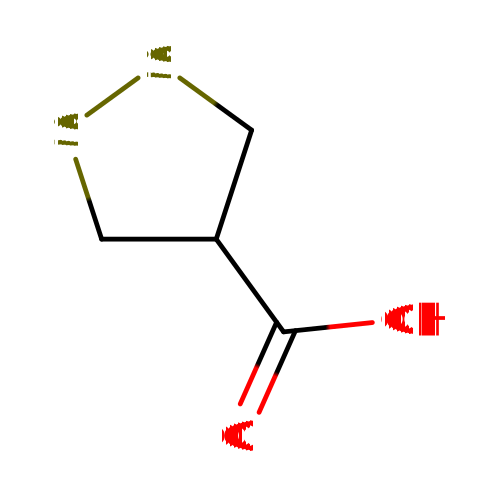
| Description | Asparagusic acid (1,2-dithiolane-4-carboxylic acid), also known as asparagusate, belongs to the class of organic compounds known as 1,2-dithiolane-4-carboxylic acids. These are organic compounds containing a 1,2-dithiolane ring that bears a carboxylic acid group at the 4-position. Asparagusic acid is a simple sulphur-containing 5-membered heterocyclic compound that appears to be unique to asparagus (Asparagus officinalis) [PMID: 24099657 ]. Asparagusic acid is a colorless solid with a melting point of 75.7–76.5 °C. Biosynthetic studies have shown that asparagusic acid is derived from isobutyric acid. The presence of the two adjacent sulphur atoms in asparagusic acid leads to an enhanced chemical reactivity, endowing it with biological properties including the ability to substitute potentially for α-lipoic acid. Specifically, Asparagusic acid and lipoic acid are similar in that both possess a 1,2-dithiolane ring with a carboxylic acid tethered to it. It has been reported that asparagusic acid can substitute for lipoic acid in α-keto-acid oxidation systems such as the citric acid cycle [PMID 24099657 ]. Asparagusic acid is the likely culprit responsible for the excretion of odorous urine following asparagus ingestion. Observations that eating asparagus results in a detectable change in the odour of urine have been recorded as early as 1702, when Louis Lémery noted "a powerful and disagreeable smell in the urine” [PMID: 31881716 ]. The most complete study on the cause of asparagus urine produced a table of 29 sulphur-containing odorants, including methanethiol, that are largely derived from the metabolism of asparagusic acid [PMID: 20876394 ]. This study suggested that while sulfur-containing compounds are potentially causal, it is also likely that the urine odour is the result of a complex mixture rather than a single component and that different individuals can produce different S-containing compounds – some of which are not particularly odorous. More than half a century ago it was recognized and reported that the phenomenon of humans producing smelly urine is actually not universal. It was later found that a specific polymorphism or SNP (in Chromosome 1 where the OR2 olfactory receptors are located) among certain individuals is responsible for the ability to smell odorous methanethiol (and other thiols) after asparagus consumption [PMID: 31881716 ]. In other words, certain individuals can secrete the smelly compounds but not smell them, others can smell the compounds despite not making them themselves and there are those that do both or neither. The “asparagus urine” smell typically begins in 15-30 minutes after the first bite of asparagus for most people and may last for up to 14 hours. A small percentage of people cannot smell the odor in “asparagus urine.” The inability to smell odors is called anosmia, and those unable to smell asparagus metabolites in their own urine as well as in others’ urine are said to be asparagus anosmic. |
|---|
| Structure | InChI=1S/C4H6O2S2/c5-4(6)3-1-7-8-2-3/h3H,1-2H2,(H,5,6) |
|---|
| Synonyms | | Value | Source |
|---|
| Asparagusate | ChEBI | | 1,2-Dithiolane-4-carboxylate | Kegg | | 1,2-Dithiolane-4-carboxylic acid | Generator | | 1,2-Dithiacyclopentane-4-carboxylic acid | HMDB | | Asparagusic acid | HMDB |
|
|---|
| Chemical Formula | C4H6O2S2 |
|---|
| Average Molecular Weight | 150.219 |
|---|
| Monoisotopic Molecular Weight | 149.980920816 |
|---|
| IUPAC Name | 1,2-dithiolane-4-carboxylic acid |
|---|
| Traditional Name | asparagusic acid |
|---|
| CAS Registry Number | 2224-02-4 |
|---|
| SMILES | OC(=O)C1CSSC1 |
|---|
| InChI Identifier | InChI=1S/C4H6O2S2/c5-4(6)3-1-7-8-2-3/h3H,1-2H2,(H,5,6) |
|---|
| InChI Key | AYGMEFRECNWRJC-UHFFFAOYSA-N |
|---|
| Chemical Taxonomy |
|---|
| Description | Belongs to the class of organic compounds known as 1,2-dithiolane-4-carboxylic acids. These are organic compounds containing a 1,2-dithiolane ring that bears a carboxylic acid group at the 4-position. |
|---|
| Kingdom | Organic compounds |
|---|
| Super Class | Organoheterocyclic compounds |
|---|
| Class | Dithiolanes |
|---|
| Sub Class | Dithiolanecarboxylic acids |
|---|
| Direct Parent | 1,2-dithiolane-4-carboxylic acids |
|---|
| Alternative Parents | |
|---|
| Substituents | - 1,2-dithiolane-4-carboxylic acid
- 1,2-dithiolane
- Organic disulfide
- Monocarboxylic acid or derivatives
- Carboxylic acid
- Carboxylic acid derivative
- Organic oxygen compound
- Organic oxide
- Hydrocarbon derivative
- Organooxygen compound
- Carbonyl group
- Aliphatic heteromonocyclic compound
|
|---|
| Molecular Framework | Aliphatic heteromonocyclic compounds |
|---|
| External Descriptors | |
|---|
| Ontology |
|---|
| Physiological effect | Not Available |
|---|
| Disposition | |
|---|
| Process | Not Available |
|---|
| Role | |
|---|
| Physical Properties |
|---|
| State | Solid |
|---|
| Experimental Molecular Properties | |
|---|
| Experimental Chromatographic Properties | Not Available |
|---|
| Predicted Molecular Properties | |
|---|
| Predicted Chromatographic Properties | Predicted Collision Cross SectionsPredicted Retention Times Underivatized| Chromatographic Method | Retention Time | Reference |
|---|
| Measured using a Waters Acquity ultraperformance liquid chromatography (UPLC) ethylene-bridged hybrid (BEH) C18 column (100 mm × 2.1 mm; 1.7 μmparticle diameter). Predicted by Afia on May 17, 2022. Predicted by Afia on May 17, 2022. | 2.7 minutes | 32390414 | | Predicted by Siyang on May 30, 2022 | 9.7068 minutes | 33406817 | | Predicted by Siyang using ReTip algorithm on June 8, 2022 | 2.82 minutes | 32390414 | | AjsUoB = Accucore 150 Amide HILIC with 10mM Ammonium Formate, 0.1% Formic Acid | 121.9 seconds | 40023050 | | Fem_Long = Waters ACQUITY UPLC HSS T3 C18 with Water:MeOH and 0.1% Formic Acid | 1516.6 seconds | 40023050 | | Fem_Lipids = Ascentis Express C18 with (60:40 water:ACN):(90:10 IPA:ACN) and 10mM NH4COOH + 0.1% Formic Acid | 369.4 seconds | 40023050 | | Life_Old = Waters ACQUITY UPLC BEH C18 with Water:(20:80 acetone:ACN) and 0.1% Formic Acid | 89.9 seconds | 40023050 | | Life_New = RP Waters ACQUITY UPLC HSS T3 C18 with Water:(30:70 MeOH:ACN) and 0.1% Formic Acid | 241.2 seconds | 40023050 | | RIKEN = Waters ACQUITY UPLC BEH C18 with Water:ACN and 0.1% Formic Acid | 67.2 seconds | 40023050 | | Eawag_XBridgeC18 = XBridge C18 3.5u 2.1x50 mm with Water:MeOH and 0.1% Formic Acid | 287.2 seconds | 40023050 | | BfG_NTS_RP1 =Agilent Zorbax Eclipse Plus C18 (2.1 mm x 150 mm, 3.5 um) with Water:ACN and 0.1% Formic Acid | 367.6 seconds | 40023050 | | HILIC_BDD_2 = Merck SeQuant ZIC-HILIC with ACN(0.1% formic acid):water(16 mM ammonium formate) | 402.8 seconds | 40023050 | | UniToyama_Atlantis = RP Waters Atlantis T3 (2.1 x 150 mm, 5 um) with ACN:Water and 0.1% Formic Acid | 694.9 seconds | 40023050 | | BDD_C18 = Hypersil Gold 1.9µm C18 with Water:ACN and 0.1% Formic Acid | 253.1 seconds | 40023050 | | UFZ_Phenomenex = Kinetex Core-Shell C18 2.6 um, 3.0 x 100 mm, Phenomenex with Water:MeOH and 0.1% Formic Acid | 929.2 seconds | 40023050 | | SNU_RIKEN_POS = Waters ACQUITY UPLC BEH C18 with Water:ACN and 0.1% Formic Acid | 254.9 seconds | 40023050 | | RPMMFDA = Waters ACQUITY UPLC BEH C18 with Water:ACN and 0.1% Formic Acid | 270.7 seconds | 40023050 | | MTBLS87 = Merck SeQuant ZIC-pHILIC column with ACN:Water and :ammonium carbonate | 547.7 seconds | 40023050 | | KI_GIAR_zic_HILIC_pH2_7 = Merck SeQuant ZIC-HILIC with ACN:Water and 0.1% FA | 340.9 seconds | 40023050 | | Meister zic-pHILIC pH9.3 = Merck SeQuant ZIC-pHILIC column with ACN:Water 5mM NH4Ac pH9.3 and 5mM ammonium acetate in water | 234.0 seconds | 40023050 |
Predicted Kovats Retention IndicesUnderivatizedDerivatized |
|---|
| GC-MS Spectra| Spectrum Type | Description | Splash Key | Deposition Date | Source | View |
|---|
| Predicted GC-MS | Predicted GC-MS Spectrum - Asparagusic acid GC-MS (Non-derivatized) - 70eV, Positive | splash10-0f6y-9700000000-fa3ab5cfd16223707d6a | 2017-09-01 | Wishart Lab | View Spectrum | | Predicted GC-MS | Predicted GC-MS Spectrum - Asparagusic acid GC-MS (1 TMS) - 70eV, Positive | splash10-0fk9-9610000000-d18b399d9263840adae2 | 2017-10-06 | Wishart Lab | View Spectrum | | Predicted GC-MS | Predicted GC-MS Spectrum - Asparagusic acid GC-MS (Non-derivatized) - 70eV, Positive | Not Available | 2021-10-12 | Wishart Lab | View Spectrum | | Predicted GC-MS | Predicted GC-MS Spectrum - Asparagusic acid GC-MS (Non-derivatized) - 70eV, Positive | Not Available | 2021-10-12 | Wishart Lab | View Spectrum |
MS/MS Spectra| Spectrum Type | Description | Splash Key | Deposition Date | Source | View |
|---|
| Predicted LC-MS/MS | Predicted LC-MS/MS Spectrum - Asparagusic acid 10V, Positive-QTOF | splash10-0ue9-0900000000-8328216b8a4ae814cbf3 | 2015-04-24 | Wishart Lab | View Spectrum | | Predicted LC-MS/MS | Predicted LC-MS/MS Spectrum - Asparagusic acid 20V, Positive-QTOF | splash10-0ue9-2900000000-c05f39b9b98ba14382a3 | 2015-04-24 | Wishart Lab | View Spectrum | | Predicted LC-MS/MS | Predicted LC-MS/MS Spectrum - Asparagusic acid 40V, Positive-QTOF | splash10-00di-9500000000-40853e90d1aaf9d03ef3 | 2015-04-24 | Wishart Lab | View Spectrum | | Predicted LC-MS/MS | Predicted LC-MS/MS Spectrum - Asparagusic acid 10V, Negative-QTOF | splash10-0udi-3900000000-55e81631466ad34ae53e | 2015-04-25 | Wishart Lab | View Spectrum | | Predicted LC-MS/MS | Predicted LC-MS/MS Spectrum - Asparagusic acid 20V, Negative-QTOF | splash10-0wms-7900000000-3861c63829c12ac606fe | 2015-04-25 | Wishart Lab | View Spectrum | | Predicted LC-MS/MS | Predicted LC-MS/MS Spectrum - Asparagusic acid 40V, Negative-QTOF | splash10-0ue9-9400000000-2c0e39286992c94c2d88 | 2015-04-25 | Wishart Lab | View Spectrum | | Predicted LC-MS/MS | Predicted LC-MS/MS Spectrum - Asparagusic acid 10V, Positive-QTOF | splash10-0udi-0900000000-02c2674a1528431c7f88 | 2021-09-24 | Wishart Lab | View Spectrum | | Predicted LC-MS/MS | Predicted LC-MS/MS Spectrum - Asparagusic acid 20V, Positive-QTOF | splash10-0pc0-7900000000-564d21ee5ebcd97044b8 | 2021-09-24 | Wishart Lab | View Spectrum | | Predicted LC-MS/MS | Predicted LC-MS/MS Spectrum - Asparagusic acid 40V, Positive-QTOF | splash10-0005-9000000000-52813164e9d33f6c90ee | 2021-09-24 | Wishart Lab | View Spectrum | | Predicted LC-MS/MS | Predicted LC-MS/MS Spectrum - Asparagusic acid 10V, Negative-QTOF | splash10-01ot-0900000000-bfc3f8635b76b27dd773 | 2021-09-24 | Wishart Lab | View Spectrum | | Predicted LC-MS/MS | Predicted LC-MS/MS Spectrum - Asparagusic acid 20V, Negative-QTOF | splash10-001i-9400000000-b6f8b89f65409275ff4f | 2021-09-24 | Wishart Lab | View Spectrum | | Predicted LC-MS/MS | Predicted LC-MS/MS Spectrum - Asparagusic acid 40V, Negative-QTOF | splash10-001i-9000000000-b54df5fd086565f234a1 | 2021-09-24 | Wishart Lab | View Spectrum |
NMR Spectra| Spectrum Type | Description | Deposition Date | Source | View |
|---|
| Predicted 1D NMR | 13C NMR Spectrum (1D, 100 MHz, D2O, predicted) | 2021-09-30 | Wishart Lab | View Spectrum | | Predicted 1D NMR | 1H NMR Spectrum (1D, 100 MHz, D2O, predicted) | 2021-09-30 | Wishart Lab | View Spectrum | | Predicted 1D NMR | 13C NMR Spectrum (1D, 1000 MHz, D2O, predicted) | 2021-09-30 | Wishart Lab | View Spectrum | | Predicted 1D NMR | 1H NMR Spectrum (1D, 1000 MHz, D2O, predicted) | 2021-09-30 | Wishart Lab | View Spectrum | | Predicted 1D NMR | 13C NMR Spectrum (1D, 200 MHz, D2O, predicted) | 2021-09-30 | Wishart Lab | View Spectrum | | Predicted 1D NMR | 1H NMR Spectrum (1D, 200 MHz, D2O, predicted) | 2021-09-30 | Wishart Lab | View Spectrum | | Predicted 1D NMR | 13C NMR Spectrum (1D, 300 MHz, D2O, predicted) | 2021-09-30 | Wishart Lab | View Spectrum | | Predicted 1D NMR | 1H NMR Spectrum (1D, 300 MHz, D2O, predicted) | 2021-09-30 | Wishart Lab | View Spectrum | | Predicted 1D NMR | 13C NMR Spectrum (1D, 400 MHz, D2O, predicted) | 2021-09-30 | Wishart Lab | View Spectrum | | Predicted 1D NMR | 1H NMR Spectrum (1D, 400 MHz, D2O, predicted) | 2021-09-30 | Wishart Lab | View Spectrum | | Predicted 1D NMR | 13C NMR Spectrum (1D, 500 MHz, D2O, predicted) | 2021-09-30 | Wishart Lab | View Spectrum | | Predicted 1D NMR | 1H NMR Spectrum (1D, 500 MHz, D2O, predicted) | 2021-09-30 | Wishart Lab | View Spectrum | | Predicted 1D NMR | 13C NMR Spectrum (1D, 600 MHz, D2O, predicted) | 2021-09-30 | Wishart Lab | View Spectrum | | Predicted 1D NMR | 1H NMR Spectrum (1D, 600 MHz, D2O, predicted) | 2021-09-30 | Wishart Lab | View Spectrum | | Predicted 1D NMR | 13C NMR Spectrum (1D, 700 MHz, D2O, predicted) | 2021-09-30 | Wishart Lab | View Spectrum | | Predicted 1D NMR | 1H NMR Spectrum (1D, 700 MHz, D2O, predicted) | 2021-09-30 | Wishart Lab | View Spectrum | | Predicted 1D NMR | 13C NMR Spectrum (1D, 800 MHz, D2O, predicted) | 2021-09-30 | Wishart Lab | View Spectrum | | Predicted 1D NMR | 1H NMR Spectrum (1D, 800 MHz, D2O, predicted) | 2021-09-30 | Wishart Lab | View Spectrum | | Predicted 1D NMR | 13C NMR Spectrum (1D, 900 MHz, D2O, predicted) | 2021-09-30 | Wishart Lab | View Spectrum | | Predicted 1D NMR | 1H NMR Spectrum (1D, 900 MHz, D2O, predicted) | 2021-09-30 | Wishart Lab | View Spectrum |
IR Spectra| Spectrum Type | Description | Deposition Date | Source | View |
|---|
| Predicted IR Spectrum | IR Ion Spectrum (Predicted IRIS Spectrum, Adduct: [M-H]-) | 2023-02-03 | FELIX lab | View Spectrum | | Predicted IR Spectrum | IR Ion Spectrum (Predicted IRIS Spectrum, Adduct: [M+H]+) | 2023-02-03 | FELIX lab | View Spectrum | | Predicted IR Spectrum | IR Ion Spectrum (Predicted IRIS Spectrum, Adduct: [M+Na]+) | 2023-02-03 | FELIX lab | View Spectrum |
|
|---|
| General References | - Mitchell SC, Waring RH: Asparagusic acid. Phytochemistry. 2014 Jan;97:5-10. doi: 10.1016/j.phytochem.2013.09.014. Epub 2013 Oct 4. [PubMed:24099657 ]
- Pegiou E, Mumm R, Acharya P, de Vos RCH, Hall RD: Green and White Asparagus (Asparagus officinalis): A Source of Developmental, Chemical and Urinary Intrigue. Metabolites. 2019 Dec 25;10(1):17. doi: 10.3390/metabo10010017. [PubMed:31881716 ]
- Pelchat ML, Bykowski C, Duke FF, Reed DR: Excretion and perception of a characteristic odor in urine after asparagus ingestion: a psychophysical and genetic study. Chem Senses. 2011 Jan;36(1):9-17. doi: 10.1093/chemse/bjq081. Epub 2010 Sep 27. [PubMed:20876394 ]
- (). Yannai, Shmuel. (2004) Dictionary of food compounds with CD-ROM: Additives, flavors, and ingredients. Boca Raton: Chapman & Hall/CRC.. .
|
|---|