| Record Information |
|---|
| Version | 5.0 |
|---|
| Status | Detected but not Quantified |
|---|
| Creation Date | 2012-09-06 21:02:44 UTC |
|---|
| Update Date | 2022-09-22 18:34:22 UTC |
|---|
| HMDB ID | HMDB0028848 |
|---|
| Secondary Accession Numbers | |
|---|
| Metabolite Identification |
|---|
| Common Name | Glycyl-Phenylalanine |
|---|
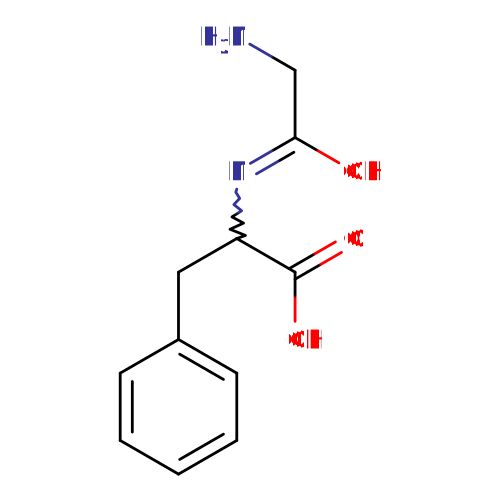
| Description | Glycyl-Phenylalanine is a dipeptide composed of glycine and phenylalanine. It is an incomplete breakdown product of protein digestion or protein catabolism. Some dipeptides are known to have physiological or cell-signaling effects although most are simply short-lived intermediates on their way to specific amino acid degradation pathways following further proteolysis. This dipeptide has not yet been identified in human tissues or biofluids and so it is classified as an 'Expected' metabolite. |
|---|
| Structure | NCC(O)=NC(CC1=CC=CC=C1)C(O)=O InChI=1S/C11H14N2O3/c12-7-10(14)13-9(11(15)16)6-8-4-2-1-3-5-8/h1-5,9H,6-7,12H2,(H,13,14)(H,15,16) |
|---|
| Synonyms | | Value | Source |
|---|
| Gly-phe | MeSH | | Gly-D-phenylalanine | MeSH | | Gly-L-phenylalanine | MeSH | | Glycyl-D-phenylalanine | MeSH | | Glycyl-L-phenylalanine | MeSH | | Glycylphenylalanine | MeSH | | Glycylphenylalanine monobrosylate, (L)-isomer | MeSH | | Glycylphenylalanine monohydrochloride, monohydrate, (L)-isomer | MeSH | | Glycylphenylalanine monotosylate, (L)-isomer | MeSH | | Glycylphenylalanine, (D)-isomer | MeSH | | Glycylphenylalanine, (L)-isomer | MeSH | | g-F Dipeptide | HMDB | | GF Dipeptide | HMDB | | Glycine phenylalanine dipeptide | HMDB | | Glycine-phenylalanine dipeptide | HMDB | | L-Glycyl-L-phenylalanine | HMDB | | 2-[(2-Amino-1-hydroxyethylidene)amino]-3-phenylpropanoate | Generator, HMDB |
|
|---|
| Chemical Formula | C11H14N2O3 |
|---|
| Average Molecular Weight | 222.2405 |
|---|
| Monoisotopic Molecular Weight | 222.100442324 |
|---|
| IUPAC Name | 2-[(2-amino-1-hydroxyethylidene)amino]-3-phenylpropanoic acid |
|---|
| Traditional Name | 2-[(2-amino-1-hydroxyethylidene)amino]-3-phenylpropanoic acid |
|---|
| CAS Registry Number | Not Available |
|---|
| SMILES | NCC(O)=NC(CC1=CC=CC=C1)C(O)=O |
|---|
| InChI Identifier | InChI=1S/C11H14N2O3/c12-7-10(14)13-9(11(15)16)6-8-4-2-1-3-5-8/h1-5,9H,6-7,12H2,(H,13,14)(H,15,16) |
|---|
| InChI Key | JBCLFWXMTIKCCB-UHFFFAOYSA-N |
|---|
| Chemical Taxonomy |
|---|
| Description | Belongs to the class of organic compounds known as dipeptides. These are organic compounds containing a sequence of exactly two alpha-amino acids joined by a peptide bond. |
|---|
| Kingdom | Organic compounds |
|---|
| Super Class | Organic acids and derivatives |
|---|
| Class | Carboxylic acids and derivatives |
|---|
| Sub Class | Amino acids, peptides, and analogues |
|---|
| Direct Parent | Dipeptides |
|---|
| Alternative Parents | |
|---|
| Substituents | - Alpha-dipeptide
- Phenylalanine or derivatives
- N-acyl-alpha amino acid or derivatives
- N-acyl-alpha-amino acid
- Alpha-amino acid amide
- 3-phenylpropanoic-acid
- Alpha-amino acid or derivatives
- Amphetamine or derivatives
- Monocyclic benzene moiety
- Benzenoid
- Amino acid or derivatives
- Amino acid
- Secondary carboxylic acid amide
- Carboxamide group
- Carboxylic acid
- Monocarboxylic acid or derivatives
- Organic nitrogen compound
- Organonitrogen compound
- Primary aliphatic amine
- Organooxygen compound
- Primary amine
- Carbonyl group
- Hydrocarbon derivative
- Organic oxide
- Organopnictogen compound
- Amine
- Organic oxygen compound
- Aromatic homomonocyclic compound
|
|---|
| Molecular Framework | Aromatic homomonocyclic compounds |
|---|
| External Descriptors | Not Available |
|---|
| Ontology |
|---|
| Physiological effect | Not Available |
|---|
| Disposition | |
|---|
| Process | Not Available |
|---|
| Role | Not Available |
|---|
| Physical Properties |
|---|
| State | Solid |
|---|
| Experimental Molecular Properties | | Property | Value | Reference |
|---|
| Melting Point | Not Available | Not Available | | Boiling Point | Not Available | Not Available | | Water Solubility | Not Available | Not Available | | LogP | -2.29 | Extrapolated |
|
|---|
| Experimental Chromatographic Properties | Not Available |
|---|
| Predicted Molecular Properties | |
|---|
| Predicted Chromatographic Properties | Predicted Collision Cross SectionsPredicted Retention Times Underivatized| Chromatographic Method | Retention Time | Reference |
|---|
| Measured using a Waters Acquity ultraperformance liquid chromatography (UPLC) ethylene-bridged hybrid (BEH) C18 column (100 mm × 2.1 mm; 1.7 μmparticle diameter). Predicted by Afia on May 17, 2022. Predicted by Afia on May 17, 2022. | 1.56 minutes | 32390414 | | Predicted by Siyang on May 30, 2022 | 10.0049 minutes | 33406817 | | Predicted by Siyang using ReTip algorithm on June 8, 2022 | 7.49 minutes | 32390414 | | AjsUoB = Accucore 150 Amide HILIC with 10mM Ammonium Formate, 0.1% Formic Acid | 269.2 seconds | 40023050 |
Predicted Kovats Retention IndicesUnderivatizedDerivatized| Derivative Name / Structure | SMILES | Kovats RI Value | Column Type | Reference |
|---|
| Glycyl-Phenylalanine,1TMS,isomer #1 | C[Si](C)(C)OC(CN)=NC(CC1=CC=CC=C1)C(=O)O | 2039.8 | Semi standard non polar | 33892256 | | Glycyl-Phenylalanine,1TMS,isomer #2 | C[Si](C)(C)OC(=O)C(CC1=CC=CC=C1)N=C(O)CN | 2058.6 | Semi standard non polar | 33892256 | | Glycyl-Phenylalanine,1TMS,isomer #3 | C[Si](C)(C)NCC(O)=NC(CC1=CC=CC=C1)C(=O)O | 2171.9 | Semi standard non polar | 33892256 | | Glycyl-Phenylalanine,2TMS,isomer #1 | C[Si](C)(C)OC(=O)C(CC1=CC=CC=C1)N=C(CN)O[Si](C)(C)C | 2047.6 | Semi standard non polar | 33892256 | | Glycyl-Phenylalanine,2TMS,isomer #2 | C[Si](C)(C)NCC(=NC(CC1=CC=CC=C1)C(=O)O)O[Si](C)(C)C | 2101.7 | Semi standard non polar | 33892256 | | Glycyl-Phenylalanine,2TMS,isomer #3 | C[Si](C)(C)NCC(O)=NC(CC1=CC=CC=C1)C(=O)O[Si](C)(C)C | 2145.0 | Semi standard non polar | 33892256 | | Glycyl-Phenylalanine,2TMS,isomer #4 | C[Si](C)(C)N(CC(O)=NC(CC1=CC=CC=C1)C(=O)O)[Si](C)(C)C | 2266.8 | Semi standard non polar | 33892256 | | Glycyl-Phenylalanine,3TMS,isomer #1 | C[Si](C)(C)NCC(=NC(CC1=CC=CC=C1)C(=O)O[Si](C)(C)C)O[Si](C)(C)C | 2074.8 | Semi standard non polar | 33892256 | | Glycyl-Phenylalanine,3TMS,isomer #1 | C[Si](C)(C)NCC(=NC(CC1=CC=CC=C1)C(=O)O[Si](C)(C)C)O[Si](C)(C)C | 2118.8 | Standard non polar | 33892256 | | Glycyl-Phenylalanine,3TMS,isomer #2 | C[Si](C)(C)OC(CN([Si](C)(C)C)[Si](C)(C)C)=NC(CC1=CC=CC=C1)C(=O)O | 2255.5 | Semi standard non polar | 33892256 | | Glycyl-Phenylalanine,3TMS,isomer #2 | C[Si](C)(C)OC(CN([Si](C)(C)C)[Si](C)(C)C)=NC(CC1=CC=CC=C1)C(=O)O | 2252.9 | Standard non polar | 33892256 | | Glycyl-Phenylalanine,3TMS,isomer #3 | C[Si](C)(C)OC(=O)C(CC1=CC=CC=C1)N=C(O)CN([Si](C)(C)C)[Si](C)(C)C | 2266.3 | Semi standard non polar | 33892256 | | Glycyl-Phenylalanine,3TMS,isomer #3 | C[Si](C)(C)OC(=O)C(CC1=CC=CC=C1)N=C(O)CN([Si](C)(C)C)[Si](C)(C)C | 2231.0 | Standard non polar | 33892256 | | Glycyl-Phenylalanine,4TMS,isomer #1 | C[Si](C)(C)OC(=O)C(CC1=CC=CC=C1)N=C(CN([Si](C)(C)C)[Si](C)(C)C)O[Si](C)(C)C | 2276.3 | Semi standard non polar | 33892256 | | Glycyl-Phenylalanine,4TMS,isomer #1 | C[Si](C)(C)OC(=O)C(CC1=CC=CC=C1)N=C(CN([Si](C)(C)C)[Si](C)(C)C)O[Si](C)(C)C | 2247.6 | Standard non polar | 33892256 | | Glycyl-Phenylalanine,1TBDMS,isomer #1 | CC(C)(C)[Si](C)(C)OC(CN)=NC(CC1=CC=CC=C1)C(=O)O | 2269.7 | Semi standard non polar | 33892256 | | Glycyl-Phenylalanine,1TBDMS,isomer #2 | CC(C)(C)[Si](C)(C)OC(=O)C(CC1=CC=CC=C1)N=C(O)CN | 2282.1 | Semi standard non polar | 33892256 | | Glycyl-Phenylalanine,1TBDMS,isomer #3 | CC(C)(C)[Si](C)(C)NCC(O)=NC(CC1=CC=CC=C1)C(=O)O | 2370.6 | Semi standard non polar | 33892256 | | Glycyl-Phenylalanine,2TBDMS,isomer #1 | CC(C)(C)[Si](C)(C)OC(=O)C(CC1=CC=CC=C1)N=C(CN)O[Si](C)(C)C(C)(C)C | 2472.4 | Semi standard non polar | 33892256 | | Glycyl-Phenylalanine,2TBDMS,isomer #2 | CC(C)(C)[Si](C)(C)NCC(=NC(CC1=CC=CC=C1)C(=O)O)O[Si](C)(C)C(C)(C)C | 2521.4 | Semi standard non polar | 33892256 | | Glycyl-Phenylalanine,2TBDMS,isomer #3 | CC(C)(C)[Si](C)(C)NCC(O)=NC(CC1=CC=CC=C1)C(=O)O[Si](C)(C)C(C)(C)C | 2534.6 | Semi standard non polar | 33892256 | | Glycyl-Phenylalanine,2TBDMS,isomer #4 | CC(C)(C)[Si](C)(C)N(CC(O)=NC(CC1=CC=CC=C1)C(=O)O)[Si](C)(C)C(C)(C)C | 2646.1 | Semi standard non polar | 33892256 | | Glycyl-Phenylalanine,3TBDMS,isomer #1 | CC(C)(C)[Si](C)(C)NCC(=NC(CC1=CC=CC=C1)C(=O)O[Si](C)(C)C(C)(C)C)O[Si](C)(C)C(C)(C)C | 2686.2 | Semi standard non polar | 33892256 | | Glycyl-Phenylalanine,3TBDMS,isomer #1 | CC(C)(C)[Si](C)(C)NCC(=NC(CC1=CC=CC=C1)C(=O)O[Si](C)(C)C(C)(C)C)O[Si](C)(C)C(C)(C)C | 2656.0 | Standard non polar | 33892256 | | Glycyl-Phenylalanine,3TBDMS,isomer #2 | CC(C)(C)[Si](C)(C)OC(CN([Si](C)(C)C(C)(C)C)[Si](C)(C)C(C)(C)C)=NC(CC1=CC=CC=C1)C(=O)O | 2904.2 | Semi standard non polar | 33892256 | | Glycyl-Phenylalanine,3TBDMS,isomer #2 | CC(C)(C)[Si](C)(C)OC(CN([Si](C)(C)C(C)(C)C)[Si](C)(C)C(C)(C)C)=NC(CC1=CC=CC=C1)C(=O)O | 2758.8 | Standard non polar | 33892256 | | Glycyl-Phenylalanine,3TBDMS,isomer #3 | CC(C)(C)[Si](C)(C)OC(=O)C(CC1=CC=CC=C1)N=C(O)CN([Si](C)(C)C(C)(C)C)[Si](C)(C)C(C)(C)C | 2859.1 | Semi standard non polar | 33892256 | | Glycyl-Phenylalanine,3TBDMS,isomer #3 | CC(C)(C)[Si](C)(C)OC(=O)C(CC1=CC=CC=C1)N=C(O)CN([Si](C)(C)C(C)(C)C)[Si](C)(C)C(C)(C)C | 2806.8 | Standard non polar | 33892256 | | Glycyl-Phenylalanine,4TBDMS,isomer #1 | CC(C)(C)[Si](C)(C)OC(=O)C(CC1=CC=CC=C1)N=C(CN([Si](C)(C)C(C)(C)C)[Si](C)(C)C(C)(C)C)O[Si](C)(C)C(C)(C)C | 3089.1 | Semi standard non polar | 33892256 | | Glycyl-Phenylalanine,4TBDMS,isomer #1 | CC(C)(C)[Si](C)(C)OC(=O)C(CC1=CC=CC=C1)N=C(CN([Si](C)(C)C(C)(C)C)[Si](C)(C)C(C)(C)C)O[Si](C)(C)C(C)(C)C | 2933.4 | Standard non polar | 33892256 |
|
|---|
| Disease References | | Colorectal cancer |
|---|
- Brown DG, Rao S, Weir TL, O'Malia J, Bazan M, Brown RJ, Ryan EP: Metabolomics and metabolic pathway networks from human colorectal cancers, adjacent mucosa, and stool. Cancer Metab. 2016 Jun 6;4:11. doi: 10.1186/s40170-016-0151-y. eCollection 2016. [PubMed:27275383 ]
- Sinha R, Ahn J, Sampson JN, Shi J, Yu G, Xiong X, Hayes RB, Goedert JJ: Fecal Microbiota, Fecal Metabolome, and Colorectal Cancer Interrelations. PLoS One. 2016 Mar 25;11(3):e0152126. doi: 10.1371/journal.pone.0152126. eCollection 2016. [PubMed:27015276 ]
- Goedert JJ, Sampson JN, Moore SC, Xiao Q, Xiong X, Hayes RB, Ahn J, Shi J, Sinha R: Fecal metabolomics: assay performance and association with colorectal cancer. Carcinogenesis. 2014 Sep;35(9):2089-96. doi: 10.1093/carcin/bgu131. Epub 2014 Jul 18. [PubMed:25037050 ]
|
|
|---|
| General References | - Rai DK, Mooney A, Kenny PT: A tandem mass spectrometric investigation of N-(3-ferrocenyl-2-naphthoyl) dipeptide ethyl esters and N-(6-ferrocenyl-2-naphthoyl) dipeptide ethyl esters. Rapid Commun Mass Spectrom. 2011 Oct 15;25(19):2905-10. doi: 10.1002/rcm.5184. [PubMed:21913269 ]
- Pingitore F, Wesdemiotis C: Characterization of dipeptide isomers by tandem mass spectrometry of their mono- versus dilithiated complexes. Anal Chem. 2005 Mar 15;77(6):1796-806. [PubMed:15762588 ]
- Girelli AM, Mattei E, Messina A, Tarola AM: Inhibition of polyphenol oxidases activity by various dipeptides. J Agric Food Chem. 2004 May 19;52(10):2741-5. [PubMed:15137808 ]
- Thirumoorthy K, Soni K, Nandi N: The molecular recognition of dipeptide by oligoglycyl head group of amphiphile: a quantum chemical study. J Nanosci Nanotechnol. 2009 Jan;9(1):77-89. [PubMed:19441281 ]
- Turecek F, Syrstad EA, Seymour JL, Chen X, Yao C: Peptide cation-radicals. A computational study of the competition between peptide N-Calpha bond cleavage and loss of the side chain in the [GlyPhe-NH2 + 2H]+. cation-radical. J Mass Spectrom. 2003 Oct;38(10):1093-104. [PubMed:14595859 ]
- Anderson L, Bussler B, Martins H, Dufton M: Enkephalin-processing oligopeptidases in cobra venom: inhibition by thiorphan and bestatin reveals co-operative actions. Toxicon. 1998 May;36(5):719-28. [PubMed:9655632 ]
- Duman JG, Chen L, Palmer AE, Hille B: Contributions of intracellular compartments to calcium dynamics: implicating an acidic store. Traffic. 2006 Jul;7(7):859-72. [PubMed:16787398 ]
- Epand RM: Virus replication inhibitory peptide inhibits the conversion of phospholipid bilayers to the hexagonal phase. Biosci Rep. 1986 Jul;6(7):647-53. [PubMed:3779040 ]
- Lopez JJ, Camello-Almaraz C, Pariente JA, Salido GM, Rosado JA: Ca2+ accumulation into acidic organelles mediated by Ca2+- and vacuolar H+-ATPases in human platelets. Biochem J. 2005 Aug 15;390(Pt 1):243-52. [PubMed:15847604 ]
- Tobin MB, Cole SC, Miller JR, Baldwin JE, Sutherland JD: Amino-acid substitutions in the cleavage site of acyl-coenzyme A:isopenicillin N acyltransferase from Penicillium chrysogenum: effect on proenzyme cleavage and activity. Gene. 1995 Aug 30;162(1):29-35. [PubMed:7557412 ]
|
|---|