| Record Information |
|---|
| Version | 5.0 |
|---|
| Status | Detected and Quantified |
|---|
| Creation Date | 2005-11-16 15:48:42 UTC |
|---|
| Update Date | 2021-09-14 15:38:58 UTC |
|---|
| HMDB ID | HMDB0000175 |
|---|
| Secondary Accession Numbers | |
|---|
| Metabolite Identification |
|---|
| Common Name | Inosinic acid |
|---|
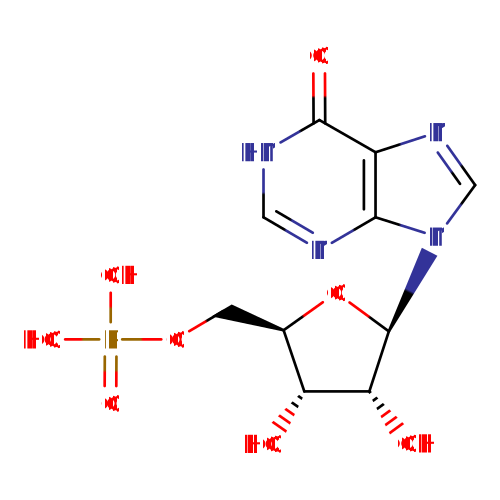
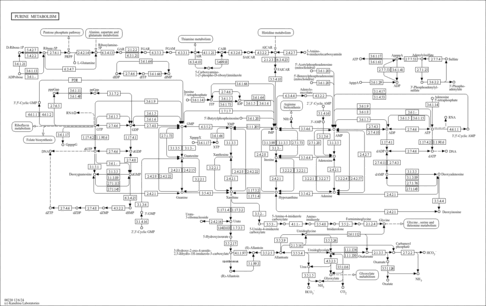
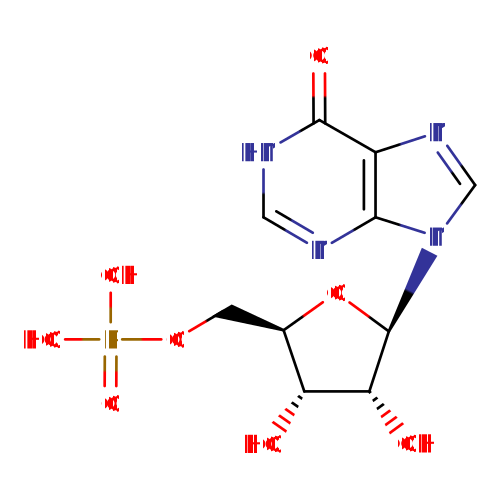
| Description | Inosinic acid, also known as inosine monophosphate, IMP, 5'-inosinate or 5'-IMP, belongs to the class of organic compounds known as purine ribonucleoside monophosphates. These are nucleotides consisting of a purine base linked to a ribose to which one monophosphate group is attached. IMP is also classified as a nucleotide (a nucleoside monophosphate). Inosinic acid exists in all living species, ranging from bacteria to plants to humans. IMP is widely used as a flavor enhancer. In the food industry it is known as E number reference E630. Inosinic acid can be converted into various salts including disodium inosinate (E631), dipotassium inosinate (E632), and calcium inosinate (E633). These three inosinate compounds are used as flavor enhancers for the basic taste umami. These inosinate salts are mostly used in soups, sauces, and seasonings for the intensification and balance of the flavor of meat. Inosinic acid is typically obtained from chicken byproducts or other meat industry waste. Inosinic acid or IMP is important in metabolism. It is the ribonucleotide of hypoxanthine and the first nucleotide formed during the synthesis of purine nucleotides. It can also be formed by the deamination of adenosine monophosphate by AMP deaminase. GMP is formed by the inosinate oxidation to xanthylate (XMP). Within humans, inosinic acid participates in a number of enzymatic reactions. In particular, inosinic acid can be converted into phosphoribosyl formamidocarboxamide; which is catalyzed by the bifunctional purine biosynthesis protein. In addition, inosinic acid can be converted into xanthylic acid; which is catalyzed by the enzyme inosine-5'-monophosphate dehydrogenase 1. |
|---|
| Structure | O[C@@H]1[C@@H](COP(O)(O)=O)O[C@H]([C@@H]1O)N1C=NC2=C1N=CNC2=O InChI=1S/C10H13N4O8P/c15-6-4(1-21-23(18,19)20)22-10(7(6)16)14-3-13-5-8(14)11-2-12-9(5)17/h2-4,6-7,10,15-16H,1H2,(H,11,12,17)(H2,18,19,20)/t4-,6-,7-,10-/m1/s1 |
|---|
| Synonyms | | Value | Source |
|---|
| 2'-Inosine-5'-monophosphate | ChEBI | | 5'-IMP | ChEBI | | 5'-Inosinate | ChEBI | | 5'-Inosine monophosphate | ChEBI | | 5'-Inosinic acid | ChEBI | | Hypoxanthosine 5'-monophosphate | ChEBI | | Inosine 5'-monophosphate | ChEBI | | Inosine 5'-phosphate | ChEBI | | Inosine monophosphate | ChEBI | | Ribosylhypoxanthine monophosphate | ChEBI | | 2'-Inosine-5'-monophosphoric acid | Generator | | 5'-Inosine monophosphoric acid | Generator | | Hypoxanthosine 5'-monophosphoric acid | Generator | | Inosine 5'-monophosphoric acid | Generator | | Inosine 5'-phosphoric acid | Generator | | Inosine monophosphoric acid | Generator | | Ribosylhypoxanthine monophosphoric acid | Generator | | Inosinate | Generator | | IMP | HMDB | | Inosine-5'-monophosphate | HMDB | | Inosinic acids | HMDB | | Inosinate, sodium | HMDB | | monoPhosphate, inosine | HMDB | | monoPhosphate, ribosylhypoxanthine | HMDB | | Sodium inosinate | HMDB | | Acid, inosinic | HMDB | | Acids, inosinic | HMDB |
|
|---|
| Chemical Formula | C10H13N4O8P |
|---|
| Average Molecular Weight | 348.206 |
|---|
| Monoisotopic Molecular Weight | 348.047099924 |
|---|
| IUPAC Name | {[(2R,3S,4R,5R)-3,4-dihydroxy-5-(6-oxo-6,9-dihydro-1H-purin-9-yl)oxolan-2-yl]methoxy}phosphonic acid |
|---|
| Traditional Name | inosine-5'-monophosphate |
|---|
| CAS Registry Number | 131-99-7 |
|---|
| SMILES | O[C@@H]1[C@@H](COP(O)(O)=O)O[C@H]([C@@H]1O)N1C=NC2=C1N=CNC2=O |
|---|
| InChI Identifier | InChI=1S/C10H13N4O8P/c15-6-4(1-21-23(18,19)20)22-10(7(6)16)14-3-13-5-8(14)11-2-12-9(5)17/h2-4,6-7,10,15-16H,1H2,(H,11,12,17)(H2,18,19,20)/t4-,6-,7-,10-/m1/s1 |
|---|
| InChI Key | GRSZFWQUAKGDAV-KQYNXXCUSA-N |
|---|
| Chemical Taxonomy |
|---|
| Description | Belongs to the class of organic compounds known as purine ribonucleoside monophosphates. These are nucleotides consisting of a purine base linked to a ribose to which one monophosphate group is attached. |
|---|
| Kingdom | Organic compounds |
|---|
| Super Class | Nucleosides, nucleotides, and analogues |
|---|
| Class | Purine nucleotides |
|---|
| Sub Class | Purine ribonucleotides |
|---|
| Direct Parent | Purine ribonucleoside monophosphates |
|---|
| Alternative Parents | |
|---|
| Substituents | - Purine ribonucleoside monophosphate
- Pentose phosphate
- Pentose-5-phosphate
- Glycosyl compound
- N-glycosyl compound
- 6-oxopurine
- Hypoxanthine
- Monosaccharide phosphate
- Pentose monosaccharide
- Imidazopyrimidine
- Purine
- Pyrimidone
- Monoalkyl phosphate
- Alkyl phosphate
- Pyrimidine
- Phosphoric acid ester
- Organic phosphoric acid derivative
- N-substituted imidazole
- Monosaccharide
- Tetrahydrofuran
- Vinylogous amide
- Azole
- Imidazole
- Heteroaromatic compound
- Secondary alcohol
- 1,2-diol
- Lactam
- Organoheterocyclic compound
- Azacycle
- Oxacycle
- Alcohol
- Organic oxide
- Organopnictogen compound
- Organic oxygen compound
- Organic nitrogen compound
- Organooxygen compound
- Organonitrogen compound
- Hydrocarbon derivative
- Aromatic heteropolycyclic compound
|
|---|
| Molecular Framework | Aromatic heteropolycyclic compounds |
|---|
| External Descriptors | |
|---|
| Ontology |
|---|
| Physiological effect | |
|---|
| Disposition | |
|---|
| Process | |
|---|
| Role | |
|---|
| Physical Properties |
|---|
| State | Solid |
|---|
| Experimental Molecular Properties | | Property | Value | Reference |
|---|
| Melting Point | Not Available | Not Available | | Boiling Point | Not Available | Not Available | | Water Solubility | Not Available | Not Available | | LogP | Not Available | Not Available |
|
|---|
| Experimental Chromatographic Properties | Experimental Collision Cross Sections |
|---|
| Predicted Molecular Properties | |
|---|
| Predicted Chromatographic Properties | Predicted Collision Cross SectionsPredicted Retention Times Underivatized| Chromatographic Method | Retention Time | Reference |
|---|
| Measured using a Waters Acquity ultraperformance liquid chromatography (UPLC) ethylene-bridged hybrid (BEH) C18 column (100 mm × 2.1 mm; 1.7 μmparticle diameter). Predicted by Afia on May 17, 2022. Predicted by Afia on May 17, 2022. | 2.52 minutes | 32390414 | | Predicted by Siyang on May 30, 2022 | 9.4692 minutes | 33406817 | | Predicted by Siyang using ReTip algorithm on June 8, 2022 | 9.37 minutes | 32390414 | | AjsUoB = Accucore 150 Amide HILIC with 10mM Ammonium Formate, 0.1% Formic Acid | 378.8 seconds | 40023050 | | Fem_Long = Waters ACQUITY UPLC HSS T3 C18 with Water:MeOH and 0.1% Formic Acid | 546.0 seconds | 40023050 | | Fem_Lipids = Ascentis Express C18 with (60:40 water:ACN):(90:10 IPA:ACN) and 10mM NH4COOH + 0.1% Formic Acid | 249.4 seconds | 40023050 | | Life_Old = Waters ACQUITY UPLC BEH C18 with Water:(20:80 acetone:ACN) and 0.1% Formic Acid | 45.5 seconds | 40023050 | | Life_New = RP Waters ACQUITY UPLC HSS T3 C18 with Water:(30:70 MeOH:ACN) and 0.1% Formic Acid | 161.7 seconds | 40023050 | | RIKEN = Waters ACQUITY UPLC BEH C18 with Water:ACN and 0.1% Formic Acid | 58.0 seconds | 40023050 | | Eawag_XBridgeC18 = XBridge C18 3.5u 2.1x50 mm with Water:MeOH and 0.1% Formic Acid | 330.9 seconds | 40023050 | | BfG_NTS_RP1 =Agilent Zorbax Eclipse Plus C18 (2.1 mm x 150 mm, 3.5 um) with Water:ACN and 0.1% Formic Acid | 268.0 seconds | 40023050 | | HILIC_BDD_2 = Merck SeQuant ZIC-HILIC with ACN(0.1% formic acid):water(16 mM ammonium formate) | 793.0 seconds | 40023050 | | UniToyama_Atlantis = RP Waters Atlantis T3 (2.1 x 150 mm, 5 um) with ACN:Water and 0.1% Formic Acid | 568.5 seconds | 40023050 | | BDD_C18 = Hypersil Gold 1.9µm C18 with Water:ACN and 0.1% Formic Acid | 72.5 seconds | 40023050 | | UFZ_Phenomenex = Kinetex Core-Shell C18 2.6 um, 3.0 x 100 mm, Phenomenex with Water:MeOH and 0.1% Formic Acid | 686.4 seconds | 40023050 | | SNU_RIKEN_POS = Waters ACQUITY UPLC BEH C18 with Water:ACN and 0.1% Formic Acid | 178.9 seconds | 40023050 | | RPMMFDA = Waters ACQUITY UPLC BEH C18 with Water:ACN and 0.1% Formic Acid | 227.8 seconds | 40023050 | | MTBLS87 = Merck SeQuant ZIC-pHILIC column with ACN:Water and :ammonium carbonate | 826.7 seconds | 40023050 | | KI_GIAR_zic_HILIC_pH2_7 = Merck SeQuant ZIC-HILIC with ACN:Water and 0.1% FA | 386.7 seconds | 40023050 | | Meister zic-pHILIC pH9.3 = Merck SeQuant ZIC-pHILIC column with ACN:Water 5mM NH4Ac pH9.3 and 5mM ammonium acetate in water | 419.2 seconds | 40023050 |
Predicted Kovats Retention IndicesUnderivatizedDerivatized| Derivative Name / Structure | SMILES | Kovats RI Value | Column Type | Reference |
|---|
| Inosinic acid,1TMS,isomer #1 | C[Si](C)(C)O[C@@H]1[C@@H](COP(=O)(O)O)O[C@@H](N2C=NC3=C2N=C[NH]C3=O)[C@@H]1O | 2828.4 | Semi standard non polar | 33892256 | | Inosinic acid,1TMS,isomer #2 | C[Si](C)(C)O[C@@H]1[C@H](O)[C@@H](COP(=O)(O)O)O[C@H]1N1C=NC2=C1N=C[NH]C2=O | 2803.7 | Semi standard non polar | 33892256 | | Inosinic acid,1TMS,isomer #3 | C[Si](C)(C)OP(=O)(O)OC[C@H]1O[C@@H](N2C=NC3=C2N=C[NH]C3=O)[C@H](O)[C@@H]1O | 2972.8 | Semi standard non polar | 33892256 | | Inosinic acid,1TMS,isomer #4 | C[Si](C)(C)N1C=NC2=C(N=CN2[C@@H]2O[C@H](COP(=O)(O)O)[C@@H](O)[C@H]2O)C1=O | 2958.2 | Semi standard non polar | 33892256 | | Inosinic acid,2TMS,isomer #1 | C[Si](C)(C)O[C@@H]1[C@@H](COP(=O)(O)O)O[C@@H](N2C=NC3=C2N=C[NH]C3=O)[C@@H]1O[Si](C)(C)C | 2724.5 | Semi standard non polar | 33892256 | | Inosinic acid,2TMS,isomer #2 | C[Si](C)(C)O[C@@H]1[C@@H](COP(=O)(O)O[Si](C)(C)C)O[C@@H](N2C=NC3=C2N=C[NH]C3=O)[C@@H]1O | 2903.1 | Semi standard non polar | 33892256 | | Inosinic acid,2TMS,isomer #3 | C[Si](C)(C)O[C@@H]1[C@@H](COP(=O)(O)O)O[C@@H](N2C=NC3=C2N=CN([Si](C)(C)C)C3=O)[C@@H]1O | 2890.9 | Semi standard non polar | 33892256 | | Inosinic acid,2TMS,isomer #4 | C[Si](C)(C)O[C@@H]1[C@H](O)[C@@H](COP(=O)(O)O[Si](C)(C)C)O[C@H]1N1C=NC2=C1N=C[NH]C2=O | 2886.8 | Semi standard non polar | 33892256 | | Inosinic acid,2TMS,isomer #5 | C[Si](C)(C)O[C@@H]1[C@H](O)[C@@H](COP(=O)(O)O)O[C@H]1N1C=NC2=C1N=CN([Si](C)(C)C)C2=O | 2873.1 | Semi standard non polar | 33892256 | | Inosinic acid,2TMS,isomer #6 | C[Si](C)(C)OP(=O)(OC[C@H]1O[C@@H](N2C=NC3=C2N=C[NH]C3=O)[C@H](O)[C@@H]1O)O[Si](C)(C)C | 2949.3 | Semi standard non polar | 33892256 | | Inosinic acid,2TMS,isomer #7 | C[Si](C)(C)OP(=O)(O)OC[C@H]1O[C@@H](N2C=NC3=C2N=CN([Si](C)(C)C)C3=O)[C@H](O)[C@@H]1O | 3022.7 | Semi standard non polar | 33892256 | | Inosinic acid,3TMS,isomer #1 | C[Si](C)(C)O[C@@H]1[C@@H](COP(=O)(O)O[Si](C)(C)C)O[C@@H](N2C=NC3=C2N=C[NH]C3=O)[C@@H]1O[Si](C)(C)C | 2862.3 | Semi standard non polar | 33892256 | | Inosinic acid,3TMS,isomer #1 | C[Si](C)(C)O[C@@H]1[C@@H](COP(=O)(O)O[Si](C)(C)C)O[C@@H](N2C=NC3=C2N=C[NH]C3=O)[C@@H]1O[Si](C)(C)C | 3269.0 | Standard non polar | 33892256 | | Inosinic acid,3TMS,isomer #1 | C[Si](C)(C)O[C@@H]1[C@@H](COP(=O)(O)O[Si](C)(C)C)O[C@@H](N2C=NC3=C2N=C[NH]C3=O)[C@@H]1O[Si](C)(C)C | 4216.3 | Standard polar | 33892256 | | Inosinic acid,3TMS,isomer #2 | C[Si](C)(C)O[C@@H]1[C@@H](COP(=O)(O)O)O[C@@H](N2C=NC3=C2N=CN([Si](C)(C)C)C3=O)[C@@H]1O[Si](C)(C)C | 2853.7 | Semi standard non polar | 33892256 | | Inosinic acid,3TMS,isomer #2 | C[Si](C)(C)O[C@@H]1[C@@H](COP(=O)(O)O)O[C@@H](N2C=NC3=C2N=CN([Si](C)(C)C)C3=O)[C@@H]1O[Si](C)(C)C | 3314.7 | Standard non polar | 33892256 | | Inosinic acid,3TMS,isomer #2 | C[Si](C)(C)O[C@@H]1[C@@H](COP(=O)(O)O)O[C@@H](N2C=NC3=C2N=CN([Si](C)(C)C)C3=O)[C@@H]1O[Si](C)(C)C | 4596.7 | Standard polar | 33892256 | | Inosinic acid,3TMS,isomer #3 | C[Si](C)(C)O[C@@H]1[C@@H](COP(=O)(O[Si](C)(C)C)O[Si](C)(C)C)O[C@@H](N2C=NC3=C2N=C[NH]C3=O)[C@@H]1O | 2908.2 | Semi standard non polar | 33892256 | | Inosinic acid,3TMS,isomer #3 | C[Si](C)(C)O[C@@H]1[C@@H](COP(=O)(O[Si](C)(C)C)O[Si](C)(C)C)O[C@@H](N2C=NC3=C2N=C[NH]C3=O)[C@@H]1O | 3259.3 | Standard non polar | 33892256 | | Inosinic acid,3TMS,isomer #3 | C[Si](C)(C)O[C@@H]1[C@@H](COP(=O)(O[Si](C)(C)C)O[Si](C)(C)C)O[C@@H](N2C=NC3=C2N=C[NH]C3=O)[C@@H]1O | 3956.1 | Standard polar | 33892256 | | Inosinic acid,3TMS,isomer #4 | C[Si](C)(C)O[C@@H]1[C@@H](COP(=O)(O)O[Si](C)(C)C)O[C@@H](N2C=NC3=C2N=CN([Si](C)(C)C)C3=O)[C@@H]1O | 2981.7 | Semi standard non polar | 33892256 | | Inosinic acid,3TMS,isomer #4 | C[Si](C)(C)O[C@@H]1[C@@H](COP(=O)(O)O[Si](C)(C)C)O[C@@H](N2C=NC3=C2N=CN([Si](C)(C)C)C3=O)[C@@H]1O | 3255.2 | Standard non polar | 33892256 | | Inosinic acid,3TMS,isomer #4 | C[Si](C)(C)O[C@@H]1[C@@H](COP(=O)(O)O[Si](C)(C)C)O[C@@H](N2C=NC3=C2N=CN([Si](C)(C)C)C3=O)[C@@H]1O | 4280.3 | Standard polar | 33892256 | | Inosinic acid,3TMS,isomer #5 | C[Si](C)(C)O[C@@H]1[C@H](O)[C@@H](COP(=O)(O[Si](C)(C)C)O[Si](C)(C)C)O[C@H]1N1C=NC2=C1N=C[NH]C2=O | 2895.7 | Semi standard non polar | 33892256 | | Inosinic acid,3TMS,isomer #5 | C[Si](C)(C)O[C@@H]1[C@H](O)[C@@H](COP(=O)(O[Si](C)(C)C)O[Si](C)(C)C)O[C@H]1N1C=NC2=C1N=C[NH]C2=O | 3265.1 | Standard non polar | 33892256 | | Inosinic acid,3TMS,isomer #5 | C[Si](C)(C)O[C@@H]1[C@H](O)[C@@H](COP(=O)(O[Si](C)(C)C)O[Si](C)(C)C)O[C@H]1N1C=NC2=C1N=C[NH]C2=O | 3988.7 | Standard polar | 33892256 | | Inosinic acid,3TMS,isomer #6 | C[Si](C)(C)O[C@@H]1[C@H](O)[C@@H](COP(=O)(O)O[Si](C)(C)C)O[C@H]1N1C=NC2=C1N=CN([Si](C)(C)C)C2=O | 2966.7 | Semi standard non polar | 33892256 | | Inosinic acid,3TMS,isomer #6 | C[Si](C)(C)O[C@@H]1[C@H](O)[C@@H](COP(=O)(O)O[Si](C)(C)C)O[C@H]1N1C=NC2=C1N=CN([Si](C)(C)C)C2=O | 3256.6 | Standard non polar | 33892256 | | Inosinic acid,3TMS,isomer #6 | C[Si](C)(C)O[C@@H]1[C@H](O)[C@@H](COP(=O)(O)O[Si](C)(C)C)O[C@H]1N1C=NC2=C1N=CN([Si](C)(C)C)C2=O | 4298.7 | Standard polar | 33892256 | | Inosinic acid,3TMS,isomer #7 | C[Si](C)(C)OP(=O)(OC[C@H]1O[C@@H](N2C=NC3=C2N=CN([Si](C)(C)C)C3=O)[C@H](O)[C@@H]1O)O[Si](C)(C)C | 3030.7 | Semi standard non polar | 33892256 | | Inosinic acid,3TMS,isomer #7 | C[Si](C)(C)OP(=O)(OC[C@H]1O[C@@H](N2C=NC3=C2N=CN([Si](C)(C)C)C3=O)[C@H](O)[C@@H]1O)O[Si](C)(C)C | 3252.7 | Standard non polar | 33892256 | | Inosinic acid,3TMS,isomer #7 | C[Si](C)(C)OP(=O)(OC[C@H]1O[C@@H](N2C=NC3=C2N=CN([Si](C)(C)C)C3=O)[C@H](O)[C@@H]1O)O[Si](C)(C)C | 4095.2 | Standard polar | 33892256 | | Inosinic acid,4TMS,isomer #1 | C[Si](C)(C)O[C@@H]1[C@@H](COP(=O)(O[Si](C)(C)C)O[Si](C)(C)C)O[C@@H](N2C=NC3=C2N=C[NH]C3=O)[C@@H]1O[Si](C)(C)C | 2909.9 | Semi standard non polar | 33892256 | | Inosinic acid,4TMS,isomer #1 | C[Si](C)(C)O[C@@H]1[C@@H](COP(=O)(O[Si](C)(C)C)O[Si](C)(C)C)O[C@@H](N2C=NC3=C2N=C[NH]C3=O)[C@@H]1O[Si](C)(C)C | 3254.5 | Standard non polar | 33892256 | | Inosinic acid,4TMS,isomer #1 | C[Si](C)(C)O[C@@H]1[C@@H](COP(=O)(O[Si](C)(C)C)O[Si](C)(C)C)O[C@@H](N2C=NC3=C2N=C[NH]C3=O)[C@@H]1O[Si](C)(C)C | 3732.1 | Standard polar | 33892256 | | Inosinic acid,4TMS,isomer #2 | C[Si](C)(C)O[C@@H]1[C@@H](COP(=O)(O)O[Si](C)(C)C)O[C@@H](N2C=NC3=C2N=CN([Si](C)(C)C)C3=O)[C@@H]1O[Si](C)(C)C | 2985.7 | Semi standard non polar | 33892256 | | Inosinic acid,4TMS,isomer #2 | C[Si](C)(C)O[C@@H]1[C@@H](COP(=O)(O)O[Si](C)(C)C)O[C@@H](N2C=NC3=C2N=CN([Si](C)(C)C)C3=O)[C@@H]1O[Si](C)(C)C | 3229.6 | Standard non polar | 33892256 | | Inosinic acid,4TMS,isomer #2 | C[Si](C)(C)O[C@@H]1[C@@H](COP(=O)(O)O[Si](C)(C)C)O[C@@H](N2C=NC3=C2N=CN([Si](C)(C)C)C3=O)[C@@H]1O[Si](C)(C)C | 4023.0 | Standard polar | 33892256 | | Inosinic acid,4TMS,isomer #3 | C[Si](C)(C)O[C@@H]1[C@@H](COP(=O)(O[Si](C)(C)C)O[Si](C)(C)C)O[C@@H](N2C=NC3=C2N=CN([Si](C)(C)C)C3=O)[C@@H]1O | 3037.3 | Semi standard non polar | 33892256 | | Inosinic acid,4TMS,isomer #3 | C[Si](C)(C)O[C@@H]1[C@@H](COP(=O)(O[Si](C)(C)C)O[Si](C)(C)C)O[C@@H](N2C=NC3=C2N=CN([Si](C)(C)C)C3=O)[C@@H]1O | 3209.9 | Standard non polar | 33892256 | | Inosinic acid,4TMS,isomer #3 | C[Si](C)(C)O[C@@H]1[C@@H](COP(=O)(O[Si](C)(C)C)O[Si](C)(C)C)O[C@@H](N2C=NC3=C2N=CN([Si](C)(C)C)C3=O)[C@@H]1O | 3797.1 | Standard polar | 33892256 | | Inosinic acid,4TMS,isomer #4 | C[Si](C)(C)O[C@@H]1[C@H](O)[C@@H](COP(=O)(O[Si](C)(C)C)O[Si](C)(C)C)O[C@H]1N1C=NC2=C1N=CN([Si](C)(C)C)C2=O | 3025.9 | Semi standard non polar | 33892256 | | Inosinic acid,4TMS,isomer #4 | C[Si](C)(C)O[C@@H]1[C@H](O)[C@@H](COP(=O)(O[Si](C)(C)C)O[Si](C)(C)C)O[C@H]1N1C=NC2=C1N=CN([Si](C)(C)C)C2=O | 3220.3 | Standard non polar | 33892256 | | Inosinic acid,4TMS,isomer #4 | C[Si](C)(C)O[C@@H]1[C@H](O)[C@@H](COP(=O)(O[Si](C)(C)C)O[Si](C)(C)C)O[C@H]1N1C=NC2=C1N=CN([Si](C)(C)C)C2=O | 3829.7 | Standard polar | 33892256 | | Inosinic acid,5TMS,isomer #1 | C[Si](C)(C)O[C@@H]1[C@@H](COP(=O)(O[Si](C)(C)C)O[Si](C)(C)C)O[C@@H](N2C=NC3=C2N=CN([Si](C)(C)C)C3=O)[C@@H]1O[Si](C)(C)C | 3049.1 | Semi standard non polar | 33892256 | | Inosinic acid,5TMS,isomer #1 | C[Si](C)(C)O[C@@H]1[C@@H](COP(=O)(O[Si](C)(C)C)O[Si](C)(C)C)O[C@@H](N2C=NC3=C2N=CN([Si](C)(C)C)C3=O)[C@@H]1O[Si](C)(C)C | 3176.7 | Standard non polar | 33892256 | | Inosinic acid,5TMS,isomer #1 | C[Si](C)(C)O[C@@H]1[C@@H](COP(=O)(O[Si](C)(C)C)O[Si](C)(C)C)O[C@@H](N2C=NC3=C2N=CN([Si](C)(C)C)C3=O)[C@@H]1O[Si](C)(C)C | 3634.9 | Standard polar | 33892256 | | Inosinic acid,1TBDMS,isomer #1 | CC(C)(C)[Si](C)(C)O[C@@H]1[C@@H](COP(=O)(O)O)O[C@@H](N2C=NC3=C2N=C[NH]C3=O)[C@@H]1O | 3100.0 | Semi standard non polar | 33892256 | | Inosinic acid,1TBDMS,isomer #2 | CC(C)(C)[Si](C)(C)O[C@@H]1[C@H](O)[C@@H](COP(=O)(O)O)O[C@H]1N1C=NC2=C1N=C[NH]C2=O | 3079.8 | Semi standard non polar | 33892256 | | Inosinic acid,1TBDMS,isomer #3 | CC(C)(C)[Si](C)(C)OP(=O)(O)OC[C@H]1O[C@@H](N2C=NC3=C2N=C[NH]C3=O)[C@H](O)[C@@H]1O | 3209.9 | Semi standard non polar | 33892256 | | Inosinic acid,1TBDMS,isomer #4 | CC(C)(C)[Si](C)(C)N1C=NC2=C(N=CN2[C@@H]2O[C@H](COP(=O)(O)O)[C@@H](O)[C@H]2O)C1=O | 3232.5 | Semi standard non polar | 33892256 | | Inosinic acid,2TBDMS,isomer #1 | CC(C)(C)[Si](C)(C)O[C@@H]1[C@@H](COP(=O)(O)O)O[C@@H](N2C=NC3=C2N=C[NH]C3=O)[C@@H]1O[Si](C)(C)C(C)(C)C | 3232.0 | Semi standard non polar | 33892256 | | Inosinic acid,2TBDMS,isomer #2 | CC(C)(C)[Si](C)(C)O[C@@H]1[C@@H](COP(=O)(O)O[Si](C)(C)C(C)(C)C)O[C@@H](N2C=NC3=C2N=C[NH]C3=O)[C@@H]1O | 3340.2 | Semi standard non polar | 33892256 | | Inosinic acid,2TBDMS,isomer #3 | CC(C)(C)[Si](C)(C)O[C@@H]1[C@@H](COP(=O)(O)O)O[C@@H](N2C=NC3=C2N=CN([Si](C)(C)C(C)(C)C)C3=O)[C@@H]1O | 3401.4 | Semi standard non polar | 33892256 | | Inosinic acid,2TBDMS,isomer #4 | CC(C)(C)[Si](C)(C)O[C@@H]1[C@H](O)[C@@H](COP(=O)(O)O[Si](C)(C)C(C)(C)C)O[C@H]1N1C=NC2=C1N=C[NH]C2=O | 3324.6 | Semi standard non polar | 33892256 | | Inosinic acid,2TBDMS,isomer #5 | CC(C)(C)[Si](C)(C)O[C@@H]1[C@H](O)[C@@H](COP(=O)(O)O)O[C@H]1N1C=NC2=C1N=CN([Si](C)(C)C(C)(C)C)C2=O | 3386.0 | Semi standard non polar | 33892256 | | Inosinic acid,2TBDMS,isomer #6 | CC(C)(C)[Si](C)(C)OP(=O)(OC[C@H]1O[C@@H](N2C=NC3=C2N=C[NH]C3=O)[C@H](O)[C@@H]1O)O[Si](C)(C)C(C)(C)C | 3352.1 | Semi standard non polar | 33892256 | | Inosinic acid,2TBDMS,isomer #7 | CC(C)(C)[Si](C)(C)OP(=O)(O)OC[C@H]1O[C@@H](N2C=NC3=C2N=CN([Si](C)(C)C(C)(C)C)C3=O)[C@H](O)[C@@H]1O | 3473.8 | Semi standard non polar | 33892256 | | Inosinic acid,3TBDMS,isomer #1 | CC(C)(C)[Si](C)(C)O[C@@H]1[C@@H](COP(=O)(O)O[Si](C)(C)C(C)(C)C)O[C@@H](N2C=NC3=C2N=C[NH]C3=O)[C@@H]1O[Si](C)(C)C(C)(C)C | 3488.2 | Semi standard non polar | 33892256 | | Inosinic acid,3TBDMS,isomer #1 | CC(C)(C)[Si](C)(C)O[C@@H]1[C@@H](COP(=O)(O)O[Si](C)(C)C(C)(C)C)O[C@@H](N2C=NC3=C2N=C[NH]C3=O)[C@@H]1O[Si](C)(C)C(C)(C)C | 3827.2 | Standard non polar | 33892256 | | Inosinic acid,3TBDMS,isomer #1 | CC(C)(C)[Si](C)(C)O[C@@H]1[C@@H](COP(=O)(O)O[Si](C)(C)C(C)(C)C)O[C@@H](N2C=NC3=C2N=C[NH]C3=O)[C@@H]1O[Si](C)(C)C(C)(C)C | 4327.5 | Standard polar | 33892256 | | Inosinic acid,3TBDMS,isomer #2 | CC(C)(C)[Si](C)(C)O[C@@H]1[C@@H](COP(=O)(O)O)O[C@@H](N2C=NC3=C2N=CN([Si](C)(C)C(C)(C)C)C3=O)[C@@H]1O[Si](C)(C)C(C)(C)C | 3555.5 | Semi standard non polar | 33892256 | | Inosinic acid,3TBDMS,isomer #2 | CC(C)(C)[Si](C)(C)O[C@@H]1[C@@H](COP(=O)(O)O)O[C@@H](N2C=NC3=C2N=CN([Si](C)(C)C(C)(C)C)C3=O)[C@@H]1O[Si](C)(C)C(C)(C)C | 3902.8 | Standard non polar | 33892256 | | Inosinic acid,3TBDMS,isomer #2 | CC(C)(C)[Si](C)(C)O[C@@H]1[C@@H](COP(=O)(O)O)O[C@@H](N2C=NC3=C2N=CN([Si](C)(C)C(C)(C)C)C3=O)[C@@H]1O[Si](C)(C)C(C)(C)C | 4582.1 | Standard polar | 33892256 | | Inosinic acid,3TBDMS,isomer #3 | CC(C)(C)[Si](C)(C)O[C@@H]1[C@@H](COP(=O)(O[Si](C)(C)C(C)(C)C)O[Si](C)(C)C(C)(C)C)O[C@@H](N2C=NC3=C2N=C[NH]C3=O)[C@@H]1O | 3500.9 | Semi standard non polar | 33892256 | | Inosinic acid,3TBDMS,isomer #3 | CC(C)(C)[Si](C)(C)O[C@@H]1[C@@H](COP(=O)(O[Si](C)(C)C(C)(C)C)O[Si](C)(C)C(C)(C)C)O[C@@H](N2C=NC3=C2N=C[NH]C3=O)[C@@H]1O | 3787.4 | Standard non polar | 33892256 | | Inosinic acid,3TBDMS,isomer #3 | CC(C)(C)[Si](C)(C)O[C@@H]1[C@@H](COP(=O)(O[Si](C)(C)C(C)(C)C)O[Si](C)(C)C(C)(C)C)O[C@@H](N2C=NC3=C2N=C[NH]C3=O)[C@@H]1O | 4143.3 | Standard polar | 33892256 | | Inosinic acid,3TBDMS,isomer #4 | CC(C)(C)[Si](C)(C)O[C@@H]1[C@@H](COP(=O)(O)O[Si](C)(C)C(C)(C)C)O[C@@H](N2C=NC3=C2N=CN([Si](C)(C)C(C)(C)C)C3=O)[C@@H]1O | 3632.1 | Semi standard non polar | 33892256 | | Inosinic acid,3TBDMS,isomer #4 | CC(C)(C)[Si](C)(C)O[C@@H]1[C@@H](COP(=O)(O)O[Si](C)(C)C(C)(C)C)O[C@@H](N2C=NC3=C2N=CN([Si](C)(C)C(C)(C)C)C3=O)[C@@H]1O | 3826.8 | Standard non polar | 33892256 | | Inosinic acid,3TBDMS,isomer #4 | CC(C)(C)[Si](C)(C)O[C@@H]1[C@@H](COP(=O)(O)O[Si](C)(C)C(C)(C)C)O[C@@H](N2C=NC3=C2N=CN([Si](C)(C)C(C)(C)C)C3=O)[C@@H]1O | 4360.9 | Standard polar | 33892256 | | Inosinic acid,3TBDMS,isomer #5 | CC(C)(C)[Si](C)(C)O[C@@H]1[C@H](O)[C@@H](COP(=O)(O[Si](C)(C)C(C)(C)C)O[Si](C)(C)C(C)(C)C)O[C@H]1N1C=NC2=C1N=C[NH]C2=O | 3488.2 | Semi standard non polar | 33892256 | | Inosinic acid,3TBDMS,isomer #5 | CC(C)(C)[Si](C)(C)O[C@@H]1[C@H](O)[C@@H](COP(=O)(O[Si](C)(C)C(C)(C)C)O[Si](C)(C)C(C)(C)C)O[C@H]1N1C=NC2=C1N=C[NH]C2=O | 3792.1 | Standard non polar | 33892256 | | Inosinic acid,3TBDMS,isomer #5 | CC(C)(C)[Si](C)(C)O[C@@H]1[C@H](O)[C@@H](COP(=O)(O[Si](C)(C)C(C)(C)C)O[Si](C)(C)C(C)(C)C)O[C@H]1N1C=NC2=C1N=C[NH]C2=O | 4175.2 | Standard polar | 33892256 | | Inosinic acid,3TBDMS,isomer #6 | CC(C)(C)[Si](C)(C)O[C@@H]1[C@H](O)[C@@H](COP(=O)(O)O[Si](C)(C)C(C)(C)C)O[C@H]1N1C=NC2=C1N=CN([Si](C)(C)C(C)(C)C)C2=O | 3618.9 | Semi standard non polar | 33892256 | | Inosinic acid,3TBDMS,isomer #6 | CC(C)(C)[Si](C)(C)O[C@@H]1[C@H](O)[C@@H](COP(=O)(O)O[Si](C)(C)C(C)(C)C)O[C@H]1N1C=NC2=C1N=CN([Si](C)(C)C(C)(C)C)C2=O | 3829.6 | Standard non polar | 33892256 | | Inosinic acid,3TBDMS,isomer #6 | CC(C)(C)[Si](C)(C)O[C@@H]1[C@H](O)[C@@H](COP(=O)(O)O[Si](C)(C)C(C)(C)C)O[C@H]1N1C=NC2=C1N=CN([Si](C)(C)C(C)(C)C)C2=O | 4377.5 | Standard polar | 33892256 | | Inosinic acid,3TBDMS,isomer #7 | CC(C)(C)[Si](C)(C)OP(=O)(OC[C@H]1O[C@@H](N2C=NC3=C2N=CN([Si](C)(C)C(C)(C)C)C3=O)[C@H](O)[C@@H]1O)O[Si](C)(C)C(C)(C)C | 3643.2 | Semi standard non polar | 33892256 | | Inosinic acid,3TBDMS,isomer #7 | CC(C)(C)[Si](C)(C)OP(=O)(OC[C@H]1O[C@@H](N2C=NC3=C2N=CN([Si](C)(C)C(C)(C)C)C3=O)[C@H](O)[C@@H]1O)O[Si](C)(C)C(C)(C)C | 3781.2 | Standard non polar | 33892256 | | Inosinic acid,3TBDMS,isomer #7 | CC(C)(C)[Si](C)(C)OP(=O)(OC[C@H]1O[C@@H](N2C=NC3=C2N=CN([Si](C)(C)C(C)(C)C)C3=O)[C@H](O)[C@@H]1O)O[Si](C)(C)C(C)(C)C | 4244.9 | Standard polar | 33892256 | | Inosinic acid,4TBDMS,isomer #1 | CC(C)(C)[Si](C)(C)O[C@@H]1[C@@H](COP(=O)(O[Si](C)(C)C(C)(C)C)O[Si](C)(C)C(C)(C)C)O[C@@H](N2C=NC3=C2N=C[NH]C3=O)[C@@H]1O[Si](C)(C)C(C)(C)C | 3674.1 | Semi standard non polar | 33892256 | | Inosinic acid,4TBDMS,isomer #1 | CC(C)(C)[Si](C)(C)O[C@@H]1[C@@H](COP(=O)(O[Si](C)(C)C(C)(C)C)O[Si](C)(C)C(C)(C)C)O[C@@H](N2C=NC3=C2N=C[NH]C3=O)[C@@H]1O[Si](C)(C)C(C)(C)C | 3913.3 | Standard non polar | 33892256 | | Inosinic acid,4TBDMS,isomer #1 | CC(C)(C)[Si](C)(C)O[C@@H]1[C@@H](COP(=O)(O[Si](C)(C)C(C)(C)C)O[Si](C)(C)C(C)(C)C)O[C@@H](N2C=NC3=C2N=C[NH]C3=O)[C@@H]1O[Si](C)(C)C(C)(C)C | 3999.9 | Standard polar | 33892256 | | Inosinic acid,4TBDMS,isomer #2 | CC(C)(C)[Si](C)(C)O[C@@H]1[C@@H](COP(=O)(O)O[Si](C)(C)C(C)(C)C)O[C@@H](N2C=NC3=C2N=CN([Si](C)(C)C(C)(C)C)C3=O)[C@@H]1O[Si](C)(C)C(C)(C)C | 3795.2 | Semi standard non polar | 33892256 | | Inosinic acid,4TBDMS,isomer #2 | CC(C)(C)[Si](C)(C)O[C@@H]1[C@@H](COP(=O)(O)O[Si](C)(C)C(C)(C)C)O[C@@H](N2C=NC3=C2N=CN([Si](C)(C)C(C)(C)C)C3=O)[C@@H]1O[Si](C)(C)C(C)(C)C | 3943.0 | Standard non polar | 33892256 | | Inosinic acid,4TBDMS,isomer #2 | CC(C)(C)[Si](C)(C)O[C@@H]1[C@@H](COP(=O)(O)O[Si](C)(C)C(C)(C)C)O[C@@H](N2C=NC3=C2N=CN([Si](C)(C)C(C)(C)C)C3=O)[C@@H]1O[Si](C)(C)C(C)(C)C | 4149.2 | Standard polar | 33892256 | | Inosinic acid,4TBDMS,isomer #3 | CC(C)(C)[Si](C)(C)O[C@@H]1[C@@H](COP(=O)(O[Si](C)(C)C(C)(C)C)O[Si](C)(C)C(C)(C)C)O[C@@H](N2C=NC3=C2N=CN([Si](C)(C)C(C)(C)C)C3=O)[C@@H]1O | 3810.8 | Semi standard non polar | 33892256 | | Inosinic acid,4TBDMS,isomer #3 | CC(C)(C)[Si](C)(C)O[C@@H]1[C@@H](COP(=O)(O[Si](C)(C)C(C)(C)C)O[Si](C)(C)C(C)(C)C)O[C@@H](N2C=NC3=C2N=CN([Si](C)(C)C(C)(C)C)C3=O)[C@@H]1O | 3890.1 | Standard non polar | 33892256 | | Inosinic acid,4TBDMS,isomer #3 | CC(C)(C)[Si](C)(C)O[C@@H]1[C@@H](COP(=O)(O[Si](C)(C)C(C)(C)C)O[Si](C)(C)C(C)(C)C)O[C@@H](N2C=NC3=C2N=CN([Si](C)(C)C(C)(C)C)C3=O)[C@@H]1O | 4018.2 | Standard polar | 33892256 | | Inosinic acid,4TBDMS,isomer #4 | CC(C)(C)[Si](C)(C)O[C@@H]1[C@H](O)[C@@H](COP(=O)(O[Si](C)(C)C(C)(C)C)O[Si](C)(C)C(C)(C)C)O[C@H]1N1C=NC2=C1N=CN([Si](C)(C)C(C)(C)C)C2=O | 3798.8 | Semi standard non polar | 33892256 | | Inosinic acid,4TBDMS,isomer #4 | CC(C)(C)[Si](C)(C)O[C@@H]1[C@H](O)[C@@H](COP(=O)(O[Si](C)(C)C(C)(C)C)O[Si](C)(C)C(C)(C)C)O[C@H]1N1C=NC2=C1N=CN([Si](C)(C)C(C)(C)C)C2=O | 3897.3 | Standard non polar | 33892256 | | Inosinic acid,4TBDMS,isomer #4 | CC(C)(C)[Si](C)(C)O[C@@H]1[C@H](O)[C@@H](COP(=O)(O[Si](C)(C)C(C)(C)C)O[Si](C)(C)C(C)(C)C)O[C@H]1N1C=NC2=C1N=CN([Si](C)(C)C(C)(C)C)C2=O | 4048.0 | Standard polar | 33892256 |
|
|---|
| GC-MS Spectra| Spectrum Type | Description | Splash Key | Deposition Date | Source | View |
|---|
| Experimental GC-MS | GC-MS Spectrum - Inosinic acid GC-MS (5 TMS) | splash10-014i-1952000000-fd534f438bc14efb9a2c | 2014-06-16 | HMDB team, MONA, MassBank | View Spectrum | | Experimental GC-MS | GC-MS Spectrum - Inosinic acid GC-MS (Non-derivatized) | splash10-014i-1952000000-fd534f438bc14efb9a2c | 2017-09-12 | HMDB team, MONA, MassBank | View Spectrum | | Experimental GC-MS | GC-MS Spectrum - Inosinic acid GC-EI-TOF (Non-derivatized) | splash10-014i-0952000000-240bf898db7f932db317 | 2017-09-12 | HMDB team, MONA, MassBank | View Spectrum | | Predicted GC-MS | Predicted GC-MS Spectrum - Inosinic acid GC-MS (Non-derivatized) - 70eV, Positive | splash10-0002-9703000000-f104482957f10e79ed31 | 2017-09-01 | Wishart Lab | View Spectrum | | Predicted GC-MS | Predicted GC-MS Spectrum - Inosinic acid GC-MS (2 TMS) - 70eV, Positive | splash10-01ot-9412200000-ce06d9df7a1b1e9f6bf7 | 2017-10-06 | Wishart Lab | View Spectrum | | Predicted GC-MS | Predicted GC-MS Spectrum - Inosinic acid GC-MS (Non-derivatized) - 70eV, Positive | Not Available | 2021-10-12 | Wishart Lab | View Spectrum | | Predicted GC-MS | Predicted GC-MS Spectrum - Inosinic acid GC-MS (TMS_1_1) - 70eV, Positive | Not Available | 2021-11-05 | Wishart Lab | View Spectrum | | Predicted GC-MS | Predicted GC-MS Spectrum - Inosinic acid GC-MS (TMS_1_2) - 70eV, Positive | Not Available | 2021-11-05 | Wishart Lab | View Spectrum | | Predicted GC-MS | Predicted GC-MS Spectrum - Inosinic acid GC-MS (TMS_1_3) - 70eV, Positive | Not Available | 2021-11-05 | Wishart Lab | View Spectrum | | Predicted GC-MS | Predicted GC-MS Spectrum - Inosinic acid GC-MS (TMS_1_4) - 70eV, Positive | Not Available | 2021-11-05 | Wishart Lab | View Spectrum | | Predicted GC-MS | Predicted GC-MS Spectrum - Inosinic acid GC-MS (TMS_2_2) - 70eV, Positive | Not Available | 2021-11-05 | Wishart Lab | View Spectrum | | Predicted GC-MS | Predicted GC-MS Spectrum - Inosinic acid GC-MS (TMS_2_3) - 70eV, Positive | Not Available | 2021-11-05 | Wishart Lab | View Spectrum | | Predicted GC-MS | Predicted GC-MS Spectrum - Inosinic acid GC-MS (TMS_2_4) - 70eV, Positive | Not Available | 2021-11-05 | Wishart Lab | View Spectrum | | Predicted GC-MS | Predicted GC-MS Spectrum - Inosinic acid GC-MS (TMS_2_5) - 70eV, Positive | Not Available | 2021-11-05 | Wishart Lab | View Spectrum | | Predicted GC-MS | Predicted GC-MS Spectrum - Inosinic acid GC-MS (TMS_2_6) - 70eV, Positive | Not Available | 2021-11-05 | Wishart Lab | View Spectrum | | Predicted GC-MS | Predicted GC-MS Spectrum - Inosinic acid GC-MS (TMS_2_7) - 70eV, Positive | Not Available | 2021-11-05 | Wishart Lab | View Spectrum | | Predicted GC-MS | Predicted GC-MS Spectrum - Inosinic acid GC-MS (TBDMS_1_1) - 70eV, Positive | Not Available | 2021-11-05 | Wishart Lab | View Spectrum | | Predicted GC-MS | Predicted GC-MS Spectrum - Inosinic acid GC-MS (TBDMS_1_2) - 70eV, Positive | Not Available | 2021-11-05 | Wishart Lab | View Spectrum | | Predicted GC-MS | Predicted GC-MS Spectrum - Inosinic acid GC-MS (TBDMS_1_3) - 70eV, Positive | Not Available | 2021-11-05 | Wishart Lab | View Spectrum | | Predicted GC-MS | Predicted GC-MS Spectrum - Inosinic acid GC-MS (TBDMS_1_4) - 70eV, Positive | Not Available | 2021-11-05 | Wishart Lab | View Spectrum | | Predicted GC-MS | Predicted GC-MS Spectrum - Inosinic acid GC-MS (TBDMS_2_1) - 70eV, Positive | Not Available | 2021-11-05 | Wishart Lab | View Spectrum | | Predicted GC-MS | Predicted GC-MS Spectrum - Inosinic acid GC-MS (TBDMS_2_2) - 70eV, Positive | Not Available | 2021-11-05 | Wishart Lab | View Spectrum | | Predicted GC-MS | Predicted GC-MS Spectrum - Inosinic acid GC-MS (TBDMS_2_3) - 70eV, Positive | Not Available | 2021-11-05 | Wishart Lab | View Spectrum | | Predicted GC-MS | Predicted GC-MS Spectrum - Inosinic acid GC-MS (TBDMS_2_4) - 70eV, Positive | Not Available | 2021-11-05 | Wishart Lab | View Spectrum | | Predicted GC-MS | Predicted GC-MS Spectrum - Inosinic acid GC-MS (TBDMS_2_5) - 70eV, Positive | Not Available | 2021-11-05 | Wishart Lab | View Spectrum |
MS/MS Spectra| Spectrum Type | Description | Splash Key | Deposition Date | Source | View |
|---|
| Experimental LC-MS/MS | LC-MS/MS Spectrum - Inosinic acid Quattro_QQQ 10V, Positive-QTOF (Annotated) | splash10-000i-0900000000-a46a4af4f25c710c773b | 2012-07-24 | HMDB team, MONA | View Spectrum | | Experimental LC-MS/MS | LC-MS/MS Spectrum - Inosinic acid Quattro_QQQ 25V, Positive-QTOF (Annotated) | splash10-000i-1900000000-e3960644419fb73668b1 | 2012-07-24 | HMDB team, MONA | View Spectrum | | Experimental LC-MS/MS | LC-MS/MS Spectrum - Inosinic acid Quattro_QQQ 40V, Positive-QTOF (Annotated) | splash10-0fb9-2983200000-58dfb3434545241ee7b6 | 2012-07-24 | HMDB team, MONA | View Spectrum | | Experimental LC-MS/MS | LC-MS/MS Spectrum - Inosinic acid LC-ESI-QTOF (UPLC Q-Tof Premier, Waters) , Positive-QTOF | splash10-000i-1900000000-d9a723b143b346290896 | 2012-08-31 | HMDB team, MONA | View Spectrum | | Experimental LC-MS/MS | LC-MS/MS Spectrum - Inosinic acid LC-ESI-QTOF (UPLC Q-Tof Premier, Waters) , Negative-QTOF | splash10-002b-9203000000-e2ceede282569ac77de5 | 2012-08-31 | HMDB team, MONA | View Spectrum | | Experimental LC-MS/MS | LC-MS/MS Spectrum - Inosinic acid LC-ESI-QTOF , negative-QTOF | splash10-002b-9203000000-e2ceede282569ac77de5 | 2017-09-14 | HMDB team, MONA | View Spectrum | | Experimental LC-MS/MS | LC-MS/MS Spectrum - Inosinic acid LC-ESI-QTOF , positive-QTOF | splash10-000i-1900000000-d9a723b143b346290896 | 2017-09-14 | HMDB team, MONA | View Spectrum | | Experimental LC-MS/MS | LC-MS/MS Spectrum - Inosinic acid 10V, Negative-QTOF | splash10-0002-2009000000-fd4ac18ae0dd374e6ff5 | 2021-09-20 | HMDB team, MONA | View Spectrum | | Experimental LC-MS/MS | LC-MS/MS Spectrum - Inosinic acid 20V, Negative-QTOF | splash10-004j-9201000000-349e076b55d7b34813f1 | 2021-09-20 | HMDB team, MONA | View Spectrum | | Experimental LC-MS/MS | LC-MS/MS Spectrum - Inosinic acid 10V, Positive-QTOF | splash10-000i-0900000000-7d260970c5fd63733d68 | 2021-09-20 | HMDB team, MONA | View Spectrum | | Experimental LC-MS/MS | LC-MS/MS Spectrum - Inosinic acid 40V, Positive-QTOF | splash10-000i-1900000000-29a9853c167178a536ca | 2021-09-20 | HMDB team, MONA | View Spectrum | | Experimental LC-MS/MS | LC-MS/MS Spectrum - Inosinic acid 40V, Negative-QTOF | splash10-004i-9200000000-d15c645092c15796fecf | 2021-09-20 | HMDB team, MONA | View Spectrum | | Experimental LC-MS/MS | LC-MS/MS Spectrum - Inosinic acid 35V, Positive-QTOF | splash10-000i-1920000000-cce3d9b2f5486a013f43 | 2021-09-20 | HMDB team, MONA | View Spectrum | | Experimental LC-MS/MS | LC-MS/MS Spectrum - Inosinic acid 40V, Positive-QTOF | splash10-000i-1900000000-123dc62f6eec7f2a443a | 2021-09-20 | HMDB team, MONA | View Spectrum | | Experimental LC-MS/MS | LC-MS/MS Spectrum - Inosinic acid 20V, Positive-QTOF | splash10-000i-1900000000-74854877c4d899dd1cbf | 2021-09-20 | HMDB team, MONA | View Spectrum | | Experimental LC-MS/MS | LC-MS/MS Spectrum - Inosinic acid 35V, Positive-QTOF | splash10-000i-1910000000-92a97d045ff5a88d7fef | 2021-09-20 | HMDB team, MONA | View Spectrum | | Experimental LC-MS/MS | LC-MS/MS Spectrum - Inosinic acid 20V, Positive-QTOF | splash10-000i-0900000000-780ab0f4378101c42e44 | 2021-09-20 | HMDB team, MONA | View Spectrum | | Experimental LC-MS/MS | LC-MS/MS Spectrum - Inosinic acid 20V, Positive-QTOF | splash10-000i-2900000000-ccbd03a9087207ab2a25 | 2021-09-20 | HMDB team, MONA | View Spectrum | | Experimental LC-MS/MS | LC-MS/MS Spectrum - Inosinic acid 10V, Positive-QTOF | splash10-000i-1900000000-69d1aff415931bcc4325 | 2021-09-20 | HMDB team, MONA | View Spectrum | | Predicted LC-MS/MS | Predicted LC-MS/MS Spectrum - Inosinic acid 10V, Positive-QTOF | splash10-000i-0914000000-12233517e0b50e335442 | 2016-09-12 | Wishart Lab | View Spectrum | | Predicted LC-MS/MS | Predicted LC-MS/MS Spectrum - Inosinic acid 20V, Positive-QTOF | splash10-000i-0900000000-001099c1a6404d88af4b | 2016-09-12 | Wishart Lab | View Spectrum | | Predicted LC-MS/MS | Predicted LC-MS/MS Spectrum - Inosinic acid 40V, Positive-QTOF | splash10-01p9-1900000000-3434d7718750395042e3 | 2016-09-12 | Wishart Lab | View Spectrum | | Predicted LC-MS/MS | Predicted LC-MS/MS Spectrum - Inosinic acid 10V, Negative-QTOF | splash10-002k-6709000000-382b74c195ae8ed61127 | 2016-09-12 | Wishart Lab | View Spectrum | | Predicted LC-MS/MS | Predicted LC-MS/MS Spectrum - Inosinic acid 20V, Negative-QTOF | splash10-002r-8900000000-b96f15a308f90974b444 | 2016-09-12 | Wishart Lab | View Spectrum | | Predicted LC-MS/MS | Predicted LC-MS/MS Spectrum - Inosinic acid 40V, Negative-QTOF | splash10-004i-9200000000-15137ad005d3cad1a603 | 2016-09-12 | Wishart Lab | View Spectrum |
NMR Spectra| Spectrum Type | Description | Deposition Date | Source | View |
|---|
| Experimental 1D NMR | 1H NMR Spectrum (1D, 500 MHz, H2O, experimental) | 2012-12-04 | Wishart Lab | View Spectrum | | Predicted 1D NMR | 1H NMR Spectrum (1D, 100 MHz, D2O, predicted) | 2021-09-16 | Wishart Lab | View Spectrum | | Predicted 1D NMR | 13C NMR Spectrum (1D, 100 MHz, D2O, predicted) | 2021-09-16 | Wishart Lab | View Spectrum | | Predicted 1D NMR | 1H NMR Spectrum (1D, 200 MHz, D2O, predicted) | 2021-09-16 | Wishart Lab | View Spectrum | | Predicted 1D NMR | 13C NMR Spectrum (1D, 200 MHz, D2O, predicted) | 2021-09-16 | Wishart Lab | View Spectrum | | Predicted 1D NMR | 1H NMR Spectrum (1D, 300 MHz, D2O, predicted) | 2021-09-16 | Wishart Lab | View Spectrum | | Predicted 1D NMR | 13C NMR Spectrum (1D, 300 MHz, D2O, predicted) | 2021-09-16 | Wishart Lab | View Spectrum | | Predicted 1D NMR | 1H NMR Spectrum (1D, 400 MHz, D2O, predicted) | 2021-09-16 | Wishart Lab | View Spectrum | | Predicted 1D NMR | 13C NMR Spectrum (1D, 400 MHz, D2O, predicted) | 2021-09-16 | Wishart Lab | View Spectrum | | Predicted 1D NMR | 1H NMR Spectrum (1D, 500 MHz, D2O, predicted) | 2021-09-16 | Wishart Lab | View Spectrum | | Predicted 1D NMR | 13C NMR Spectrum (1D, 500 MHz, D2O, predicted) | 2021-09-16 | Wishart Lab | View Spectrum | | Predicted 1D NMR | 1H NMR Spectrum (1D, 600 MHz, D2O, predicted) | 2021-09-16 | Wishart Lab | View Spectrum | | Predicted 1D NMR | 13C NMR Spectrum (1D, 600 MHz, D2O, predicted) | 2021-09-16 | Wishart Lab | View Spectrum | | Predicted 1D NMR | 1H NMR Spectrum (1D, 700 MHz, D2O, predicted) | 2021-09-16 | Wishart Lab | View Spectrum | | Predicted 1D NMR | 13C NMR Spectrum (1D, 700 MHz, D2O, predicted) | 2021-09-16 | Wishart Lab | View Spectrum | | Predicted 1D NMR | 1H NMR Spectrum (1D, 800 MHz, D2O, predicted) | 2021-09-16 | Wishart Lab | View Spectrum | | Predicted 1D NMR | 13C NMR Spectrum (1D, 800 MHz, D2O, predicted) | 2021-09-16 | Wishart Lab | View Spectrum | | Predicted 1D NMR | 1H NMR Spectrum (1D, 900 MHz, D2O, predicted) | 2021-09-16 | Wishart Lab | View Spectrum | | Predicted 1D NMR | 13C NMR Spectrum (1D, 900 MHz, D2O, predicted) | 2021-09-16 | Wishart Lab | View Spectrum | | Predicted 1D NMR | 1H NMR Spectrum (1D, 1000 MHz, D2O, predicted) | 2021-09-16 | Wishart Lab | View Spectrum | | Predicted 1D NMR | 13C NMR Spectrum (1D, 1000 MHz, D2O, predicted) | 2021-09-16 | Wishart Lab | View Spectrum | | Experimental 2D NMR | [1H, 13C]-HSQC NMR Spectrum (2D, 600 MHz, H2O, experimental) | 2012-12-05 | Wishart Lab | View Spectrum |
|
|---|
| General References | - Nakayama Y, Kinoshita A, Tomita M: Dynamic simulation of red blood cell metabolism and its application to the analysis of a pathological condition. Theor Biol Med Model. 2005 May 9;2:18. [PubMed:15882454 ]
- McConell GK, Shinewell J, Stephens TJ, Stathis CG, Canny BJ, Snow RJ: Creatine supplementation reduces muscle inosine monophosphate during endurance exercise in humans. Med Sci Sports Exerc. 2005 Dec;37(12):2054-61. [PubMed:16331129 ]
- Castro-Gago M, Cid E, Trabazo S, Pavon P, Camina F, Rodriguez-Segade S, Einis Punal J, Rodriguez-Nunez A: Cerebrospinal fluid purine metabolites and pyrimidine bases after brief febrile convulsions. Epilepsia. 1995 May;36(5):471-4. [PubMed:7614924 ]
- Green HJ, Grant SM, Phillips SM, Enns DL, Tarnopolsky MA, Sutton JR: Reduced muscle lactate during prolonged exercise following induced plasma volume expansion. Can J Physiol Pharmacol. 1997 Dec;75(12):1280-6. [PubMed:9534937 ]
- Rodriguez-Nunez A, Cid E, Rodriguez-Garcia J, Camina F, Rodriguez-Segade S, Castro-Gago M: Concentrations of nucleotides, nucleosides, purine bases, oxypurines, uric acid, and neuron-specific enolase in the cerebrospinal fluid of children with sepsis. J Child Neurol. 2001 Sep;16(9):704-6. [PubMed:11575617 ]
- Pouw EM, Schols AM, van der Vusse GJ, Wouters EF: Elevated inosine monophosphate levels in resting muscle of patients with stable chronic obstructive pulmonary disease. Am J Respir Crit Care Med. 1998 Feb;157(2):453-7. [PubMed:9476857 ]
- Allison AC, Eugui EM: Purine metabolism and immunosuppressive effects of mycophenolate mofetil (MMF). Clin Transplant. 1996 Feb;10(1 Pt 2):77-84. [PubMed:8680053 ]
- van Hall G, van der Vusse GJ, Soderlund K, Wagenmakers AJ: Deamination of amino acids as a source for ammonia production in human skeletal muscle during prolonged exercise. J Physiol. 1995 Nov 15;489 ( Pt 1):251-61. [PubMed:8583409 ]
- McConell G, Snow RJ, Proietto J, Hargreaves M: Muscle metabolism during prolonged exercise in humans: influence of carbohydrate availability. J Appl Physiol (1985). 1999 Sep;87(3):1083-6. [PubMed:10484580 ]
- Klupp J, Pfitzmann R, Langrehr JM, Neuhaus P: Indications of mycophenolate mofetil in liver transplantation. Transplantation. 2005 Sep 27;80(1 Suppl):S142-6. [PubMed:16286893 ]
- Bangsbo J, Gollnick PD, Graham TE, Juel C, Kiens B, Mizuno M, Saltin B: Anaerobic energy production and O2 deficit-debt relationship during exhaustive exercise in humans. J Physiol. 1990 Mar;422:539-59. [PubMed:2352192 ]
- McCauley TG, Hamaguchi N, Stanton M: Aptamer-based biosensor arrays for detection and quantification of biological macromolecules. Anal Biochem. 2003 Aug 15;319(2):244-50. [PubMed:12871718 ]
- Rush JW, MacLean DA, Hultman E, Graham TE: Exercise causes branched-chain oxoacid dehydrogenase dephosphorylation but not AMP deaminase binding. J Appl Physiol (1985). 1995 Jun;78(6):2193-200. [PubMed:7665417 ]
- McConell GK, Canny BJ, Daddo MC, Nance MJ, Snow RJ: Effect of carbohydrate ingestion on glucose kinetics and muscle metabolism during intense endurance exercise. J Appl Physiol (1985). 2000 Nov;89(5):1690-8. [PubMed:11053315 ]
- Swart PJ, Beljaars E, Smit C, Pasma A, Schuitemaker H, Meijer DK: Comparative pharmacokinetic, immunologic and hematologic studies on the anti-HIV-1/2 compounds aconitylated and succinylated HSA. J Drug Target. 1996;4(2):109-16. [PubMed:8894971 ]
- Scott GS, Spitsin SV, Kean RB, Mikheeva T, Koprowski H, Hooper DC: Therapeutic intervention in experimental allergic encephalomyelitis by administration of uric acid precursors. Proc Natl Acad Sci U S A. 2002 Dec 10;99(25):16303-8. Epub 2002 Nov 25. [PubMed:12451183 ]
|
|---|