| Record Information |
|---|
| Version | 5.0 |
|---|
| Status | Expected but not Quantified |
|---|
| Creation Date | 2012-09-11 17:39:08 UTC |
|---|
| Update Date | 2022-03-07 02:52:42 UTC |
|---|
| HMDB ID | HMDB0030802 |
|---|
| Secondary Accession Numbers | |
|---|
| Metabolite Identification |
|---|
| Common Name | Patuletin |
|---|
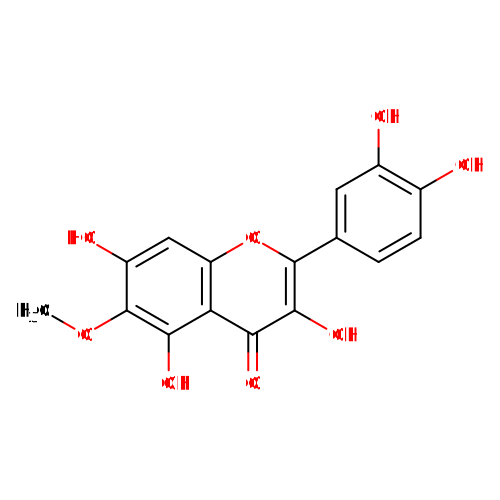
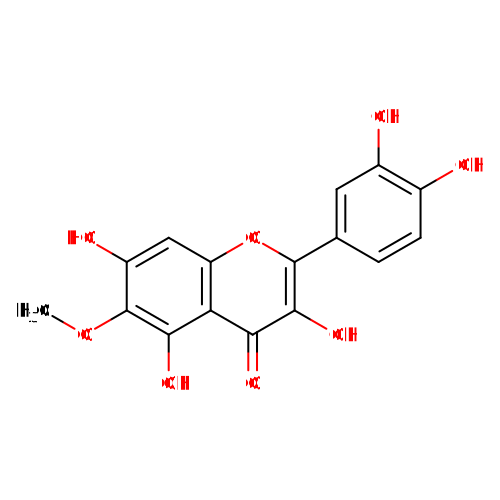
| Description | Patuletin belongs to the class of organic compounds known as flavonols. Flavonols are compounds that contain a flavone (2-phenyl-1-benzopyran-4-one) backbone carrying a hydroxyl group at the 3-position. Thus, patuletin is considered to be a flavonoid lipid molecule. A trimethoxyflavone that is quercetagetin methylated at position 6. Patuletin is a very hydrophobic molecule, practically insoluble (in water), and relatively neutral. Outside of the human body, Patuletin has been detected, but not quantified in, a few different foods, such as german camomiles, herbs and spices, and spinachs. This could make patuletin a potential biomarker for the consumption of these foods. |
|---|
| Structure | COC1=C(O)C2=C(OC(=C(O)C2=O)C2=CC(O)=C(O)C=C2)C=C1O InChI=1S/C16H12O8/c1-23-16-9(19)5-10-11(13(16)21)12(20)14(22)15(24-10)6-2-3-7(17)8(18)4-6/h2-5,17-19,21-22H,1H3 |
|---|
| Synonyms | | Value | Source |
|---|
| 2-(3,4-Dihydroxyphenyl)-3,5,7-trihydroxy-6-methoxy-4-benzopyrone | ChEBI | | 2-(3,4-Dihydroxyphenyl)-3,5,7-trihydroxy-6-methoxy-4H-1-benzopyran-4-one | ChEBI | | 3',4',5,7-Tetrahydroxy-6-methoxyflavonol | ChEBI | | 3,5,7,3',4'-Pentahydroxy-6-methoxyflavone | ChEBI | | 6-Methoxyquercetin | ChEBI | | 6-O-Methylquercetagetin | ChEBI | | Quercetagetin 6-methyl ether | ChEBI | | 2-(3,4-Dihydroxyphenyl)-3,5,7-trihydroxy-6-methoxy-4H-1-benzopyran-4-one, 9ci | HMDB | | 2-(3,4-Dihydroxyphenyl)-3,5,7-trihydroxy-6-methoxy-4H-chromen-4-one | MeSH |
|
|---|
| Chemical Formula | C16H12O8 |
|---|
| Average Molecular Weight | 332.2617 |
|---|
| Monoisotopic Molecular Weight | 332.05321736 |
|---|
| IUPAC Name | 2-(3,4-dihydroxyphenyl)-3,5,7-trihydroxy-6-methoxy-4H-chromen-4-one |
|---|
| Traditional Name | patuletin |
|---|
| CAS Registry Number | 519-96-0 |
|---|
| SMILES | COC1=C(O)C2=C(OC(=C(O)C2=O)C2=CC(O)=C(O)C=C2)C=C1O |
|---|
| InChI Identifier | InChI=1S/C16H12O8/c1-23-16-9(19)5-10-11(13(16)21)12(20)14(22)15(24-10)6-2-3-7(17)8(18)4-6/h2-5,17-19,21-22H,1H3 |
|---|
| InChI Key | JMIFIYIEXODVTO-UHFFFAOYSA-N |
|---|
| Chemical Taxonomy |
|---|
| Description | Belongs to the class of organic compounds known as flavonols. Flavonols are compounds that contain a flavone (2-phenyl-1-benzopyran-4-one) backbone carrying a hydroxyl group at the 3-position. |
|---|
| Kingdom | Organic compounds |
|---|
| Super Class | Phenylpropanoids and polyketides |
|---|
| Class | Flavonoids |
|---|
| Sub Class | Flavones |
|---|
| Direct Parent | Flavonols |
|---|
| Alternative Parents | |
|---|
| Substituents | - 6-methoxyflavonoid-skeleton
- 3-hydroxyflavone
- Hydroxyflavonoid
- 5-hydroxyflavonoid
- 7-hydroxyflavonoid
- 4'-hydroxyflavonoid
- 3-hydroxyflavonoid
- 3'-hydroxyflavonoid
- Chromone
- 1-benzopyran
- Benzopyran
- Anisole
- Catechol
- Pyranone
- Phenol
- Alkyl aryl ether
- 1-hydroxy-4-unsubstituted benzenoid
- 1-hydroxy-2-unsubstituted benzenoid
- Benzenoid
- Pyran
- Monocyclic benzene moiety
- Vinylogous acid
- Heteroaromatic compound
- Ether
- Polyol
- Organoheterocyclic compound
- Oxacycle
- Organic oxygen compound
- Organooxygen compound
- Hydrocarbon derivative
- Organic oxide
- Aromatic heteropolycyclic compound
|
|---|
| Molecular Framework | Aromatic heteropolycyclic compounds |
|---|
| External Descriptors | |
|---|
| Ontology |
|---|
| Physiological effect | Not Available |
|---|
| Disposition | |
|---|
| Process | Not Available |
|---|
| Role | |
|---|
| Physical Properties |
|---|
| State | Solid |
|---|
| Experimental Molecular Properties | | Property | Value | Reference |
|---|
| Melting Point | 262 - 264 °C | Not Available | | Boiling Point | Not Available | Not Available | | Water Solubility | Not Available | Not Available | | LogP | Not Available | Not Available |
|
|---|
| Experimental Chromatographic Properties | Not Available |
|---|
| Predicted Molecular Properties | |
|---|
| Predicted Chromatographic Properties | Predicted Collision Cross SectionsPredicted Retention Times Underivatized| Chromatographic Method | Retention Time | Reference |
|---|
| Measured using a Waters Acquity ultraperformance liquid chromatography (UPLC) ethylene-bridged hybrid (BEH) C18 column (100 mm × 2.1 mm; 1.7 μmparticle diameter). Predicted by Afia on May 17, 2022. Predicted by Afia on May 17, 2022. | 5.71 minutes | 32390414 | | Predicted by Siyang on May 30, 2022 | 11.7565 minutes | 33406817 | | Predicted by Siyang using ReTip algorithm on June 8, 2022 | 2.95 minutes | 32390414 | | AjsUoB = Accucore 150 Amide HILIC with 10mM Ammonium Formate, 0.1% Formic Acid | 27.4 seconds | 40023050 | | Fem_Long = Waters ACQUITY UPLC HSS T3 C18 with Water:MeOH and 0.1% Formic Acid | 2077.4 seconds | 40023050 | | Fem_Lipids = Ascentis Express C18 with (60:40 water:ACN):(90:10 IPA:ACN) and 10mM NH4COOH + 0.1% Formic Acid | 237.4 seconds | 40023050 | | Life_Old = Waters ACQUITY UPLC BEH C18 with Water:(20:80 acetone:ACN) and 0.1% Formic Acid | 108.6 seconds | 40023050 | | Life_New = RP Waters ACQUITY UPLC HSS T3 C18 with Water:(30:70 MeOH:ACN) and 0.1% Formic Acid | 146.1 seconds | 40023050 | | RIKEN = Waters ACQUITY UPLC BEH C18 with Water:ACN and 0.1% Formic Acid | 312.6 seconds | 40023050 | | Eawag_XBridgeC18 = XBridge C18 3.5u 2.1x50 mm with Water:MeOH and 0.1% Formic Acid | 604.9 seconds | 40023050 | | BfG_NTS_RP1 =Agilent Zorbax Eclipse Plus C18 (2.1 mm x 150 mm, 3.5 um) with Water:ACN and 0.1% Formic Acid | 563.0 seconds | 40023050 | | HILIC_BDD_2 = Merck SeQuant ZIC-HILIC with ACN(0.1% formic acid):water(16 mM ammonium formate) | 145.5 seconds | 40023050 | | UniToyama_Atlantis = RP Waters Atlantis T3 (2.1 x 150 mm, 5 um) with ACN:Water and 0.1% Formic Acid | 834.9 seconds | 40023050 | | BDD_C18 = Hypersil Gold 1.9µm C18 with Water:ACN and 0.1% Formic Acid | 414.0 seconds | 40023050 | | UFZ_Phenomenex = Kinetex Core-Shell C18 2.6 um, 3.0 x 100 mm, Phenomenex with Water:MeOH and 0.1% Formic Acid | 1434.1 seconds | 40023050 | | SNU_RIKEN_POS = Waters ACQUITY UPLC BEH C18 with Water:ACN and 0.1% Formic Acid | 276.3 seconds | 40023050 | | RPMMFDA = Waters ACQUITY UPLC BEH C18 with Water:ACN and 0.1% Formic Acid | 433.2 seconds | 40023050 | | MTBLS87 = Merck SeQuant ZIC-pHILIC column with ACN:Water and :ammonium carbonate | 535.7 seconds | 40023050 | | KI_GIAR_zic_HILIC_pH2_7 = Merck SeQuant ZIC-HILIC with ACN:Water and 0.1% FA | 236.2 seconds | 40023050 | | Meister zic-pHILIC pH9.3 = Merck SeQuant ZIC-pHILIC column with ACN:Water 5mM NH4Ac pH9.3 and 5mM ammonium acetate in water | 267.3 seconds | 40023050 |
Predicted Kovats Retention IndicesUnderivatizedDerivatized| Derivative Name / Structure | SMILES | Kovats RI Value | Column Type | Reference |
|---|
| Patuletin,1TMS,isomer #1 | COC1=C(O)C=C2OC(C3=CC=C(O)C(O)=C3)=C(O)C(=O)C2=C1O[Si](C)(C)C | 3349.8 | Semi standard non polar | 33892256 | | Patuletin,1TMS,isomer #2 | COC1=C(O)C=C2OC(C3=CC=C(O)C(O)=C3)=C(O[Si](C)(C)C)C(=O)C2=C1O | 3332.2 | Semi standard non polar | 33892256 | | Patuletin,1TMS,isomer #3 | COC1=C(O)C=C2OC(C3=CC=C(O)C(O[Si](C)(C)C)=C3)=C(O)C(=O)C2=C1O | 3422.8 | Semi standard non polar | 33892256 | | Patuletin,1TMS,isomer #4 | COC1=C(O)C=C2OC(C3=CC=C(O[Si](C)(C)C)C(O)=C3)=C(O)C(=O)C2=C1O | 3443.2 | Semi standard non polar | 33892256 | | Patuletin,1TMS,isomer #5 | COC1=C(O[Si](C)(C)C)C=C2OC(C3=CC=C(O)C(O)=C3)=C(O)C(=O)C2=C1O | 3376.3 | Semi standard non polar | 33892256 | | Patuletin,2TMS,isomer #1 | COC1=C(O[Si](C)(C)C)C=C2OC(C3=CC=C(O)C(O)=C3)=C(O)C(=O)C2=C1O[Si](C)(C)C | 3244.1 | Semi standard non polar | 33892256 | | Patuletin,2TMS,isomer #10 | COC1=C(O[Si](C)(C)C)C=C2OC(C3=CC=C(O[Si](C)(C)C)C(O)=C3)=C(O)C(=O)C2=C1O | 3396.9 | Semi standard non polar | 33892256 | | Patuletin,2TMS,isomer #2 | COC1=C(O)C=C2OC(C3=CC=C(O[Si](C)(C)C)C(O)=C3)=C(O)C(=O)C2=C1O[Si](C)(C)C | 3363.1 | Semi standard non polar | 33892256 | | Patuletin,2TMS,isomer #3 | COC1=C(O)C=C2OC(C3=CC=C(O)C(O[Si](C)(C)C)=C3)=C(O)C(=O)C2=C1O[Si](C)(C)C | 3339.0 | Semi standard non polar | 33892256 | | Patuletin,2TMS,isomer #4 | COC1=C(O)C=C2OC(C3=CC=C(O)C(O)=C3)=C(O[Si](C)(C)C)C(=O)C2=C1O[Si](C)(C)C | 3162.7 | Semi standard non polar | 33892256 | | Patuletin,2TMS,isomer #5 | COC1=C(O[Si](C)(C)C)C=C2OC(C3=CC=C(O)C(O)=C3)=C(O[Si](C)(C)C)C(=O)C2=C1O | 3201.4 | Semi standard non polar | 33892256 | | Patuletin,2TMS,isomer #6 | COC1=C(O)C=C2OC(C3=CC=C(O[Si](C)(C)C)C(O)=C3)=C(O[Si](C)(C)C)C(=O)C2=C1O | 3369.5 | Semi standard non polar | 33892256 | | Patuletin,2TMS,isomer #7 | COC1=C(O)C=C2OC(C3=CC=C(O)C(O[Si](C)(C)C)=C3)=C(O[Si](C)(C)C)C(=O)C2=C1O | 3332.7 | Semi standard non polar | 33892256 | | Patuletin,2TMS,isomer #8 | COC1=C(O[Si](C)(C)C)C=C2OC(C3=CC=C(O)C(O[Si](C)(C)C)=C3)=C(O)C(=O)C2=C1O | 3367.5 | Semi standard non polar | 33892256 | | Patuletin,2TMS,isomer #9 | COC1=C(O)C=C2OC(C3=CC=C(O[Si](C)(C)C)C(O[Si](C)(C)C)=C3)=C(O)C(=O)C2=C1O | 3346.8 | Semi standard non polar | 33892256 | | Patuletin,3TMS,isomer #1 | COC1=C(O[Si](C)(C)C)C=C2OC(C3=CC=C(O[Si](C)(C)C)C(O)=C3)=C(O)C(=O)C2=C1O[Si](C)(C)C | 3245.5 | Semi standard non polar | 33892256 | | Patuletin,3TMS,isomer #10 | COC1=C(O[Si](C)(C)C)C=C2OC(C3=CC=C(O[Si](C)(C)C)C(O[Si](C)(C)C)=C3)=C(O)C(=O)C2=C1O | 3221.3 | Semi standard non polar | 33892256 | | Patuletin,3TMS,isomer #2 | COC1=C(O[Si](C)(C)C)C=C2OC(C3=CC=C(O)C(O[Si](C)(C)C)=C3)=C(O)C(=O)C2=C1O[Si](C)(C)C | 3225.0 | Semi standard non polar | 33892256 | | Patuletin,3TMS,isomer #3 | COC1=C(O[Si](C)(C)C)C=C2OC(C3=CC=C(O)C(O)=C3)=C(O[Si](C)(C)C)C(=O)C2=C1O[Si](C)(C)C | 3141.0 | Semi standard non polar | 33892256 | | Patuletin,3TMS,isomer #4 | COC1=C(O)C=C2OC(C3=CC=C(O[Si](C)(C)C)C(O[Si](C)(C)C)=C3)=C(O)C(=O)C2=C1O[Si](C)(C)C | 3177.5 | Semi standard non polar | 33892256 | | Patuletin,3TMS,isomer #5 | COC1=C(O)C=C2OC(C3=CC=C(O[Si](C)(C)C)C(O)=C3)=C(O[Si](C)(C)C)C(=O)C2=C1O[Si](C)(C)C | 3203.4 | Semi standard non polar | 33892256 | | Patuletin,3TMS,isomer #6 | COC1=C(O)C=C2OC(C3=CC=C(O)C(O[Si](C)(C)C)=C3)=C(O[Si](C)(C)C)C(=O)C2=C1O[Si](C)(C)C | 3187.0 | Semi standard non polar | 33892256 | | Patuletin,3TMS,isomer #7 | COC1=C(O[Si](C)(C)C)C=C2OC(C3=CC=C(O[Si](C)(C)C)C(O)=C3)=C(O[Si](C)(C)C)C(=O)C2=C1O | 3230.0 | Semi standard non polar | 33892256 | | Patuletin,3TMS,isomer #8 | COC1=C(O[Si](C)(C)C)C=C2OC(C3=CC=C(O)C(O[Si](C)(C)C)=C3)=C(O[Si](C)(C)C)C(=O)C2=C1O | 3209.0 | Semi standard non polar | 33892256 | | Patuletin,3TMS,isomer #9 | COC1=C(O)C=C2OC(C3=CC=C(O[Si](C)(C)C)C(O[Si](C)(C)C)=C3)=C(O[Si](C)(C)C)C(=O)C2=C1O | 3226.8 | Semi standard non polar | 33892256 | | Patuletin,4TMS,isomer #1 | COC1=C(O[Si](C)(C)C)C=C2OC(C3=CC=C(O[Si](C)(C)C)C(O[Si](C)(C)C)=C3)=C(O)C(=O)C2=C1O[Si](C)(C)C | 3184.5 | Semi standard non polar | 33892256 | | Patuletin,4TMS,isomer #2 | COC1=C(O[Si](C)(C)C)C=C2OC(C3=CC=C(O[Si](C)(C)C)C(O)=C3)=C(O[Si](C)(C)C)C(=O)C2=C1O[Si](C)(C)C | 3207.3 | Semi standard non polar | 33892256 | | Patuletin,4TMS,isomer #3 | COC1=C(O[Si](C)(C)C)C=C2OC(C3=CC=C(O)C(O[Si](C)(C)C)=C3)=C(O[Si](C)(C)C)C(=O)C2=C1O[Si](C)(C)C | 3191.3 | Semi standard non polar | 33892256 | | Patuletin,4TMS,isomer #4 | COC1=C(O)C=C2OC(C3=CC=C(O[Si](C)(C)C)C(O[Si](C)(C)C)=C3)=C(O[Si](C)(C)C)C(=O)C2=C1O[Si](C)(C)C | 3163.7 | Semi standard non polar | 33892256 | | Patuletin,4TMS,isomer #5 | COC1=C(O[Si](C)(C)C)C=C2OC(C3=CC=C(O[Si](C)(C)C)C(O[Si](C)(C)C)=C3)=C(O[Si](C)(C)C)C(=O)C2=C1O | 3196.5 | Semi standard non polar | 33892256 | | Patuletin,5TMS,isomer #1 | COC1=C(O[Si](C)(C)C)C=C2OC(C3=CC=C(O[Si](C)(C)C)C(O[Si](C)(C)C)=C3)=C(O[Si](C)(C)C)C(=O)C2=C1O[Si](C)(C)C | 3197.1 | Semi standard non polar | 33892256 | | Patuletin,1TBDMS,isomer #1 | COC1=C(O)C=C2OC(C3=CC=C(O)C(O)=C3)=C(O)C(=O)C2=C1O[Si](C)(C)C(C)(C)C | 3629.8 | Semi standard non polar | 33892256 | | Patuletin,1TBDMS,isomer #2 | COC1=C(O)C=C2OC(C3=CC=C(O)C(O)=C3)=C(O[Si](C)(C)C(C)(C)C)C(=O)C2=C1O | 3627.0 | Semi standard non polar | 33892256 | | Patuletin,1TBDMS,isomer #3 | COC1=C(O)C=C2OC(C3=CC=C(O)C(O[Si](C)(C)C(C)(C)C)=C3)=C(O)C(=O)C2=C1O | 3688.2 | Semi standard non polar | 33892256 | | Patuletin,1TBDMS,isomer #4 | COC1=C(O)C=C2OC(C3=CC=C(O[Si](C)(C)C(C)(C)C)C(O)=C3)=C(O)C(=O)C2=C1O | 3712.6 | Semi standard non polar | 33892256 | | Patuletin,1TBDMS,isomer #5 | COC1=C(O[Si](C)(C)C(C)(C)C)C=C2OC(C3=CC=C(O)C(O)=C3)=C(O)C(=O)C2=C1O | 3666.0 | Semi standard non polar | 33892256 | | Patuletin,2TBDMS,isomer #1 | COC1=C(O[Si](C)(C)C(C)(C)C)C=C2OC(C3=CC=C(O)C(O)=C3)=C(O)C(=O)C2=C1O[Si](C)(C)C(C)(C)C | 3816.1 | Semi standard non polar | 33892256 | | Patuletin,2TBDMS,isomer #10 | COC1=C(O[Si](C)(C)C(C)(C)C)C=C2OC(C3=CC=C(O[Si](C)(C)C(C)(C)C)C(O)=C3)=C(O)C(=O)C2=C1O | 3920.6 | Semi standard non polar | 33892256 | | Patuletin,2TBDMS,isomer #2 | COC1=C(O)C=C2OC(C3=CC=C(O[Si](C)(C)C(C)(C)C)C(O)=C3)=C(O)C(=O)C2=C1O[Si](C)(C)C(C)(C)C | 3882.9 | Semi standard non polar | 33892256 | | Patuletin,2TBDMS,isomer #3 | COC1=C(O)C=C2OC(C3=CC=C(O)C(O[Si](C)(C)C(C)(C)C)=C3)=C(O)C(=O)C2=C1O[Si](C)(C)C(C)(C)C | 3842.8 | Semi standard non polar | 33892256 | | Patuletin,2TBDMS,isomer #4 | COC1=C(O)C=C2OC(C3=CC=C(O)C(O)=C3)=C(O[Si](C)(C)C(C)(C)C)C(=O)C2=C1O[Si](C)(C)C(C)(C)C | 3716.3 | Semi standard non polar | 33892256 | | Patuletin,2TBDMS,isomer #5 | COC1=C(O[Si](C)(C)C(C)(C)C)C=C2OC(C3=CC=C(O)C(O)=C3)=C(O[Si](C)(C)C(C)(C)C)C(=O)C2=C1O | 3765.8 | Semi standard non polar | 33892256 | | Patuletin,2TBDMS,isomer #6 | COC1=C(O)C=C2OC(C3=CC=C(O[Si](C)(C)C(C)(C)C)C(O)=C3)=C(O[Si](C)(C)C(C)(C)C)C(=O)C2=C1O | 3901.0 | Semi standard non polar | 33892256 | | Patuletin,2TBDMS,isomer #7 | COC1=C(O)C=C2OC(C3=CC=C(O)C(O[Si](C)(C)C(C)(C)C)=C3)=C(O[Si](C)(C)C(C)(C)C)C(=O)C2=C1O | 3855.6 | Semi standard non polar | 33892256 | | Patuletin,2TBDMS,isomer #8 | COC1=C(O[Si](C)(C)C(C)(C)C)C=C2OC(C3=CC=C(O)C(O[Si](C)(C)C(C)(C)C)=C3)=C(O)C(=O)C2=C1O | 3882.1 | Semi standard non polar | 33892256 | | Patuletin,2TBDMS,isomer #9 | COC1=C(O)C=C2OC(C3=CC=C(O[Si](C)(C)C(C)(C)C)C(O[Si](C)(C)C(C)(C)C)=C3)=C(O)C(=O)C2=C1O | 3864.6 | Semi standard non polar | 33892256 | | Patuletin,3TBDMS,isomer #1 | COC1=C(O[Si](C)(C)C(C)(C)C)C=C2OC(C3=CC=C(O[Si](C)(C)C(C)(C)C)C(O)=C3)=C(O)C(=O)C2=C1O[Si](C)(C)C(C)(C)C | 4053.0 | Semi standard non polar | 33892256 | | Patuletin,3TBDMS,isomer #10 | COC1=C(O[Si](C)(C)C(C)(C)C)C=C2OC(C3=CC=C(O[Si](C)(C)C(C)(C)C)C(O[Si](C)(C)C(C)(C)C)=C3)=C(O)C(=O)C2=C1O | 4023.1 | Semi standard non polar | 33892256 | | Patuletin,3TBDMS,isomer #2 | COC1=C(O[Si](C)(C)C(C)(C)C)C=C2OC(C3=CC=C(O)C(O[Si](C)(C)C(C)(C)C)=C3)=C(O)C(=O)C2=C1O[Si](C)(C)C(C)(C)C | 4002.0 | Semi standard non polar | 33892256 | | Patuletin,3TBDMS,isomer #3 | COC1=C(O[Si](C)(C)C(C)(C)C)C=C2OC(C3=CC=C(O)C(O)=C3)=C(O[Si](C)(C)C(C)(C)C)C(=O)C2=C1O[Si](C)(C)C(C)(C)C | 3885.7 | Semi standard non polar | 33892256 | | Patuletin,3TBDMS,isomer #4 | COC1=C(O)C=C2OC(C3=CC=C(O[Si](C)(C)C(C)(C)C)C(O[Si](C)(C)C(C)(C)C)=C3)=C(O)C(=O)C2=C1O[Si](C)(C)C(C)(C)C | 3964.8 | Semi standard non polar | 33892256 | | Patuletin,3TBDMS,isomer #5 | COC1=C(O)C=C2OC(C3=CC=C(O[Si](C)(C)C(C)(C)C)C(O)=C3)=C(O[Si](C)(C)C(C)(C)C)C(=O)C2=C1O[Si](C)(C)C(C)(C)C | 3981.3 | Semi standard non polar | 33892256 | | Patuletin,3TBDMS,isomer #6 | COC1=C(O)C=C2OC(C3=CC=C(O)C(O[Si](C)(C)C(C)(C)C)=C3)=C(O[Si](C)(C)C(C)(C)C)C(=O)C2=C1O[Si](C)(C)C(C)(C)C | 3931.6 | Semi standard non polar | 33892256 | | Patuletin,3TBDMS,isomer #7 | COC1=C(O[Si](C)(C)C(C)(C)C)C=C2OC(C3=CC=C(O[Si](C)(C)C(C)(C)C)C(O)=C3)=C(O[Si](C)(C)C(C)(C)C)C(=O)C2=C1O | 4046.3 | Semi standard non polar | 33892256 | | Patuletin,3TBDMS,isomer #8 | COC1=C(O[Si](C)(C)C(C)(C)C)C=C2OC(C3=CC=C(O)C(O[Si](C)(C)C(C)(C)C)=C3)=C(O[Si](C)(C)C(C)(C)C)C(=O)C2=C1O | 3999.5 | Semi standard non polar | 33892256 | | Patuletin,3TBDMS,isomer #9 | COC1=C(O)C=C2OC(C3=CC=C(O[Si](C)(C)C(C)(C)C)C(O[Si](C)(C)C(C)(C)C)=C3)=C(O[Si](C)(C)C(C)(C)C)C(=O)C2=C1O | 4005.9 | Semi standard non polar | 33892256 | | Patuletin,4TBDMS,isomer #1 | COC1=C(O[Si](C)(C)C(C)(C)C)C=C2OC(C3=CC=C(O[Si](C)(C)C(C)(C)C)C(O[Si](C)(C)C(C)(C)C)=C3)=C(O)C(=O)C2=C1O[Si](C)(C)C(C)(C)C | 4138.6 | Semi standard non polar | 33892256 | | Patuletin,4TBDMS,isomer #2 | COC1=C(O[Si](C)(C)C(C)(C)C)C=C2OC(C3=CC=C(O[Si](C)(C)C(C)(C)C)C(O)=C3)=C(O[Si](C)(C)C(C)(C)C)C(=O)C2=C1O[Si](C)(C)C(C)(C)C | 4104.0 | Semi standard non polar | 33892256 | | Patuletin,4TBDMS,isomer #3 | COC1=C(O[Si](C)(C)C(C)(C)C)C=C2OC(C3=CC=C(O)C(O[Si](C)(C)C(C)(C)C)=C3)=C(O[Si](C)(C)C(C)(C)C)C(=O)C2=C1O[Si](C)(C)C(C)(C)C | 4054.8 | Semi standard non polar | 33892256 | | Patuletin,4TBDMS,isomer #4 | COC1=C(O)C=C2OC(C3=CC=C(O[Si](C)(C)C(C)(C)C)C(O[Si](C)(C)C(C)(C)C)=C3)=C(O[Si](C)(C)C(C)(C)C)C(=O)C2=C1O[Si](C)(C)C(C)(C)C | 4029.9 | Semi standard non polar | 33892256 | | Patuletin,4TBDMS,isomer #5 | COC1=C(O[Si](C)(C)C(C)(C)C)C=C2OC(C3=CC=C(O[Si](C)(C)C(C)(C)C)C(O[Si](C)(C)C(C)(C)C)=C3)=C(O[Si](C)(C)C(C)(C)C)C(=O)C2=C1O | 4134.7 | Semi standard non polar | 33892256 |
|
|---|