| Record Information |
|---|
| Version | 5.0 |
|---|
| Status | Detected and Quantified |
|---|
| Creation Date | 2006-05-22 15:12:40 UTC |
|---|
| Update Date | 2021-09-14 15:18:58 UTC |
|---|
| HMDB ID | HMDB0003193 |
|---|
| Secondary Accession Numbers | |
|---|
| Metabolite Identification |
|---|
| Common Name | Testosterone glucuronide |
|---|
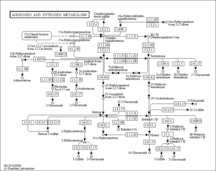
| Description | Testosterone glucuronide is a natural human metabolite of testosterone. Testosterone is a steroid hormone from the androgen group. Testosterone is primarily secreted in the testes of males and the ovaries of females although small amounts are secreted by the adrenal glands. It is the principal male sex hormone and an anabolic steroid. In both males and females, it plays key roles in health and well-being. There is a sex difference in the median values of testosterone glucuronide in the amniotic fluid specimens 15-19 wk gestation between female (median 160 pM, range 64-465 pM) and male (median 817 pM, range 68-3707 pM). This difference, when used in conjunction with amniotic fluid unconjugated testosterone values, increase the predictive accuracy of fetal sexing from 95.4 to 98.9%. In human newborns and young infants, urinary testosterone sulfate is higher than glucuronide. The high sulfokinase activity in fetal and neonatal testes is more likely responsible for this phenomenon than an impaired glucuronizing capacity of the liver. Urinary excretion of testosterone glucuronide increases significantly during puberty. The level of testosterone glucuronide exceeds the level of unconjugated testosterone in human seminal plasma. Urinary testosterone glucuronide excretion is increased in women with virilizing adrenocortical tumors. Concentration of testosterone glucuronide in urine from women with breast tumor in urine samples is not different from patients with benign or malignant breast disease, either before or after the menopause. (PMID: 8327267 , 3560942 , 6246233 , 871373 , 133773 , 947290 ). |
|---|
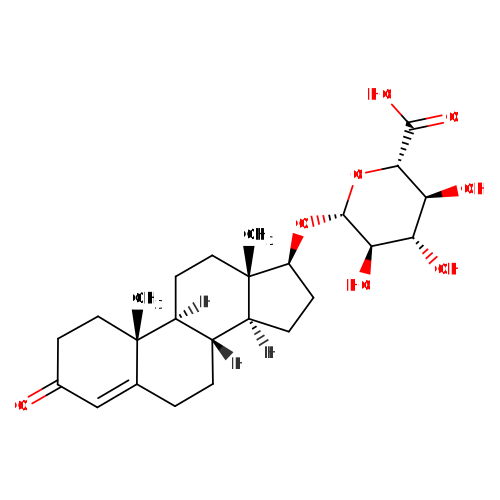
| Structure | [H][C@@]12CC[C@H](O[C@@H]3O[C@@H]([C@@H](O)[C@H](O)[C@H]3O)C(O)=O)[C@@]1(C)CC[C@@]1([H])[C@@]2([H])CCC2=CC(=O)CC[C@]12C InChI=1S/C25H36O8/c1-24-9-7-13(26)11-12(24)3-4-14-15-5-6-17(25(15,2)10-8-16(14)24)32-23-20(29)18(27)19(28)21(33-23)22(30)31/h11,14-21,23,27-29H,3-10H2,1-2H3,(H,30,31)/t14-,15-,16-,17-,18-,19-,20+,21-,23+,24-,25-/m0/s1 |
|---|
| Synonyms | | Value | Source |
|---|
| Testosterone 17beta-(beta-D-glucuronide) | ChEBI | | Testosterone glucuronoside | ChEBI | | Testosterone 17b-(b-D-glucuronide) | Generator | | Testosterone 17β-(β-D-glucuronide) | Generator | | (17b)-3-Oxoandrost-4-en-17-yl b-D-glucopyranosiduronic acid | HMDB | | b-D-3-Oxoandrost-4-en-17b-yl glucopyranosiduronic acid | HMDB | | b-D-Androstane glucopyranosiduronic acid | HMDB | | Epitestosterone glucuronide | HMDB | | Testosterone 17-glucosiduronate | HMDB | | Testosterone 17-glucuronide | HMDB | | Testosterone glucopyranuronoside | HMDB | | Testosterone glucosiduronide | HMDB | | Testosterone glucuronate | HMDB | | Testosterone-glucuronide | HMDB | | (alpha)-Isomer OF testosterone glucuronate | HMDB |
|
|---|
| Chemical Formula | C25H36O8 |
|---|
| Average Molecular Weight | 464.5485 |
|---|
| Monoisotopic Molecular Weight | 464.241018128 |
|---|
| IUPAC Name | (2S,3S,4S,5R,6R)-6-{[(1S,2R,10R,11S,14S,15S)-2,15-dimethyl-5-oxotetracyclo[8.7.0.0²,⁷.0¹¹,¹⁵]heptadec-6-en-14-yl]oxy}-3,4,5-trihydroxyoxane-2-carboxylic acid |
|---|
| Traditional Name | testosterone glucuronide |
|---|
| CAS Registry Number | 1180-25-2 |
|---|
| SMILES | [H][C@@]12CC[C@H](O[C@@H]3O[C@@H]([C@@H](O)[C@H](O)[C@H]3O)C(O)=O)[C@@]1(C)CC[C@@]1([H])[C@@]2([H])CCC2=CC(=O)CC[C@]12C |
|---|
| InChI Identifier | InChI=1S/C25H36O8/c1-24-9-7-13(26)11-12(24)3-4-14-15-5-6-17(25(15,2)10-8-16(14)24)32-23-20(29)18(27)19(28)21(33-23)22(30)31/h11,14-21,23,27-29H,3-10H2,1-2H3,(H,30,31)/t14-,15-,16-,17-,18-,19-,20+,21-,23+,24-,25-/m0/s1 |
|---|
| InChI Key | NIKZPECGCSUSBV-HMAFJQTKSA-N |
|---|
| Chemical Taxonomy |
|---|
| Description | Belongs to the class of organic compounds known as steroid glucuronide conjugates. These are sterol lipids containing a glucuronide moiety linked to the steroid skeleton. |
|---|
| Kingdom | Organic compounds |
|---|
| Super Class | Lipids and lipid-like molecules |
|---|
| Class | Steroids and steroid derivatives |
|---|
| Sub Class | Steroidal glycosides |
|---|
| Direct Parent | Steroid glucuronide conjugates |
|---|
| Alternative Parents | |
|---|
| Substituents | - Steroid-glucuronide-skeleton
- Androgen-skeleton
- Androstane-skeleton
- 3-oxo-delta-4-steroid
- 3-oxosteroid
- Oxosteroid
- Delta-4-steroid
- 1-o-glucuronide
- O-glucuronide
- Glucuronic acid or derivatives
- Hexose monosaccharide
- O-glycosyl compound
- Glycosyl compound
- Cyclohexenone
- Beta-hydroxy acid
- Monosaccharide
- Hydroxy acid
- Pyran
- Oxane
- Cyclic ketone
- Secondary alcohol
- Ketone
- Polyol
- Carboxylic acid
- Carboxylic acid derivative
- Organoheterocyclic compound
- Oxacycle
- Monocarboxylic acid or derivatives
- Acetal
- Organic oxide
- Organic oxygen compound
- Carbonyl group
- Hydrocarbon derivative
- Alcohol
- Organooxygen compound
- Aliphatic heteropolycyclic compound
|
|---|
| Molecular Framework | Aliphatic heteropolycyclic compounds |
|---|
| External Descriptors | |
|---|
| Ontology |
|---|
| Physiological effect | Not Available |
|---|
| Disposition | |
|---|
| Process | |
|---|
| Role | |
|---|
| Physical Properties |
|---|
| State | Solid |
|---|
| Experimental Molecular Properties | | Property | Value | Reference |
|---|
| Melting Point | 155 - 156 °C | Not Available | | Boiling Point | Not Available | Not Available | | Water Solubility | Not Available | Not Available | | LogP | Not Available | Not Available |
|
|---|
| Experimental Chromatographic Properties | Not Available |
|---|
| Predicted Molecular Properties | |
|---|
| Predicted Chromatographic Properties | Predicted Collision Cross SectionsPredicted Retention Times Underivatized| Chromatographic Method | Retention Time | Reference |
|---|
| Measured using a Waters Acquity ultraperformance liquid chromatography (UPLC) ethylene-bridged hybrid (BEH) C18 column (100 mm × 2.1 mm; 1.7 μmparticle diameter). Predicted by Afia on May 17, 2022. Predicted by Afia on May 17, 2022. | 5.7 minutes | 32390414 | | Predicted by Siyang on May 30, 2022 | 13.506 minutes | 33406817 | | Predicted by Siyang using ReTip algorithm on June 8, 2022 | 3.27 minutes | 32390414 | | Fem_Long = Waters ACQUITY UPLC HSS T3 C18 with Water:MeOH and 0.1% Formic Acid | 2698.5 seconds | 40023050 | | Fem_Lipids = Ascentis Express C18 with (60:40 water:ACN):(90:10 IPA:ACN) and 10mM NH4COOH + 0.1% Formic Acid | 191.9 seconds | 40023050 | | Life_Old = Waters ACQUITY UPLC BEH C18 with Water:(20:80 acetone:ACN) and 0.1% Formic Acid | 182.8 seconds | 40023050 | | Life_New = RP Waters ACQUITY UPLC HSS T3 C18 with Water:(30:70 MeOH:ACN) and 0.1% Formic Acid | 173.7 seconds | 40023050 | | RIKEN = Waters ACQUITY UPLC BEH C18 with Water:ACN and 0.1% Formic Acid | 331.4 seconds | 40023050 | | Eawag_XBridgeC18 = XBridge C18 3.5u 2.1x50 mm with Water:MeOH and 0.1% Formic Acid | 490.2 seconds | 40023050 | | BfG_NTS_RP1 =Agilent Zorbax Eclipse Plus C18 (2.1 mm x 150 mm, 3.5 um) with Water:ACN and 0.1% Formic Acid | 619.3 seconds | 40023050 | | HILIC_BDD_2 = Merck SeQuant ZIC-HILIC with ACN(0.1% formic acid):water(16 mM ammonium formate) | 167.8 seconds | 40023050 | | UniToyama_Atlantis = RP Waters Atlantis T3 (2.1 x 150 mm, 5 um) with ACN:Water and 0.1% Formic Acid | 1062.9 seconds | 40023050 | | BDD_C18 = Hypersil Gold 1.9µm C18 with Water:ACN and 0.1% Formic Acid | 500.4 seconds | 40023050 | | UFZ_Phenomenex = Kinetex Core-Shell C18 2.6 um, 3.0 x 100 mm, Phenomenex with Water:MeOH and 0.1% Formic Acid | 1466.4 seconds | 40023050 | | SNU_RIKEN_POS = Waters ACQUITY UPLC BEH C18 with Water:ACN and 0.1% Formic Acid | 344.6 seconds | 40023050 | | RPMMFDA = Waters ACQUITY UPLC BEH C18 with Water:ACN and 0.1% Formic Acid | 422.5 seconds | 40023050 | | MTBLS87 = Merck SeQuant ZIC-pHILIC column with ACN:Water and :ammonium carbonate | 315.3 seconds | 40023050 | | KI_GIAR_zic_HILIC_pH2_7 = Merck SeQuant ZIC-HILIC with ACN:Water and 0.1% FA | 222.6 seconds | 40023050 | | Meister zic-pHILIC pH9.3 = Merck SeQuant ZIC-pHILIC column with ACN:Water 5mM NH4Ac pH9.3 and 5mM ammonium acetate in water | 47.8 seconds | 40023050 |
Predicted Kovats Retention IndicesUnderivatizedDerivatized| Derivative Name / Structure | SMILES | Kovats RI Value | Column Type | Reference |
|---|
| Testosterone glucuronide,1TMS,isomer #1 | C[C@]12CC[C@H]3[C@@H](CCC4=CC(=O)CC[C@@]43C)[C@@H]1CC[C@@H]2O[C@@H]1O[C@H](C(=O)O)[C@@H](O[Si](C)(C)C)[C@H](O)[C@H]1O | 3975.5 | Semi standard non polar | 33892256 | | Testosterone glucuronide,1TMS,isomer #2 | C[C@]12CC[C@H]3[C@@H](CCC4=CC(=O)CC[C@@]43C)[C@@H]1CC[C@@H]2O[C@@H]1O[C@H](C(=O)O)[C@@H](O)[C@H](O[Si](C)(C)C)[C@H]1O | 3988.4 | Semi standard non polar | 33892256 | | Testosterone glucuronide,1TMS,isomer #3 | C[C@]12CC[C@H]3[C@@H](CCC4=CC(=O)CC[C@@]43C)[C@@H]1CC[C@@H]2O[C@@H]1O[C@H](C(=O)O)[C@@H](O)[C@H](O)[C@H]1O[Si](C)(C)C | 3986.9 | Semi standard non polar | 33892256 | | Testosterone glucuronide,1TMS,isomer #4 | C[C@]12CC[C@H]3[C@@H](CCC4=CC(=O)CC[C@@]43C)[C@@H]1CC[C@@H]2O[C@@H]1O[C@H](C(=O)O[Si](C)(C)C)[C@@H](O)[C@H](O)[C@H]1O | 3932.5 | Semi standard non polar | 33892256 | | Testosterone glucuronide,1TMS,isomer #5 | C[C@]12CC[C@H]3[C@@H](CCC4=CC(O[Si](C)(C)C)=CC[C@@]43C)[C@@H]1CC[C@@H]2O[C@@H]1O[C@H](C(=O)O)[C@@H](O)[C@H](O)[C@H]1O | 3882.9 | Semi standard non polar | 33892256 | | Testosterone glucuronide,2TMS,isomer #1 | C[C@]12CC[C@H]3[C@@H](CCC4=CC(=O)CC[C@@]43C)[C@@H]1CC[C@@H]2O[C@@H]1O[C@H](C(=O)O[Si](C)(C)C)[C@@H](O[Si](C)(C)C)[C@H](O)[C@H]1O | 3921.4 | Semi standard non polar | 33892256 | | Testosterone glucuronide,2TMS,isomer #10 | C[C@]12CC[C@H]3[C@@H](CCC4=CC(O[Si](C)(C)C)=CC[C@@]43C)[C@@H]1CC[C@@H]2O[C@@H]1O[C@H](C(=O)O[Si](C)(C)C)[C@@H](O)[C@H](O)[C@H]1O | 3815.9 | Semi standard non polar | 33892256 | | Testosterone glucuronide,2TMS,isomer #2 | C[C@]12CC[C@H]3[C@@H](CCC4=CC(=O)CC[C@@]43C)[C@@H]1CC[C@@H]2O[C@@H]1O[C@H](C(=O)O)[C@@H](O[Si](C)(C)C)[C@H](O[Si](C)(C)C)[C@H]1O | 3936.8 | Semi standard non polar | 33892256 | | Testosterone glucuronide,2TMS,isomer #3 | C[C@]12CC[C@H]3[C@@H](CCC4=CC(=O)CC[C@@]43C)[C@@H]1CC[C@@H]2O[C@@H]1O[C@H](C(=O)O)[C@@H](O[Si](C)(C)C)[C@H](O)[C@H]1O[Si](C)(C)C | 3935.6 | Semi standard non polar | 33892256 | | Testosterone glucuronide,2TMS,isomer #4 | C[C@]12CC[C@H]3[C@@H](CCC4=CC(O[Si](C)(C)C)=CC[C@@]43C)[C@@H]1CC[C@@H]2O[C@@H]1O[C@H](C(=O)O)[C@@H](O[Si](C)(C)C)[C@H](O)[C@H]1O | 3843.1 | Semi standard non polar | 33892256 | | Testosterone glucuronide,2TMS,isomer #5 | C[C@]12CC[C@H]3[C@@H](CCC4=CC(=O)CC[C@@]43C)[C@@H]1CC[C@@H]2O[C@@H]1O[C@H](C(=O)O[Si](C)(C)C)[C@@H](O)[C@H](O[Si](C)(C)C)[C@H]1O | 3918.4 | Semi standard non polar | 33892256 | | Testosterone glucuronide,2TMS,isomer #6 | C[C@]12CC[C@H]3[C@@H](CCC4=CC(=O)CC[C@@]43C)[C@@H]1CC[C@@H]2O[C@@H]1O[C@H](C(=O)O)[C@@H](O)[C@H](O[Si](C)(C)C)[C@H]1O[Si](C)(C)C | 3939.5 | Semi standard non polar | 33892256 | | Testosterone glucuronide,2TMS,isomer #7 | C[C@]12CC[C@H]3[C@@H](CCC4=CC(O[Si](C)(C)C)=CC[C@@]43C)[C@@H]1CC[C@@H]2O[C@@H]1O[C@H](C(=O)O)[C@@H](O)[C@H](O[Si](C)(C)C)[C@H]1O | 3837.7 | Semi standard non polar | 33892256 | | Testosterone glucuronide,2TMS,isomer #8 | C[C@]12CC[C@H]3[C@@H](CCC4=CC(=O)CC[C@@]43C)[C@@H]1CC[C@@H]2O[C@@H]1O[C@H](C(=O)O[Si](C)(C)C)[C@@H](O)[C@H](O)[C@H]1O[Si](C)(C)C | 3912.3 | Semi standard non polar | 33892256 | | Testosterone glucuronide,2TMS,isomer #9 | C[C@]12CC[C@H]3[C@@H](CCC4=CC(O[Si](C)(C)C)=CC[C@@]43C)[C@@H]1CC[C@@H]2O[C@@H]1O[C@H](C(=O)O)[C@@H](O)[C@H](O)[C@H]1O[Si](C)(C)C | 3841.8 | Semi standard non polar | 33892256 | | Testosterone glucuronide,3TMS,isomer #1 | C[C@]12CC[C@H]3[C@@H](CCC4=CC(=O)CC[C@@]43C)[C@@H]1CC[C@@H]2O[C@@H]1O[C@H](C(=O)O[Si](C)(C)C)[C@@H](O[Si](C)(C)C)[C@H](O[Si](C)(C)C)[C@H]1O | 3904.2 | Semi standard non polar | 33892256 | | Testosterone glucuronide,3TMS,isomer #10 | C[C@]12CC[C@H]3[C@@H](CCC4=CC(O[Si](C)(C)C)=CC[C@@]43C)[C@@H]1CC[C@@H]2O[C@@H]1O[C@H](C(=O)O[Si](C)(C)C)[C@@H](O)[C@H](O)[C@H]1O[Si](C)(C)C | 3802.6 | Semi standard non polar | 33892256 | | Testosterone glucuronide,3TMS,isomer #2 | C[C@]12CC[C@H]3[C@@H](CCC4=CC(=O)CC[C@@]43C)[C@@H]1CC[C@@H]2O[C@@H]1O[C@H](C(=O)O[Si](C)(C)C)[C@@H](O[Si](C)(C)C)[C@H](O)[C@H]1O[Si](C)(C)C | 3909.9 | Semi standard non polar | 33892256 | | Testosterone glucuronide,3TMS,isomer #3 | C[C@]12CC[C@H]3[C@@H](CCC4=CC(O[Si](C)(C)C)=CC[C@@]43C)[C@@H]1CC[C@@H]2O[C@@H]1O[C@H](C(=O)O[Si](C)(C)C)[C@@H](O[Si](C)(C)C)[C@H](O)[C@H]1O | 3805.7 | Semi standard non polar | 33892256 | | Testosterone glucuronide,3TMS,isomer #4 | C[C@]12CC[C@H]3[C@@H](CCC4=CC(=O)CC[C@@]43C)[C@@H]1CC[C@@H]2O[C@@H]1O[C@H](C(=O)O)[C@@H](O[Si](C)(C)C)[C@H](O[Si](C)(C)C)[C@H]1O[Si](C)(C)C | 3902.6 | Semi standard non polar | 33892256 | | Testosterone glucuronide,3TMS,isomer #5 | C[C@]12CC[C@H]3[C@@H](CCC4=CC(O[Si](C)(C)C)=CC[C@@]43C)[C@@H]1CC[C@@H]2O[C@@H]1O[C@H](C(=O)O)[C@@H](O[Si](C)(C)C)[C@H](O[Si](C)(C)C)[C@H]1O | 3807.4 | Semi standard non polar | 33892256 | | Testosterone glucuronide,3TMS,isomer #6 | C[C@]12CC[C@H]3[C@@H](CCC4=CC(O[Si](C)(C)C)=CC[C@@]43C)[C@@H]1CC[C@@H]2O[C@@H]1O[C@H](C(=O)O)[C@@H](O[Si](C)(C)C)[C@H](O)[C@H]1O[Si](C)(C)C | 3823.9 | Semi standard non polar | 33892256 | | Testosterone glucuronide,3TMS,isomer #7 | C[C@]12CC[C@H]3[C@@H](CCC4=CC(=O)CC[C@@]43C)[C@@H]1CC[C@@H]2O[C@@H]1O[C@H](C(=O)O[Si](C)(C)C)[C@@H](O)[C@H](O[Si](C)(C)C)[C@H]1O[Si](C)(C)C | 3897.3 | Semi standard non polar | 33892256 | | Testosterone glucuronide,3TMS,isomer #8 | C[C@]12CC[C@H]3[C@@H](CCC4=CC(O[Si](C)(C)C)=CC[C@@]43C)[C@@H]1CC[C@@H]2O[C@@H]1O[C@H](C(=O)O[Si](C)(C)C)[C@@H](O)[C@H](O[Si](C)(C)C)[C@H]1O | 3793.3 | Semi standard non polar | 33892256 | | Testosterone glucuronide,3TMS,isomer #9 | C[C@]12CC[C@H]3[C@@H](CCC4=CC(O[Si](C)(C)C)=CC[C@@]43C)[C@@H]1CC[C@@H]2O[C@@H]1O[C@H](C(=O)O)[C@@H](O)[C@H](O[Si](C)(C)C)[C@H]1O[Si](C)(C)C | 3815.6 | Semi standard non polar | 33892256 | | Testosterone glucuronide,4TMS,isomer #1 | C[C@]12CC[C@H]3[C@@H](CCC4=CC(=O)CC[C@@]43C)[C@@H]1CC[C@@H]2O[C@@H]1O[C@H](C(=O)O[Si](C)(C)C)[C@@H](O[Si](C)(C)C)[C@H](O[Si](C)(C)C)[C@H]1O[Si](C)(C)C | 3876.5 | Semi standard non polar | 33892256 | | Testosterone glucuronide,4TMS,isomer #2 | C[C@]12CC[C@H]3[C@@H](CCC4=CC(O[Si](C)(C)C)=CC[C@@]43C)[C@@H]1CC[C@@H]2O[C@@H]1O[C@H](C(=O)O[Si](C)(C)C)[C@@H](O[Si](C)(C)C)[C@H](O[Si](C)(C)C)[C@H]1O | 3786.9 | Semi standard non polar | 33892256 | | Testosterone glucuronide,4TMS,isomer #3 | C[C@]12CC[C@H]3[C@@H](CCC4=CC(O[Si](C)(C)C)=CC[C@@]43C)[C@@H]1CC[C@@H]2O[C@@H]1O[C@H](C(=O)O[Si](C)(C)C)[C@@H](O[Si](C)(C)C)[C@H](O)[C@H]1O[Si](C)(C)C | 3795.4 | Semi standard non polar | 33892256 | | Testosterone glucuronide,4TMS,isomer #4 | C[C@]12CC[C@H]3[C@@H](CCC4=CC(O[Si](C)(C)C)=CC[C@@]43C)[C@@H]1CC[C@@H]2O[C@@H]1O[C@H](C(=O)O)[C@@H](O[Si](C)(C)C)[C@H](O[Si](C)(C)C)[C@H]1O[Si](C)(C)C | 3785.6 | Semi standard non polar | 33892256 | | Testosterone glucuronide,4TMS,isomer #5 | C[C@]12CC[C@H]3[C@@H](CCC4=CC(O[Si](C)(C)C)=CC[C@@]43C)[C@@H]1CC[C@@H]2O[C@@H]1O[C@H](C(=O)O[Si](C)(C)C)[C@@H](O)[C@H](O[Si](C)(C)C)[C@H]1O[Si](C)(C)C | 3796.9 | Semi standard non polar | 33892256 | | Testosterone glucuronide,5TMS,isomer #1 | C[C@]12CC[C@H]3[C@@H](CCC4=CC(O[Si](C)(C)C)=CC[C@@]43C)[C@@H]1CC[C@@H]2O[C@@H]1O[C@H](C(=O)O[Si](C)(C)C)[C@@H](O[Si](C)(C)C)[C@H](O[Si](C)(C)C)[C@H]1O[Si](C)(C)C | 3746.8 | Semi standard non polar | 33892256 | | Testosterone glucuronide,5TMS,isomer #1 | C[C@]12CC[C@H]3[C@@H](CCC4=CC(O[Si](C)(C)C)=CC[C@@]43C)[C@@H]1CC[C@@H]2O[C@@H]1O[C@H](C(=O)O[Si](C)(C)C)[C@@H](O[Si](C)(C)C)[C@H](O[Si](C)(C)C)[C@H]1O[Si](C)(C)C | 3966.8 | Standard non polar | 33892256 | | Testosterone glucuronide,5TMS,isomer #1 | C[C@]12CC[C@H]3[C@@H](CCC4=CC(O[Si](C)(C)C)=CC[C@@]43C)[C@@H]1CC[C@@H]2O[C@@H]1O[C@H](C(=O)O[Si](C)(C)C)[C@@H](O[Si](C)(C)C)[C@H](O[Si](C)(C)C)[C@H]1O[Si](C)(C)C | 4320.9 | Standard polar | 33892256 | | Testosterone glucuronide,1TBDMS,isomer #1 | CC(C)(C)[Si](C)(C)O[C@@H]1[C@@H](C(=O)O)O[C@@H](O[C@H]2CC[C@H]3[C@@H]4CCC5=CC(=O)CC[C@]5(C)[C@H]4CC[C@]23C)[C@H](O)[C@H]1O | 4211.2 | Semi standard non polar | 33892256 | | Testosterone glucuronide,1TBDMS,isomer #2 | CC(C)(C)[Si](C)(C)O[C@H]1[C@H](O)[C@@H](C(=O)O)O[C@@H](O[C@H]2CC[C@H]3[C@@H]4CCC5=CC(=O)CC[C@]5(C)[C@H]4CC[C@]23C)[C@@H]1O | 4224.0 | Semi standard non polar | 33892256 | | Testosterone glucuronide,1TBDMS,isomer #3 | CC(C)(C)[Si](C)(C)O[C@@H]1[C@@H](O)[C@H](O)[C@@H](C(=O)O)O[C@H]1O[C@H]1CC[C@H]2[C@@H]3CCC4=CC(=O)CC[C@]4(C)[C@H]3CC[C@]12C | 4226.1 | Semi standard non polar | 33892256 | | Testosterone glucuronide,1TBDMS,isomer #4 | CC(C)(C)[Si](C)(C)OC(=O)[C@H]1O[C@@H](O[C@H]2CC[C@H]3[C@@H]4CCC5=CC(=O)CC[C@]5(C)[C@H]4CC[C@]23C)[C@H](O)[C@@H](O)[C@@H]1O | 4201.9 | Semi standard non polar | 33892256 | | Testosterone glucuronide,1TBDMS,isomer #5 | CC(C)(C)[Si](C)(C)OC1=CC[C@@]2(C)C(=C1)CC[C@H]1[C@@H]3CC[C@H](O[C@@H]4O[C@H](C(=O)O)[C@@H](O)[C@H](O)[C@H]4O)[C@@]3(C)CC[C@@H]12 | 4123.9 | Semi standard non polar | 33892256 | | Testosterone glucuronide,2TBDMS,isomer #1 | CC(C)(C)[Si](C)(C)OC(=O)[C@H]1O[C@@H](O[C@H]2CC[C@H]3[C@@H]4CCC5=CC(=O)CC[C@]5(C)[C@H]4CC[C@]23C)[C@H](O)[C@@H](O)[C@@H]1O[Si](C)(C)C(C)(C)C | 4411.4 | Semi standard non polar | 33892256 | | Testosterone glucuronide,2TBDMS,isomer #10 | CC(C)(C)[Si](C)(C)OC(=O)[C@H]1O[C@@H](O[C@H]2CC[C@H]3[C@@H]4CCC5=CC(O[Si](C)(C)C(C)(C)C)=CC[C@]5(C)[C@H]4CC[C@]23C)[C@H](O)[C@@H](O)[C@@H]1O | 4291.4 | Semi standard non polar | 33892256 | | Testosterone glucuronide,2TBDMS,isomer #2 | CC(C)(C)[Si](C)(C)O[C@@H]1[C@@H](C(=O)O)O[C@@H](O[C@H]2CC[C@H]3[C@@H]4CCC5=CC(=O)CC[C@]5(C)[C@H]4CC[C@]23C)[C@H](O[Si](C)(C)C(C)(C)C)[C@H]1O | 4401.1 | Semi standard non polar | 33892256 | | Testosterone glucuronide,2TBDMS,isomer #3 | CC(C)(C)[Si](C)(C)O[C@@H]1[C@@H](C(=O)O)O[C@@H](O[C@H]2CC[C@H]3[C@@H]4CCC5=CC(=O)CC[C@]5(C)[C@H]4CC[C@]23C)[C@H](O)[C@H]1O[Si](C)(C)C(C)(C)C | 4392.6 | Semi standard non polar | 33892256 | | Testosterone glucuronide,2TBDMS,isomer #4 | CC(C)(C)[Si](C)(C)OC1=CC[C@@]2(C)C(=C1)CC[C@H]1[C@@H]3CC[C@H](O[C@@H]4O[C@H](C(=O)O)[C@@H](O[Si](C)(C)C(C)(C)C)[C@H](O)[C@H]4O)[C@@]3(C)CC[C@@H]12 | 4315.2 | Semi standard non polar | 33892256 | | Testosterone glucuronide,2TBDMS,isomer #5 | CC(C)(C)[Si](C)(C)OC(=O)[C@H]1O[C@@H](O[C@H]2CC[C@H]3[C@@H]4CCC5=CC(=O)CC[C@]5(C)[C@H]4CC[C@]23C)[C@H](O)[C@@H](O[Si](C)(C)C(C)(C)C)[C@@H]1O | 4401.2 | Semi standard non polar | 33892256 | | Testosterone glucuronide,2TBDMS,isomer #6 | CC(C)(C)[Si](C)(C)O[C@H]1[C@H](O)[C@@H](C(=O)O)O[C@@H](O[C@H]2CC[C@H]3[C@@H]4CCC5=CC(=O)CC[C@]5(C)[C@H]4CC[C@]23C)[C@@H]1O[Si](C)(C)C(C)(C)C | 4401.8 | Semi standard non polar | 33892256 | | Testosterone glucuronide,2TBDMS,isomer #7 | CC(C)(C)[Si](C)(C)OC1=CC[C@@]2(C)C(=C1)CC[C@H]1[C@@H]3CC[C@H](O[C@@H]4O[C@H](C(=O)O)[C@@H](O)[C@H](O[Si](C)(C)C(C)(C)C)[C@H]4O)[C@@]3(C)CC[C@@H]12 | 4315.8 | Semi standard non polar | 33892256 | | Testosterone glucuronide,2TBDMS,isomer #8 | CC(C)(C)[Si](C)(C)OC(=O)[C@H]1O[C@@H](O[C@H]2CC[C@H]3[C@@H]4CCC5=CC(=O)CC[C@]5(C)[C@H]4CC[C@]23C)[C@H](O[Si](C)(C)C(C)(C)C)[C@@H](O)[C@@H]1O | 4410.1 | Semi standard non polar | 33892256 | | Testosterone glucuronide,2TBDMS,isomer #9 | CC(C)(C)[Si](C)(C)OC1=CC[C@@]2(C)C(=C1)CC[C@H]1[C@@H]3CC[C@H](O[C@@H]4O[C@H](C(=O)O)[C@@H](O)[C@H](O)[C@H]4O[Si](C)(C)C(C)(C)C)[C@@]3(C)CC[C@@H]12 | 4317.2 | Semi standard non polar | 33892256 | | Testosterone glucuronide,3TBDMS,isomer #1 | CC(C)(C)[Si](C)(C)OC(=O)[C@H]1O[C@@H](O[C@H]2CC[C@H]3[C@@H]4CCC5=CC(=O)CC[C@]5(C)[C@H]4CC[C@]23C)[C@H](O[Si](C)(C)C(C)(C)C)[C@@H](O)[C@@H]1O[Si](C)(C)C(C)(C)C | 4594.0 | Semi standard non polar | 33892256 | | Testosterone glucuronide,3TBDMS,isomer #10 | CC(C)(C)[Si](C)(C)OC(=O)[C@H]1O[C@@H](O[C@H]2CC[C@H]3[C@@H]4CCC5=CC(O[Si](C)(C)C(C)(C)C)=CC[C@]5(C)[C@H]4CC[C@]23C)[C@H](O[Si](C)(C)C(C)(C)C)[C@@H](O)[C@@H]1O | 4493.9 | Semi standard non polar | 33892256 | | Testosterone glucuronide,3TBDMS,isomer #2 | CC(C)(C)[Si](C)(C)OC(=O)[C@H]1O[C@@H](O[C@H]2CC[C@H]3[C@@H]4CCC5=CC(=O)CC[C@]5(C)[C@H]4CC[C@]23C)[C@H](O)[C@@H](O[Si](C)(C)C(C)(C)C)[C@@H]1O[Si](C)(C)C(C)(C)C | 4577.4 | Semi standard non polar | 33892256 | | Testosterone glucuronide,3TBDMS,isomer #3 | CC(C)(C)[Si](C)(C)OC(=O)[C@H]1O[C@@H](O[C@H]2CC[C@H]3[C@@H]4CCC5=CC(O[Si](C)(C)C(C)(C)C)=CC[C@]5(C)[C@H]4CC[C@]23C)[C@H](O)[C@@H](O)[C@@H]1O[Si](C)(C)C(C)(C)C | 4487.6 | Semi standard non polar | 33892256 | | Testosterone glucuronide,3TBDMS,isomer #4 | CC(C)(C)[Si](C)(C)O[C@H]1[C@H](O[Si](C)(C)C(C)(C)C)[C@@H](C(=O)O)O[C@@H](O[C@H]2CC[C@H]3[C@@H]4CCC5=CC(=O)CC[C@]5(C)[C@H]4CC[C@]23C)[C@@H]1O[Si](C)(C)C(C)(C)C | 4588.7 | Semi standard non polar | 33892256 | | Testosterone glucuronide,3TBDMS,isomer #5 | CC(C)(C)[Si](C)(C)OC1=CC[C@@]2(C)C(=C1)CC[C@H]1[C@@H]3CC[C@H](O[C@@H]4O[C@H](C(=O)O)[C@@H](O[Si](C)(C)C(C)(C)C)[C@H](O)[C@H]4O[Si](C)(C)C(C)(C)C)[C@@]3(C)CC[C@@H]12 | 4505.3 | Semi standard non polar | 33892256 | | Testosterone glucuronide,3TBDMS,isomer #6 | CC(C)(C)[Si](C)(C)OC1=CC[C@@]2(C)C(=C1)CC[C@H]1[C@@H]3CC[C@H](O[C@@H]4O[C@H](C(=O)O)[C@@H](O[Si](C)(C)C(C)(C)C)[C@H](O[Si](C)(C)C(C)(C)C)[C@H]4O)[C@@]3(C)CC[C@@H]12 | 4488.5 | Semi standard non polar | 33892256 | | Testosterone glucuronide,3TBDMS,isomer #7 | CC(C)(C)[Si](C)(C)OC(=O)[C@H]1O[C@@H](O[C@H]2CC[C@H]3[C@@H]4CCC5=CC(=O)CC[C@]5(C)[C@H]4CC[C@]23C)[C@H](O[Si](C)(C)C(C)(C)C)[C@@H](O[Si](C)(C)C(C)(C)C)[C@@H]1O | 4592.1 | Semi standard non polar | 33892256 | | Testosterone glucuronide,3TBDMS,isomer #8 | CC(C)(C)[Si](C)(C)OC(=O)[C@H]1O[C@@H](O[C@H]2CC[C@H]3[C@@H]4CCC5=CC(O[Si](C)(C)C(C)(C)C)=CC[C@]5(C)[C@H]4CC[C@]23C)[C@H](O)[C@@H](O[Si](C)(C)C(C)(C)C)[C@@H]1O | 4480.7 | Semi standard non polar | 33892256 | | Testosterone glucuronide,3TBDMS,isomer #9 | CC(C)(C)[Si](C)(C)OC1=CC[C@@]2(C)C(=C1)CC[C@H]1[C@@H]3CC[C@H](O[C@@H]4O[C@H](C(=O)O)[C@@H](O)[C@H](O[Si](C)(C)C(C)(C)C)[C@H]4O[Si](C)(C)C(C)(C)C)[C@@]3(C)CC[C@@H]12 | 4498.3 | Semi standard non polar | 33892256 |
|
|---|
| General References | - van de Kerkhof DH, de Boer D, Thijssen JH, Maes RA: Evaluation of testosterone/epitestosterone ratio influential factors as determined in doping analysis. J Anal Toxicol. 2000 Mar;24(2):102-15. [PubMed:10732948 ]
- Perera DM, McGarrigle HH, Lawrence DM, Lucas M: Amniotic fluid testosterone and testosterone glucuronide levels in the determination of foetal sex. J Steroid Biochem. 1987 Feb;26(2):273-7. [PubMed:3560942 ]
- Jimenez C, de la Torre R, Segura J, Ventura R: Stability studies of testosterone and epitestosterone glucuronides in urine. Rapid Commun Mass Spectrom. 2006;20(5):858-64. [PubMed:16470578 ]
- de Boer D, de Jong EG, van Rossum JM, Maes RA: Doping control of testosterone and human chorionic gonadotrophin: a case study. Int J Sports Med. 1991 Feb;12(1):46-51. [PubMed:2030059 ]
- Purvis K, Saksena SK, Landgren BM, Cekan Z, Diczfalusy E: Steroid conjugates in human seminal plasma. Clin Endocrinol (Oxf). 1976 May;5(3):253-61. [PubMed:133773 ]
- Raynaud E, Audran M, Pages JC, Brun JF, Fedou C, Chanal JL, Orsetti A: [Study of urinary excretion of testosterone and epitestosterone glucuronides in children and adolescents]. Pathol Biol (Paris). 1993 Feb;41(2):159-63. [PubMed:8327267 ]
- Sayo H, Hosokawa M: [Spin immunoassay of urinary testosterone (author's transl)]. Yakugaku Zasshi. 1980 Jan;100(1):56-60. [PubMed:6246233 ]
- Jones MK, Ramsay ID, Collins WP: Concentration of testosterone glucuronide in urine from women with breast tumours. Br J Cancer. 1977 Jun;35(6):885-7. [PubMed:871373 ]
- Krawczynska H, Zachmann M, Prader A: Urinary testosterone glucuronide and sulphate in newborns and young infants. Acta Endocrinol (Copenh). 1976 Aug;82(4):842-50. [PubMed:947290 ]
|
|---|